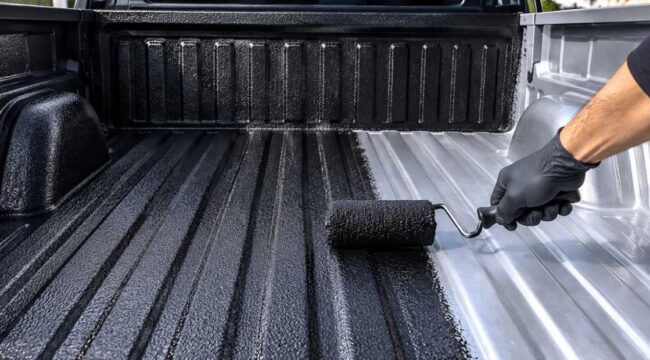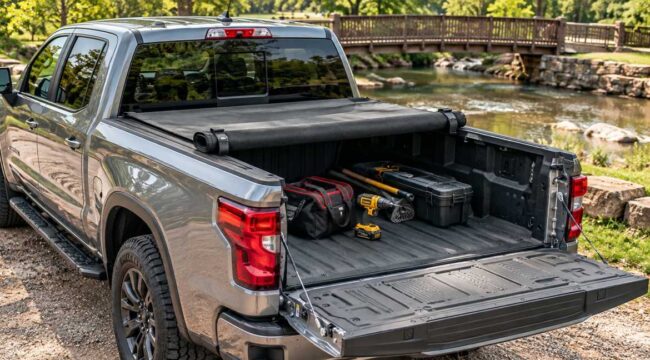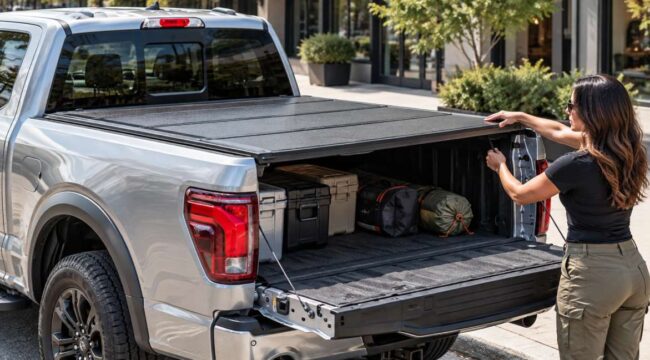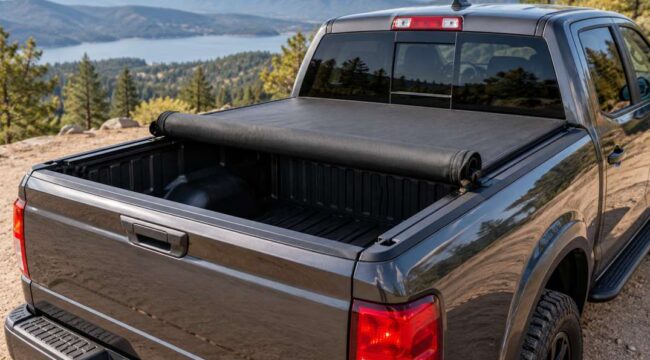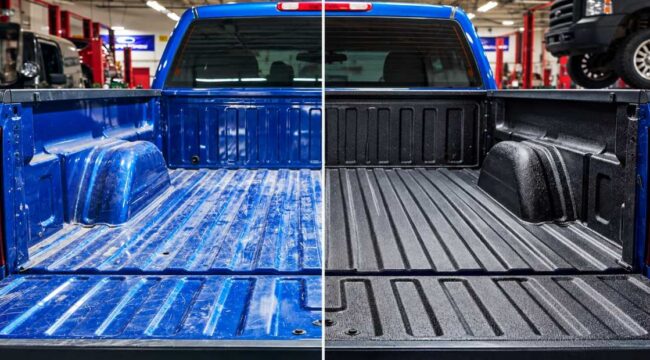
A spray-in bed liner can turn a bare or worn truck bed into a tougher working surface while adding grip and helping protect the metal underneath from everyday cargo, moisture, scratches, and abrasion. The appeal is straightforward: instead of dropping a separate liner into the bed, you apply a coating that bonds to the truck’s surface and becomes part of the bed itself.
The harder part is choosing the right sprayable system. Two-component urethane kits are very different from one-part aerosol coatings, and a kit that is suitable for a full-size pickup bed may be excessive for a tailgate, wheel well, or small repair. Surface preparation also matters enormously. A good coating cannot compensate for grease, loose rust, glossy paint, or poor adhesion.
For this guide, we focused specifically on sprayable and spray-in truck-bed coatings, including professional-grade DIY kits and smaller aerosol products. We compared coating type, application method, coverage, texture, preparation requirements, durability-related claims, and the situations each product is actually suited to. We did not treat manufacturer claims as hands-on testing, and WheelsWire has not personally tested these products.
Before buying, remember that a spray-in liner is a coating project rather than a vehicle-specific accessory. The exact truck bed still matters because bed condition, existing paint or liner, rust, and factory coatings can change the preparation and application process.
If you want a serious DIY spray-on system for a full-size truck bed, Herculiner Professional Grade Bed Liner Kit is a strong overall choice because it is a two-component system with a spray gun and rollers and is designed to cover an 8-foot bed in one coat. U-POL Raptor 0820V is another strong option if you want a 2K urethane coating with approximately 125 square feet of stated coverage and the flexibility to use a compatible spray gun.
If you want the spray gun included with the Raptor system, the U-POL Raptor Black 0820VG kit is the more complete package. For small repairs or areas where a full gallon kit makes little sense, Rust-Oleum Automotive Truck Bed Coating Spray and Herculiner Aerosol are better viewed as small-area or touch-up products.
- Our Top Picks
- Spray-In vs. Roll-On Bed Liners
- How We Chose
- Detailed Reviews
- Understanding Spray-In Bed Liner Types
- Surface Preparation
- How to Apply a DIY Spray-In Bed Liner
- What to Consider Before Buying
- Professional Spray-In vs. DIY Kits
- Maintenance and Long-Term Use
- Common Application Mistakes
- FAQs
Our Top Picks
These five products cover the main sprayable use cases rather than pretending every spray-in bed liner is designed for the same job. The first three are full-bed DIY systems; the final two are aerosol products better suited to smaller areas, repairs, or touch-ups.
U-POL Raptor 0820V2K urethane full-bed coating
U-POL Raptor 0820VGRaptor kit with spray gun
Rust-Oleum Automotive Truck Bed Coating SpraySmall-area aerosol
Herculiner AerosolTouch-up and small-area option
Spray-In vs. Roll-On Bed Liners
Spray-in and roll-on products are often discussed together because both are DIY alternatives to professionally applied truck-bed coatings. The important difference is the way the coating is distributed over the surface.
A sprayable coating can be atomized or propelled through an application gun to create a more consistent textured finish when the material, gun settings, distance, and technique are appropriate. This is particularly useful around the floor, sidewalls, corners, and other areas where maintaining a reasonably even texture matters.
Roll-on products are simpler because they do not normally require an air compressor or spray gun. They can be attractive for owners who want a straightforward project and are comfortable with the texture produced by a roller. The trade-off is that the finished appearance and texture are more directly influenced by the roller and application technique.
This article keeps the focus on sprayable coatings. If you are specifically looking for a roll-on product, the selection criteria change because application equipment, material viscosity, and the way the coating builds texture are different.
How We Chose
We started with the actual search intent behind a spray-in bed liner: a truck owner wants to protect the bed with a coating that can be sprayed or is supplied in an aerosol format, and they need to know whether a product is appropriate for a complete bed or only a smaller project.
Our comparison focused on:
- Application method: spray gun, compatible application gun, or aerosol.
- Coating chemistry: whether the manufacturer identifies the product as a 2K urethane, epoxy, polyurethane, or another coating type.
- Coverage: published coverage information where available.
- Preparation: cleaning, degreasing, scuffing, sanding, and masking requirements.
- Texture: the type of surface the product is intended to create and whether skid resistance is part of the product design.
- Application flexibility: whether the system can be sprayed only or can also be rolled where the manufacturer permits it.
- Project size: whether the product makes sense for a full pickup bed, a smaller bed, or a repair.
- Product verification: exact Amazon listing, model or part number where available, and matching Amazon product imagery.
Manufacturer information was prioritized for product specifications and application instructions. Amazon listing information was used to verify the exact recommended listing and its current product presentation. Prices and availability can change, so we have not treated either as permanent specifications.
Detailed Reviews
1. Herculiner Professional Grade Bed Liner Kit — Best Overall Full-Bed Spray-On Kit

The Herculiner Professional Grade kit is the most straightforward choice in this group if your goal is to spray a complete truck bed without having to assemble a separate spray gun and coating system. Herculiner describes it as a two-component bed liner, and the kit includes four bottles of professional-grade liner, one bottle of hardener, a spray gun, and two rollers.
The biggest practical advantage is flexibility. You can spray the material using the included gun, but the kit also provides rollers for areas or users where rolling is more convenient. Herculiner states that the kit can cover an 8-foot truck bed in a single spray-on coat and produces a textured, skid-resistant finish after curing.
The product is also designed around durability-related needs that matter in a working truck bed. Herculiner lists scratch, impact, chemical, water, and fade resistance among the product characteristics. Those are manufacturer claims rather than independent WheelsWire test results, so they should be treated as product specifications rather than a guarantee of performance in every truck.
Preparation is still the part that deserves the most attention. A spray gun can make application faster, but it cannot fix poor adhesion caused by grease, loose coating, rust, or an inadequately prepared surface. You also need enough room to mask surrounding paint, hardware, drain plugs, and anything else you do not want coated.
Who should consider it?
- Owners coating a complete pickup bed
- DIY users who want a spray gun included
- Buyers who want a two-component system rather than a small aerosol
- People who want the option to spray or roll the material
Who may want something else?
If you only need to repair a small worn area, buying a full professional-grade kit can be unnecessary. A smaller aerosol product may be easier to manage for a localized repair.
Pros
- Two-component professional-grade system
- Spray gun included
- Rollers included as an alternative application method
- Designed to cover an 8-foot bed in one spray-on coat
- Textured, skid-resistant finish
Cons
- Requires careful surface preparation
- Two-component application is more involved than aerosol spraying
- Full kit is excessive for small touch-up jobs
- Final finish depends heavily on preparation and application technique
2. U-POL Raptor 0820V — Best 2K Urethane Option

U-POL Raptor is one of the better-known sprayable protective coatings, and the 0820V listing gives buyers a full one-gallon system rather than a small touch-up container. U-POL describes the 1 US Gallon kit as four bottles of RAPTOR with hardener and states that it covers approximately 125 square feet, enough for a full-size pickup bed.
The coating is a 2K urethane system, which means the base material is combined with a hardener before application. Raptor is designed to be applied with a compatible application gun, and U-POL also offers professional and standard application equipment for the product family.
The main reason to choose Raptor is the combination of a spray-oriented application system, flexible 2K urethane formulation, and relatively generous stated coverage. U-POL also describes the coating as scratch and stain resistant, flexible under impact, and suitable for truck beds and other high-traffic surfaces.
The main limitation is that you need to take the mixing and application process seriously. The product is not a simple spray can that you shake and point at the truck. You need the correct ratio, suitable application equipment, appropriate preparation, and enough working time to apply the coating consistently.
Who should consider it?
- DIY users who already have compatible spray equipment
- Owners looking for a 2K urethane bed coating
- Full-bed projects where the stated 125-square-foot coverage is useful
- Users who want a textured protective coating rather than a thin aerosol finish
Who may want something else?
If you do not have a suitable spray gun or do not want to manage a two-component coating, a kit that includes application equipment can be easier.
Pros
- 2K urethane coating
- Approximately 125 square feet of stated coverage
- Designed for spray-gun application
- Flexible protective coating
- Suitable for full-size pickup-bed projects
Cons
- Application equipment is required
- Mixing and preparation need to be done correctly
- More involved than an aerosol product
- Exact finish depends on gun setup and technique
3. U-POL Raptor Black 0820VG — Best Raptor Kit With Spray Gun
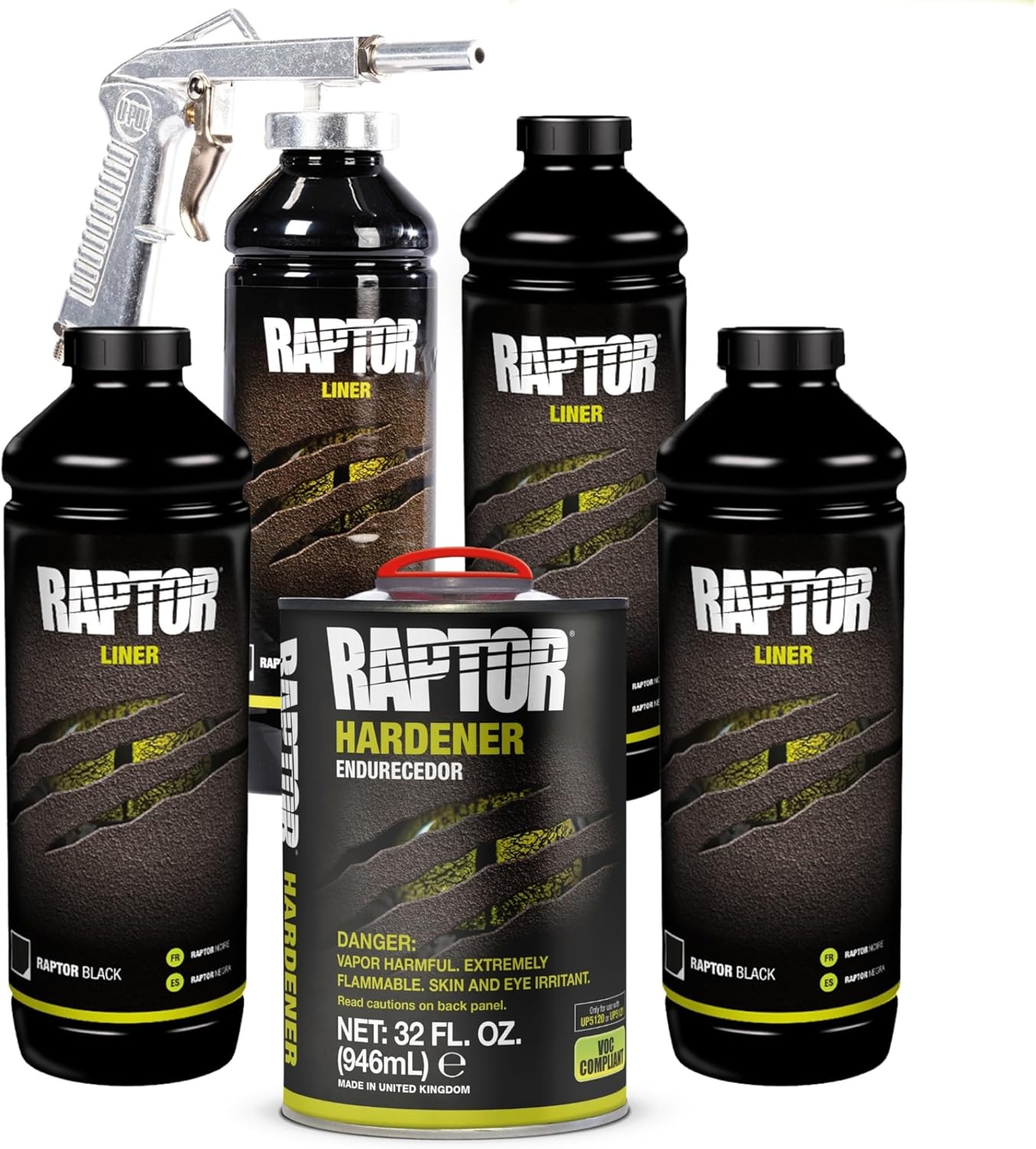
The 0820VG is worth separating from the standard 0820V listing because the Amazon product is presented as a four-quart Raptor kit with a spray gun. For a buyer who wants Raptor but does not already own the application equipment, that distinction can make the complete package more practical.
The underlying idea remains the same: this is a spray-on 2K urethane system intended for a durable textured protective coating. The current Amazon listing identifies the black version as a four-quart kit and identifies the included spray gun in the product title. U-POL’s Raptor product information confirms that the four-bottle system is designed for spray-gun application.
The advantage is convenience rather than a fundamentally different coating. You can avoid buying a compatible gun separately and have a more self-contained starting point for a full-bed project. That can simplify the equipment side of the job, although you still need to prepare the truck bed properly and follow the product’s mixing and application instructions.
Because this is a spray-gun project, the final texture is influenced by application distance, pressure, nozzle choice, material preparation, and the speed at which you move the gun. The goal should be an even, deliberate application rather than trying to build excessive thickness in one pass.
Who should consider it?
- DIY users who want Raptor and need application equipment
- Full-bed projects where a four-quart system makes sense
- Buyers who prefer a package rather than sourcing the gun separately
- Owners comfortable with two-component coating application
Who may want something else?
If you already own a suitable Raptor application gun, the standard 0820V listing may make more sense because you are not paying for equipment you already have.
Pros
- 2K urethane Raptor coating
- Four-quart full-bed-oriented kit
- Spray gun included with this listing
- Textured spray-on application
- Useful package for first-time Raptor buyers
Cons
- Still requires careful preparation and mixing
- More involved than aerosol spraying
- Spray equipment and technique affect the final texture
- Not necessary if you already own compatible equipment
4. Rust-Oleum Automotive Truck Bed Coating Spray — Best for Small Areas and Repairs

Rust-Oleum’s Automotive Truck Bed Coating Spray is a very different product from the gallon-sized two-component systems above. The aerosol format makes it much easier to handle when the job is small, and the Amazon listing describes it as a textured coating intended to help protect truck beds from scratches, rust, and weather.
That makes it useful for restoration and localized work. If a previously coated bed has a worn patch, or you need to coat a small area such as a bedrail or another compatible surface, an aerosol can can be more sensible than buying enough two-component material for an entire pickup bed.
The limitation is obvious: one 15-ounce aerosol is not a substitute for a full professional-grade spray-on kit when you are coating an entire large pickup bed. Coverage, control, material thickness, and the time required to build a consistent finish make a full-bed aerosol project a very different proposition.
Rust-Oleum also recommends using the product outdoors or in a well-ventilated area. Surface preparation still matters. The goal is to remove contaminants and loose material and provide a sound surface for the coating to bond to before spraying.
Who should consider it?
- Small repair areas
- Touch-ups on compatible existing bed coatings
- Bedrails, running boards, or other small compatible surfaces
- DIY users who want an easy aerosol format
Who may want something else?
If you are starting with a bare eight-foot truck bed and want a uniform full-bed coating, use a product designed and packaged for that amount of material instead.
Pros
- Simple aerosol application
- Textured finish
- Useful for repairs and smaller areas
- Designed for truck-bed coating applications
Cons
- Not the practical choice for a complete large truck bed
- Coverage is limited compared with gallon kits
- Finish consistency depends on spray technique
- Surface preparation is still required
5. Herculiner Aerosol — Best for Touch-Ups and Cut-In Work

Herculiner’s Original aerosol is another small-format option, and the current Amazon listing identifies it as a 15-ounce textured spray can with approximately 6–7 square feet of stated coverage. That immediately tells you how it should be positioned: it is a touch-up and small-project product, not a replacement for a full four-bottle or gallon-sized spray-on kit.
Its usefulness comes from convenience. If an existing bed liner has a damaged section, or you need to coat a small compatible area without mixing a two-component system, an aerosol can be easier to prepare and use. It can also make sense for cut-in work around areas that are difficult to reach with a larger spray setup, provided the coating and existing surface are compatible.
The relatively small coverage figure is also a useful warning. A full pickup bed contains far more surface area than a single aerosol can is intended to cover. Trying to stretch a small can across an entire bed can lead to an uneven film and a poor-looking finish.
Who should consider it?
- Touch-up work on compatible bed liners
- Small areas that need a textured protective coating
- Owners who do not need a full-bed kit
- DIY users who value simple aerosol application
Who may want something else?
For a new full-bed installation, choose a product with enough material and an application system designed for the entire project.
Pros
- Simple 15-ounce aerosol format
- Textured finish
- Approximately 6–7 square feet of stated coverage
- Useful for touch-ups and small areas
Cons
- Very limited coverage for a full pickup bed
- Not a substitute for a full-bed 2K kit
- Spray technique affects texture and coverage
- Preparation remains important for adhesion
Understanding Spray-In Bed Liner Types
Two-component urethane systems
Two-component, or 2K, systems combine a base coating with a hardener before application. Products such as Raptor and Herculiner Professional Grade use this type of approach. The appeal is a more substantial coating system intended for demanding protective applications, but the process is less forgiving than simply spraying an aerosol.
Mixing ratios, working time, application equipment, temperature, and surface preparation all matter. The exact instructions vary by product, so do not assume that the procedure for one 2K liner can be copied to another.
Epoxy-based systems
Some truck-bed coatings use epoxy chemistry. Epoxy systems can offer strong adhesion and resistance characteristics, but the application process and recommended preparation can differ from urethane products. If you choose an epoxy-based kit, follow its own technical data and preparation instructions rather than relying on general bed-liner advice.
One-part spray coatings
One-part coatings and aerosol products are generally simpler to use. They are particularly useful when the project is small or when convenience matters more than having a full professional-style coating system.
Professional shop-applied liners
A professionally applied spray-in liner is a different category from a DIY kit. A shop can prepare the bed using professional equipment and apply a dedicated coating system under controlled conditions. That can be attractive when you want a uniform finish and do not want to manage sanding, masking, mixing, spraying, and cleanup yourself.
Surface Preparation
Preparation is arguably the most important part of any spray-in bed liner project. The coating has to bond to the existing surface, and contaminants between the bed and the coating can undermine that bond.
Start with a clean bed
Remove loose dirt, mud, grease, oil, wax, and other contaminants. A dirty surface can produce adhesion problems that may not become obvious until after the coating has dried.
Deal with rust and loose coating
Do not simply spray over loose rust or flaking paint because the new coating looks thick enough to hide it. Any unstable material underneath remains a weak layer. Remove loose material and address corrosion according to the product’s instructions before continuing.
Scuff glossy surfaces
Many DIY coatings require the existing surface to be scuffed or sanded so the new material has an appropriate surface to bond to. Follow the exact grit and preparation method specified by the manufacturer rather than choosing a sanding grade at random.
Mask everything that should remain uncoated
Drain plugs, tailgate hardware, wiring, bed bolts, lights, painted exterior panels, and other components can be difficult to clean once liner material has dried. Masking is much easier before spraying.
Allow the surface to dry
Moisture trapped under the coating can interfere with adhesion. Make sure the bed is dry before beginning the application and follow the product’s recommended temperature and humidity conditions.
How to Apply a DIY Spray-In Bed Liner
The exact process varies by product, but a full-bed DIY project usually follows the same broad sequence.
1. Plan the work area
Choose a well-ventilated work area with enough space to move around the truck. Spraying a bed is much easier when you can reach the sidewalls and floor without stretching over freshly coated sections.
2. Remove or protect accessories
Remove anything that the manufacturer’s instructions say to remove, and mask components that should not receive coating. Think about the tailgate, bed hardware, drain holes, tie-downs, lights, rails, and surrounding body panels.
3. Clean and degrease
Clean the bed thoroughly and use the recommended cleaner or degreaser. The surface should be free from oil and other contaminants before sanding or scuffing.
4. Sand or scuff
Prepare glossy paint and other surfaces as instructed. The goal is a clean, stable, appropriately keyed surface rather than simply making the bed look rough.
5. Mix the coating
For a 2K system, follow the exact product mixing instructions. Do not improvise the ratio. The hardener is part of the coating system, and incorrect mixing can affect curing and performance.
6. Set up the spray equipment
Use the recommended spray gun, nozzle, and pressure settings. Practice on a scrap surface when appropriate so you can understand the spray pattern before coating the truck.
7. Apply even passes
Keep your gun distance and movement reasonably consistent. Overlapping each pass helps avoid obvious thin strips and heavy bands. Do not try to create all of the desired texture by holding the gun too close or moving too slowly.
8. Follow the recoat and curing instructions
Do not rush the next coat or put the truck immediately back into hard service. Dry-to-touch, recoat, light-use, and full-cure times are not necessarily the same thing. Follow the product instructions for the coating you selected.
What to Consider Before Buying
Full bed or small repair?
This should be the first question. If you are coating an entire pickup bed, look for a kit with enough material for the surface area and an application method intended for that job. Aerosol cans make more sense for touch-ups and smaller surfaces.
Do you already have a spray gun?
A standard Raptor kit can make sense if you already own compatible equipment. If you do not, a package that includes the gun can be simpler. Just confirm that the included equipment is intended for the coating and follow the manufacturer’s setup instructions.
How important is texture?
A textured surface can provide grip and can help hide minor visual variation, but a more aggressive texture is not automatically better. Think about the cargo you carry and how often you slide objects across the bed.
How much coverage do you need?
Published coverage figures are useful for planning, but real-world coverage depends on film thickness, surface condition, application technique, overspray, and the shape of the bed. Treat the manufacturer’s coverage number as a planning figure rather than a guarantee.
What is the existing bed surface?
A bare steel bed, painted bed, previously coated bed, and factory spray-in liner may all require different preparation. The product’s instructions should determine whether the existing surface is compatible and how it needs to be prepared.
Do you want a DIY project or a professional finish?
A DIY kit can be rewarding and can cost less than professional installation, but it also puts the preparation and application quality in your hands. If a highly uniform finish matters more than doing the project yourself, a reputable professional installer may be the better choice.
Consider ventilation and safety
Sprayable coatings and their solvents can create fumes and overspray. Use the personal protective equipment, ventilation, respiratory protection, and application conditions specified by the manufacturer and product safety documentation. Do not treat a driveway spray project as if it were harmless paint.
Professional Spray-In vs. DIY Kits
| Factor | Professional shop | DIY sprayable kit |
|---|---|---|
| Application equipment | Professional equipment | Consumer or semi-professional equipment |
| Preparation | Handled by installer | Owner does the preparation |
| Finish consistency | Usually more controlled | Depends heavily on technique |
| Convenience | High | Lower |
| Project control | Installer determines process | Owner controls material and application |
| Cost structure | Includes labor and materials | Material and equipment are purchased separately or as a kit |
| Best for | Owners wanting a professionally applied coating | DIY owners comfortable with preparation and spraying |
A DIY kit is not automatically inferior, but the result depends much more on the quality of the preparation and application. If you are comfortable sanding, masking, mixing, spraying, and cleaning equipment, a good kit can be a practical route. If you would rather avoid those steps, professional installation removes much of the process from your hands.
Maintenance and Long-Term Use
Once the liner has cured according to its instructions, maintenance is generally straightforward, but the coating should still be treated as a protective surface rather than an indestructible shell.
Keep the bed clean
Dirt, road salt, mud, and debris can collect in the texture. Regular cleaning helps keep the surface usable and makes it easier to notice damaged areas.
Inspect high-wear locations
Pay attention to the tailgate edge, front wall, wheel wells, and areas where heavy cargo repeatedly contacts the coating. If you see lifting, peeling, or corrosion underneath, address the problem instead of simply spraying more material over it.
Do not assume every chemical is harmless
Different coatings have different chemical-resistance characteristics. If you routinely carry fuels, solvents, fertilizers, or other aggressive materials, check the coating’s technical documentation rather than assuming all bed liners have identical resistance.
Repair damage properly
A localized repair should begin with cleaning and stabilizing the damaged area. The new material needs a sound surface to bond to. Simply covering loose or contaminated material can trap the underlying problem.
Common Application Mistakes
Skipping degreasing
A surface can look clean while still carrying oil or wax. Proper cleaning is inexpensive compared with having to strip and redo a failed coating.
Spraying over loose rust
A thick liner does not turn unstable rust into a stable foundation. Remove loose corrosion and follow the coating manufacturer’s preparation instructions.
Using the wrong mixing ratio
For a 2K product, the ratio is part of the formulation. Guessing can affect curing and final performance.
Applying too heavily
More material is not automatically better. Excessively heavy application can change the texture, extend drying, and create other problems. Build the coating according to the product instructions.
Failing to protect the surrounding truck
Overspray and splashes can land on painted panels, glass, lights, wiring, and hardware. Spend time on masking before the first spray pass.
Choosing an aerosol for a full-size bed without checking coverage
Aerosols are convenient, but their coverage is limited. A product intended for six or seven square feet should not be presented as an economical full-bed solution.
Rushing the cure
A coating that feels dry on the surface may not be ready for heavy cargo. Follow the product’s stated cure schedule before returning the truck to normal use.
How Much Does a Spray-In Bed Liner Cost?
The cost varies widely because a professional shop installation and a DIY aerosol can are solving very different problems. A full-bed 2K kit requires substantially more material and may also require spray equipment, protective equipment, masking supplies, cleaners, and preparation materials. A small aerosol project has a much lower entry cost but is intended for much less surface area.
When comparing DIY systems, do not look only at the price printed on the product. Include the spray gun if one is required, compressor or compatible equipment if necessary, surface-preparation materials, masking supplies, and the possibility of needing additional coating if the bed is larger or the application is thicker than expected.
Frequently Asked Questions
What is the best spray-in bed liner?
For a full-bed DIY project, the Herculiner Professional Grade kit and U-POL Raptor systems are strong starting points because they are designed as substantial sprayable coating systems rather than small aerosol touch-up products. The right choice depends on your equipment, coverage needs, preparation, and preferred coating system.
Is a spray-in bed liner better than a roll-on liner?
It depends on the project. Spray application can make it easier to build a consistent textured finish across a large bed, while roll-on products can be simpler for owners who do not want spray equipment. The coating chemistry and preparation requirements can matter just as much as the application method.
Can I spray a truck bed liner myself?
Yes. Several products are designed for DIY application, including two-component systems that can be sprayed with compatible equipment. The project requires careful cleaning, preparation, masking, application, ventilation, and adherence to the product’s safety and curing instructions.
Do I need a spray gun for Raptor bed liner?
The standard Raptor 0820V system is designed for application with a compatible Raptor spray gun or professional application gun. The 0820VG Amazon listing is a package that includes a spray gun, making it more convenient for buyers who do not already own compatible equipment.
How much Raptor do I need for a truck bed?
U-POL states that its 1 US Gallon four-bottle Raptor kit covers approximately 125 square feet, which is enough for a full-size pickup bed under the manufacturer’s stated coverage conditions. Actual usage depends on the bed and application technique.
How much Herculiner Professional Grade do I need?
Herculiner states that its Professional Grade kit covers an 8-foot truck bed in one spray-on coat. Follow the manufacturer’s instructions for your specific application and do not assume every truck bed requires exactly the same amount of material.
Can aerosol bed liner cover an entire truck bed?
It can technically be sprayed over a surface, but small aerosol cans are generally not the practical choice for a complete large pickup bed. The Herculiner aerosol listing, for example, states approximately 6–7 square feet of coverage, which illustrates why full-bed kits are more appropriate for large surfaces.
Does a spray-in liner stop rust?
A properly prepared and applied coating can help protect a suitable surface from moisture and corrosion, and several products are marketed with rust-resistance or rust-protection characteristics. However, a liner does not make existing corrosion disappear. Rust and unstable material should be dealt with before coating.
How important is sanding before applying bed liner?
It can be critical when the existing surface is glossy or otherwise unsuitable for adhesion. Follow the exact preparation procedure for the product you choose because the required sanding or scuffing method can vary between coatings.
Can I spray bed liner over paint?
Some products can be applied over properly prepared painted surfaces, but compatibility and preparation vary. The paint must be stable and free of contaminants, and the surface may need to be scuffed to create an appropriate bonding surface.
How long does spray-in bed liner take to cure?
Cure time depends on the coating, temperature, humidity, film thickness, and other conditions. Do not confuse dry-to-touch time with full cure. Use the product’s published schedule before loading the bed heavily.
Final Thoughts
The best spray-in bed liner is the one that matches the size of your project and the amount of application work you are prepared to do. For a full pickup bed, a two-component system such as the Herculiner Professional Grade kit or U-POL Raptor makes far more sense than trying to cover the entire bed with small aerosol cans. If your project is only a damaged patch or small section, an aerosol can can be the more sensible choice.
Whichever route you choose, preparation deserves as much attention as the coating itself. Clean the bed thoroughly, remove unstable material, scuff the surface as required, mask carefully, and follow the product’s mixing, spraying, ventilation, and curing instructions. A good coating applied to a poorly prepared surface is still a poor installation.
If you want a full-bed DIY system and would rather have the spray gun included, the Herculiner Professional Grade kit is the most straightforward starting point in this group. Before ordering, confirm that the kit’s application method, coverage, and preparation requirements match your truck and the condition of its bed.