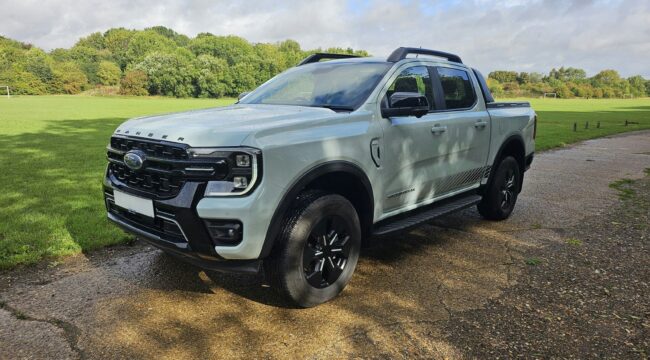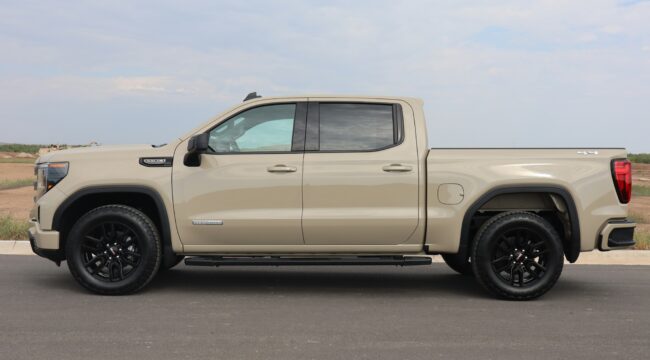
If loose boxes, coolers, tool cases, groceries, storage bins, or work gear keep sliding around your pickup bed, a cargo bar can be one of the simplest ways to create a more organized hauling space. Instead of drilling into the bed or permanently installing a divider, a tension-mounted bar gives you a movable stop that you can reposition or remove whenever you need the full bed.
The challenge is finding a bar that actually fits your truck and makes sense for the way you use it. A bar that is too short cannot create the required contact between the bed walls. A bar with a minimum length that is too large may not fit at all. Even when the length is correct, the end pads, adjustment mechanism, bed liner, tonneau cover, and the type of cargo you carry can affect how useful the setup is.
In this guide, we compare five Amazon-listed products with different adjustment ranges and designs. Rather than treating one model as a universal answer, we explain where each product fits, what its strengths are, what its limitations are, and what you should check before buying.
We also want to make one distinction clear from the start: a cargo bar is primarily a cargo-management and separation tool. It can help stop loose items from sliding, but it is not automatically a substitute for properly rated tie-down straps and suitable anchor points when a load needs positive restraint.
If you want a conventional ratcheting option for a pickup bed, the Keeper Adjustable Cargo Bar covers 40 to 70 inches and uses large grip pads. The US Cargo Control Ratcheting Cargo Bar also covers 40 to 70 inches and is listed for pickup beds, SUVs, minivans, and small trailers. For wider full-size pickup beds, the Heininger HitchMate 4016 adjusts from 59 to 73 inches. The Strapinno covers 44 to 74 inches with a 1.25-inch tube, while the KILOUPOLE reaches 79 inches and adds a cargo net organizer and divider bar.
- Our Top Picks
- What Is a Truck Bed Cargo Bar?
- How Does a Cargo Bar Work?
- Types of Cargo Bars
- How We Chose
- Detailed Reviews
- Cargo Bar Comparison
- How to Choose the Right Cargo Bar
- Truck Bed Fitment and Installation
- Cargo Bar vs. Tie-Down Straps
- Common Cargo Bar Mistakes to Avoid
- How to Use a Cargo Bar Properly
- Maintenance and Replacement
- Frequently Asked Questions
Our Top Picks
These five products cover the main differences worth considering when shopping for a truck bed cargo bar. The Keeper and US Cargo Control provide conventional 40- to 70-inch options. The Heininger starts at a wider 59 inches for full-size truck applications. Strapinno extends to 74 inches and uses a larger 1.25-inch tube, while KILOUPOLE combines a 40- to 79-inch range with a cargo net and divider.
US Cargo Control Ratcheting Cargo Bar40-70-inch load lock
Heininger HitchMate 401659-73-inch full-size truck bar
Strapinno Ratcheting Cargo Bar44-74-inch 1.25-inch tube
KILOUPOLE Adjustable Cargo Bar40-79-inch bar with net and divider
What Is a Truck Bed Cargo Bar?
A truck bed cargo bar is an adjustable crossbar that spans the inside width of a pickup bed. The two ends press against the bed walls, usually through rubber or non-slip pads, and the resulting tension helps keep the bar in position.
The bar then acts as a movable divider. For example, you might put several storage bins behind the cab and place the bar immediately behind them. If the bins try to slide toward the tailgate during braking, the bar provides a physical stop.
This is different from an anchor point. An anchor is designed to give a strap or other restraint somewhere to attach. A cargo bar does not wrap around your cargo or connect it directly to the truck. It simply creates a barrier between the cargo and the rest of the bed.
That distinction is important because cargo bars are sometimes described as “securing” cargo. They can certainly reduce unwanted movement, but their function is narrower than that of a properly installed tie-down system.
Cargo bars are especially convenient for loose groups of items. If you have several grocery bags, coolers, tool cases, plastic totes, or small pieces of equipment, individually strapping every item can be unnecessarily time-consuming. A well-fitted bar can keep the group together instead.
They are also useful when you frequently change the amount of cargo in the truck. You can move the bar forward or backward as needed rather than committing to one fixed divider position.
How Does a Cargo Bar Work?
The operating principle is straightforward. First, you adjust the bar so that its overall length is close to the distance between the two bed walls. You then place it at the desired location and use the ratcheting or locking mechanism to increase the pressure against the walls.
Ratcheting models use a lever and locking mechanism to make small adjustments. This is useful because you can start with a rough fit and then increase the tension incrementally instead of trying to get the exact length in one movement.
The feet are just as important as the center bar. They spread the contact force over the bed wall and create friction. A rubber pad can also reduce the chance of the metal structure contacting and marking the truck.
For the system to work properly, both feet need to sit against suitable surfaces. If one foot is resting on a loose trim piece, the edge of a bed liner, or an accessory that can move, the bar may not hold as intended.
Position also matters. A bar installed squarely across the bed generally gives the most predictable contact. A bar installed at a sharp angle can place uneven pressure on the two sides.
Another important point is that a cargo bar is not designed to support weight from underneath. Do not use it as a shelf, step, bridge, lifting support, or improvised structural beam. Its job is to apply lateral pressure between two surfaces.
Types of Cargo Bars
Ratcheting cargo bars
Ratcheting bars are the most common type for pickup-bed cargo management. They use a mechanical ratchet to extend the bar and build tension after it has been placed in the bed.
The main advantage is controlled adjustment. You can make small changes until the bar is firmly seated. Releasing it is also generally straightforward once you understand the release mechanism.
The downside is that a ratchet adds moving parts. The mechanism should therefore be inspected periodically for damage, dirt, bent components, or unusual movement.
Telescoping or twist-lock bars
Some cargo bars use telescoping sections with a collar, pin, or other locking arrangement. These can be simpler than ratcheting bars and may work well for lighter organization tasks.
There is more variation between products in this category, so the exact locking mechanism should be checked before purchase. Do not assume that two bars with the same length range use the same type of locking system.
Heavy-duty cargo bars
Heavy-duty models generally use larger tubing, stronger hardware, more substantial feet, or a more robust adjustment mechanism. The Heininger and Strapinno products in this guide illustrate two different approaches to a more substantial cargo bar.
However, “heavy-duty” is not a universal engineering standard. A product can have a larger tube and still be the wrong tool for a particular load. Always use the manufacturer’s stated application and do not treat a cargo-bar capacity figure as a complete cargo-securement rating.
Cargo bars with nets or dividers
Some newer systems combine the main crossbar with a cargo net or secondary divider. These are useful when you want more than one way to organize the bed.
A net can contain smaller objects that might otherwise slip below a rigid bar. A secondary divider can also let you create separate sections within the bed. The trade-off is that there are more pieces to install and store.
How We Chose
We focused on the specifications that determine whether a cargo bar is actually useful in a pickup bed.
Adjustment range came first. The best-looking bar is still the wrong product if it does not reach the walls of your truck. We therefore compared the published minimum and maximum lengths rather than assuming one size works for every pickup.
Mechanism and construction were also considered. Ratcheting hardware, tube size, end pads, and stated material information help explain how the products differ.
Application matters as well. Some products are described for full-size trucks, while others are intended for pickup beds as well as SUVs, minivans, and trailers. A broader application can be useful if you want to move the bar between vehicles.
Everyday usability was another consideration. A cargo bar is most useful when it is quick enough to install, reposition, and remove that you will actually use it. We therefore looked at the adjustment method and whether additional accessories add useful functionality or unnecessary complexity.
We also limited the list to five distinct products with identifiable Amazon ASINs. We did not add a product simply to make the list longer, and we do not claim hands-on testing. Specifications and product descriptions are based on the available listing and manufacturer information at the time of research.
Detailed Reviews
1. Keeper Adjustable Cargo Bar for Pickup Truck Bed

The Keeper Adjustable Cargo Bar is a conventional ratcheting cargo bar with a 40- to 70-inch adjustment range. That makes it one of the more straightforward options to consider when you want a movable divider without permanently modifying the bed.
The 40-inch minimum is useful for pickup owners whose bed is narrower than a typical full-size interior width. At the other end, the 70-inch maximum covers many common truck-bed applications, although you should never assume that a particular truck will fit simply because it is a pickup.
The large grip pads are an important part of the design. Because the bar is tension-mounted, the feet need to maintain solid contact with the bed walls. The rubber-style contact surface also helps separate the metal hardware from the truck’s painted or lined surfaces.
The ratcheting mechanism is useful when the bar is installed in different positions. You can roughly extend it, place it behind the cargo, and then use the mechanism to tighten the fit. That is more convenient than trying to calculate the exact bar length before installation.
The Keeper is also a good example of how a cargo bar can be used for organization rather than heavy-duty restraint. Put a few storage totes against the cab, place the bar behind them, and the totes have much less room to slide toward the tailgate.
There are limitations. The 70-inch maximum is not enough for every full-size pickup application, and the bar should not be used to restrain a load that needs straps or another positive restraint method.
Who should consider it?
Consider the Keeper if you want a simple ratcheting divider, your usable bed width falls between 40 and 70 inches, and most of your cargo consists of loose items that need help staying in one area.
Pros
- 40-70-inch adjustable range
- Ratcheting adjustment
- Large grip pads
- Easy to reposition
- Useful for everyday cargo organization
Cons
- 70-inch maximum limits wider applications
- Requires accurate measurement
- Not a replacement for proper tie-down equipment
2. US Cargo Control Ratcheting Cargo Bar 40-70 Inches

The US Cargo Control Ratcheting Cargo Bar is another 40- to 70-inch option, but it is positioned as a small cargo-bar solution for pickup beds, SUVs, minivans, and small trailers. That broader application makes it worth considering when the bar may be used outside the truck.
The product uses a ratcheting mechanism and rubber non-slip pads. The basic idea is the same as other tension-mounted bars: adjust the length, position the bar against suitable surfaces, and tighten it until the contact points hold firmly.
The 40-inch minimum makes the bar useful for spaces where a full-size-only cargo stabilizer would be too long. The 70-inch maximum, however, puts it in the same general size category as the Keeper. If your truck needs more than 70 inches at the intended mounting point, a longer model is the better starting point.
One advantage of a simple 40- to 70-inch bar is that it can be used for more than one kind of cargo. You can place it behind a group of plastic bins on one trip and use it behind a cooler or several tool cases on another.
The main thing to avoid is treating the broad vehicle application as a guarantee of universal fit. Measure each vehicle separately. The interior shape, bed liner, rails, and accessories can all change the actual contact distance.
Who should consider it?
Consider the US Cargo Control bar if you want a conventional 40- to 70-inch load lock that can potentially serve a pickup, SUV, minivan, or small trailer when the measured space falls within its range.
Pros
- 40-70-inch range
- Ratcheting design
- Rubber non-slip pads
- Broad vehicle application
- Simple removable setup
Cons
- 70-inch maximum limits wider beds
- Requires suitable contact surfaces
- Not a complete cargo-restraint system
3. Heininger 4016 HitchMate Cargo Stabilizer Bar

The Heininger HitchMate 4016 is designed specifically around full-size pickup applications. Its listed adjustment range is 59 to 73 inches, which immediately separates it from the shorter 40- to 70-inch bars.
This is a useful model to consider when your truck has a wider bed and you want a bar that starts at a relatively large minimum length. The 73-inch maximum also provides a little more reach than a standard 70-inch product.
Heininger describes the 4016 as a heavy-duty steel cargo stabilizer with a high-strength ratcheting system. The large rubber feet are intended to provide grip while helping protect the bed surface.
The design can also be installed at different positions in the bed. That is helpful when you use the pickup for different types of cargo throughout the week. A bar can be positioned closer to the tailgate for a small load or moved forward to keep equipment near the cab.
The 4016 can also be used in multiples for additional cargo organization, although adding more bars is not a substitute for proper tie-downs when a load requires positive restraint.
The biggest drawback is the minimum length. At 59 inches, it will not work in many compact or midsize truck beds at the same mounting point. This is a product where measuring first is particularly important.
Who should consider it?
Consider the Heininger 4016 if you own a full-size pickup and the usable width where you want the bar to sit is between 59 and 73 inches. Its more substantial construction also makes sense if you prefer a heavier-duty cargo-divider design.
Pros
- 59-73-inch adjustment range
- Designed for full-size trucks
- Heavy-duty steel construction
- High-strength ratcheting system
- Large rubber feet
- Can be used as part of a larger organization setup
Cons
- 59-inch minimum is too wide for many smaller beds
- More substantial than necessary for light organization
- Still requires careful positioning
4. Strapinno Ratcheting Cargo Bar 44-74 Inches

The Strapinno Ratcheting Cargo Bar takes a more substantial approach than the basic 40- to 70-inch bars. Its Amazon listing identifies a 44- to 74-inch adjustment range, a 1.25-inch tube, alloy-steel construction, and a stated 330-pound load capacity.
The 44-inch minimum is useful for truck owners who need more than a compact 40-inch bar but do not necessarily need a full-size-truck-only product. At the other end, 74 inches provides a little extra reach beyond the common 70-inch maximum.
The larger tube is one of the clearest differences in the product specification. It gives the bar a more substantial profile, while the ratcheting mechanism allows incremental adjustment after the bar is positioned.
Strapinno also lists a power-grip mounting approach. As with every tension-mounted cargo bar, the mounting surface still matters. A large tube cannot compensate for a foot that is resting on an unstable or unsuitable surface.
The 330-pound figure in the product listing should also be interpreted carefully. It is a product-specific capacity statement, not a universal recommendation for how much cargo your truck can safely carry or how much force can be applied to a load. The cargo, bed, contact surfaces, and any other restraint equipment still matter.
For owners who frequently organize heavier boxes, bins, or equipment and want a little more reach than a standard 70-inch bar, this design is worth considering.
Who should consider it?
Consider the Strapinno if your measured width falls between 44 and 74 inches and you want a larger 1.25-inch tube with a ratcheting mechanism.
Pros
- 44-74-inch range
- 1.25-inch tube
- Alloy-steel construction listed
- Ratcheting adjustment
- 330-pound stated load capacity
Cons
- 44-inch minimum may be too wide for some smaller applications
- 74-inch maximum may still be short for very wide beds
- Capacity should not be confused with a complete cargo-securement rating
5. KILOUPOLE Adjustable Cargo Bar 40-79 Inches
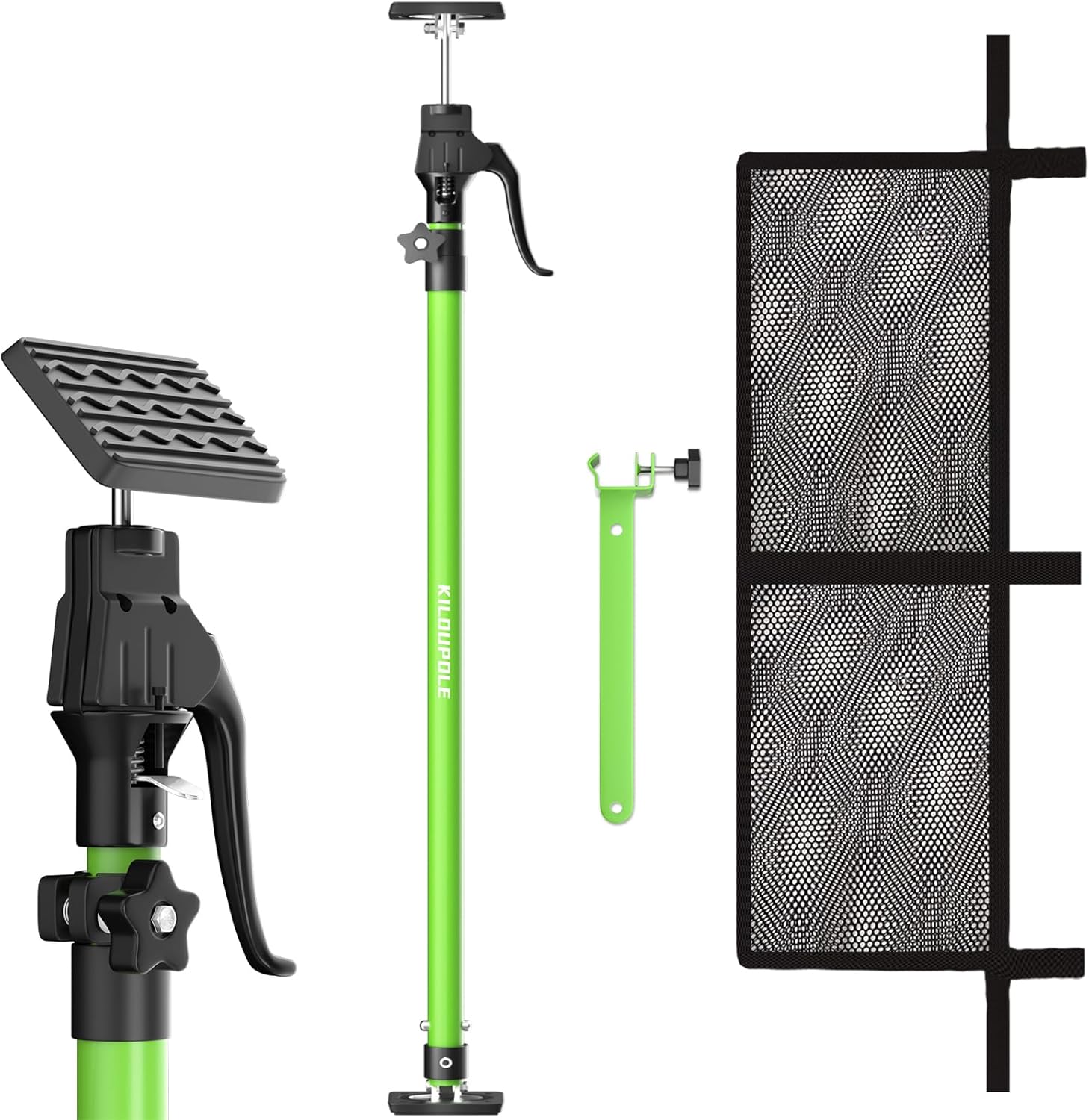
The KILOUPOLE Adjustable Cargo Bar is the longest-range product in this group. The listing gives it a 40- to 79-inch adjustment range and describes it for pickup trucks, SUVs, trailers, and vans.
The extra reach is the most obvious reason to consider it. If a 70- or 73-inch bar is near its maximum extension in your truck, the 79-inch limit gives you more room to work with.
This version also includes a cargo net organizer and divider bar. That changes the product from a simple crossbar into a broader organization system. The net can be useful for smaller items that could otherwise slide below a rigid bar, while the divider provides another way to separate the bed.
The listing also describes rotating non-slip feet and an adjustable design. Rotating contact points can be useful when the bed walls are not perfectly flat, but the feet still need to sit securely against suitable surfaces.
The additional pieces are not automatically an advantage for every buyer. If you simply need a bar behind two storage bins, a basic model may be easier to store and quicker to reposition. If you frequently carry mixed-size gear, however, the added organization may be worthwhile.
Because the maximum range is large, it is especially important not to assume that “79 inches” means the bar is suitable for every full-size truck. Measure the actual distance at the height where you intend to place the bar.
Who should consider it?
Consider KILOUPOLE if you need a 40- to 79-inch range or want a more complete cargo-organization setup with a net and divider included.
Pros
- 40-79-inch adjustment range
- Longest maximum range in this group
- Cargo net organizer included
- Divider bar included
- Rotating non-slip feet listed
- Multiple vehicle applications listed
Cons
- Extra accessories may be unnecessary for simple cargo separation
- More components mean more parts to store
- Still requires careful measurement
Cargo Bar Comparison
The adjustment range is the first specification to compare because it determines whether the bar can physically fit your truck. The other differences become useful only after the basic fit has been established.
| Product | Adjustment Range | Key Difference | Listed Application |
|---|---|---|---|
| Keeper Adjustable Cargo Bar | 40-70 in. | Conventional ratcheting design with grip pads | Pickup trucks and compatible vehicle interiors |
| US Cargo Control Ratcheting Cargo Bar | 40-70 in. | Ratcheting load lock with rubber non-slip pads | Pickup, SUV, minivan, small trailer |
| Heininger HitchMate 4016 | 59-73 in. | Heavy-duty full-size truck design | Full-size pickup trucks |
| Strapinno Ratcheting Cargo Bar | 44-74 in. | 1.25-inch tube and 330-lb stated capacity | Pickup trucks |
| KILOUPOLE Adjustable Cargo Bar | 40-79 in. | Cargo net and divider included | Pickup, SUV, trailer, van |
How to Choose the Right Cargo Bar for Your Truck Bed
1. Measure the actual contact width
This is the most important step. Measure from one side of the bed to the other at the exact height and location where the bar will sit. Do not use the truck’s advertised bed length because bed length is measured front to back.
If you want to move the bar between several positions, check more than one position. Bed walls can have different contours, rail caps, liner thicknesses, and accessories at different heights.
2. Make sure the minimum length is small enough
People often check only the maximum length. The minimum is just as important. A bar that starts at 59 inches is not useful in a location that is only 55 inches wide.
This is one reason the Heininger 4016 and the 40-inch-class bars serve different applications. Neither range is inherently right for every truck.
3. Make sure the maximum length leaves adjustment room
You also do not want to choose a bar that reaches your measured width only at the extreme end of its adjustment. A little extra range gives you more flexibility when the bar is repositioned.
Do not assume that a longer maximum automatically makes a product better. A very long bar can still be unsuitable if its minimum length is too large for your truck.
4. Look at the end pads
The pads are the interface between the cargo bar and the truck. Rubber or non-slip materials can help create friction and reduce the risk of marking the bed walls.
Inspect the surface where the pads will sit. A clean, solid surface is preferable to a loose trim piece or a narrow edge. If the truck has a drop-in liner, check that the liner itself is stable and that the bar is not pushing against a weak section.
5. Decide whether you need a ratcheting mechanism
A ratcheting mechanism is useful when you move the bar frequently because you can make small adjustments without repeatedly removing the bar.
For occasional light-duty organization, you may not need a complicated mechanism. The right choice is the one that matches how often you expect to use the product.
6. Consider the tube and overall construction
A larger tube can make a bar more substantial, but tube diameter is only one part of the design. The ratchet, joints, feet, and locking components all contribute to the finished product.
Avoid choosing solely from a phrase such as “heavy duty.” Compare the actual specifications and make sure they relate to the cargo-management job you have in mind.
7. Think about the type of cargo
A cargo bar works particularly well for groups of loose items. Storage bins, coolers, tool cases, groceries, bags, and boxes are typical examples.
Heavy appliances, motorcycles, ATVs, machinery, tall equipment, and loads that can roll or tip may need additional restraints. A cargo bar can sometimes be part of the setup, but it should not be assumed to replace the required tie-downs.
8. Consider whether you need a net or divider
If you mostly carry large containers, a basic bar may be all you need. If the bed often contains smaller loose objects, a cargo net or secondary divider can provide additional organization.
Truck Bed Fitment and Installation
Fitment is where many cargo-bar purchases go wrong. A product can have excellent reviews and still be the wrong choice for a particular truck because the dimensions do not match.
Measure with the bed accessories installed
If your truck has a spray-in or drop-in liner, bed rail caps, utility tracks, a toolbox, a bed rack, or another accessory, measure the truck in its actual configuration. Do not measure an empty bed and assume the same width will be available after accessories are installed.
Check the height of the contact point
The distance between the walls can vary with height. A cargo bar positioned low in the bed may have a different contact width from one positioned near the top of the bed rails.
Position the bar squarely
Place both feet on solid, suitable surfaces. Avoid a setup where one foot is on a narrow edge or partly supported by a loose accessory.
Do not over-tighten
The purpose of tightening is to keep the bar firmly seated. Maximum possible force is not the goal. Excessive tension can place unnecessary stress on the bar, bed walls, liner, or other accessories.
Check clearance around a tonneau cover
If your truck has a tonneau cover, check the clearance before buying. The bar should not prevent the cover from closing, opening, rolling, folding, or locking. If the bar sits too high, it may interfere with the cover even if the width is correct.
Test the bar before loading cargo
Once installed, push the bar firmly by hand. It should feel stable. If it shifts easily, stop and check the length, feet, contact surfaces, and locking mechanism before putting cargo against it.
Cargo Bar vs. Tie-Down Straps
A cargo bar and a tie-down strap can both help control cargo, but they do so in different ways.
A cargo bar is a rigid divider. It is particularly useful for preventing a group of items from sliding along the bed. It does not need to be wrapped around every item, so it can be faster for everyday organization.
A tie-down strap connects the cargo to an anchor point. Depending on how it is installed, it can provide restraint against movement in directions that a simple cargo bar cannot control.
For a few storage bins, a cargo bar may be all you need to keep the group in place during ordinary driving. For a tall appliance, motorcycle, heavy equipment, or other unstable load, the requirements are different.
The two systems can also be used together. A cargo bar can divide the bed and keep small items grouped, while properly rated straps secure the larger or more important pieces.
The key is to think about the direction in which the cargo could move. If the main problem is forward-and-back sliding, a divider can be very useful. If the cargo can tip, lift, roll, or move sideways, additional restraint may be necessary.
Common Cargo Bar Mistakes to Avoid
Buying by truck model instead of measuring
Two trucks can share the same advertised bed length while having different interior widths or different usable contact points. Always measure the actual location where the bar will be installed.
Choosing the longest bar available
More maximum reach is not automatically better. A bar with a very high minimum length may not fit a smaller truck or a particular position in a larger truck.
Using a bar on an unstable surface
The bar depends on its feet staying in contact with the bed. Loose trim, an unstable liner, or an accessory that moves under pressure can make the setup unreliable.
Over-tightening the mechanism
More tension is not always safer. Excessive force can damage components or place unnecessary stress on the bed. Tighten the bar according to the manufacturer’s instructions.
Using the bar as a substitute for tie-downs
A cargo bar can stop sliding, but it is not a universal load-restraint system. If a load needs straps or another positive restraint, use them.
Ignoring a tonneau cover
A bar that fits the bed width can still interfere with a cover. Check the complete setup before buying.
Leaving the bar installed when the bed is empty
There is nothing wrong with keeping a cargo bar installed when it is useful, but remove it when you need the full bed or when the bar would interfere with other cargo. A removable design is valuable precisely because you can reposition it.
How to Use a Cargo Bar Properly
- Measure the intended installation point.
- Confirm that the product’s minimum and maximum lengths cover the measurement.
- Place the cargo in a stable position.
- Decide where the bar should sit relative to the cargo.
- Set both end pads against solid, suitable contact surfaces.
- Adjust the bar gradually until it is firmly seated.
- Check that the locking mechanism is fully engaged.
- Push the bar by hand to make sure it does not move freely.
- Use properly rated tie-downs when the load requires positive restraint.
- Recheck the bar and cargo after driving a short distance.
When releasing a ratcheting bar, follow the manufacturer’s release procedure and keep control of the bar as the tension comes off. A tensioned bar can move suddenly when released, especially if it has been tightened more than necessary.
Maintenance and Replacement
Cargo bars do not require complicated maintenance, but a quick inspection can help identify problems before the product is needed for a load.
Inspect the ratchet
Look for damaged teeth, bent parts, loose hardware, or a release mechanism that does not operate normally. If the mechanism no longer locks securely, stop using the bar until it is repaired or replaced according to the manufacturer’s guidance.
Check the end pads
Rubber feet can wear, crack, harden, or separate over time. Damaged pads may reduce grip and can increase the chance of direct metal contact with the truck.
Keep moving parts clean
Dirt and grit can accumulate around ratcheting components. Clean the bar according to the manufacturer’s instructions and avoid applying unapproved lubricants that could affect the locking mechanism or rubber parts.
Inspect the bed surface
Before every important use, check that the contact points are clean and structurally sound. A cargo bar cannot compensate for a damaged or loose section of the truck bed.
Store the bar properly
If you remove the bar, keep it somewhere dry and protected from tools, chemicals, and impacts. The ratchet and feet should not be left where other equipment can damage them.
Frequently Asked Questions
What is a truck bed cargo bar used for?
A cargo bar creates a movable divider across the pickup bed. It helps keep loose cargo such as boxes, bins, coolers, groceries, and tools from sliding into another part of the bed.
What size cargo bar do I need?
Measure the side-to-side distance between the surfaces where the bar will contact the bed walls. Choose a product whose adjustment range includes that measurement. Do not choose based only on your truck’s bed length.
What is the best cargo bar for truck bed use?
There is no single size that fits every pickup. The Keeper and US Cargo Control models cover 40 to 70 inches, the Heininger covers 59 to 73 inches, Strapinno covers 44 to 74 inches, and KILOUPOLE reaches 79 inches. Your measured width should determine where you start.
What is the best heavy duty truck bed cargo bar?
If you need a more substantial design, compare products such as the Heininger 4016 and Strapinno by their actual construction and adjustment ranges. “Heavy duty” should not be treated as a universal load rating, and a cargo bar should not replace appropriate tie-down equipment for heavy or unstable loads.
What is the best ratcheting cargo bar for truck bed use?
A ratcheting bar can be convenient because it allows incremental tightening. The best fit depends on the truck’s usable width and the type of cargo you want to contain.
Can a cargo bar replace tie-down straps?
Not for every load. A cargo bar mainly limits sliding by creating a physical barrier. Tie-down straps can provide positive restraint to suitable anchor points and may be necessary for cargo that can tip, roll, lift, or move in multiple directions.
Can I use a cargo bar with a tonneau cover?
It depends on the specific bar and cover. Check the clearance with the cover open and closed. The bar should not interfere with the cover’s operation or locking system.
Will a cargo bar damage my truck bed?
A properly fitted bar with suitable contact pads is designed to press against the bed walls without drilling. Problems can occur if the pads are damaged, the bar is over-tightened, or the contact surface is unsuitable. Follow the manufacturer’s instructions.
How tight should a truck bed cargo bar be?
It should be firmly seated and stable without excessive force. The objective is to create a dependable divider, not to apply the maximum possible pressure.
Can I use one cargo bar in different trucks?
Possibly. If the usable width of the second vehicle falls within the bar’s adjustment range and the contact surfaces are suitable, it may work. Measure the second vehicle rather than assuming the fit transfers.
Are 40-70 inch cargo bars good for pickup trucks?
They can be useful for many pickup applications. The Keeper and US Cargo Control models both cover 40 to 70 inches, but the actual truck still needs to fall within that range at the intended installation point.
Is a longer cargo bar better?
Not automatically. A longer maximum range is useful only when you need it. The minimum range, contact design, adjustment mechanism, and actual truck fit are just as important.
Can I use a cargo bar for heavy cargo?
Use caution. A cargo bar can help organize and limit sliding, but heavy or unstable cargo may require properly rated straps, anchors, or other restraints. Follow the manufacturer’s application and safety instructions.
How do I stop a cargo bar from slipping?
First confirm that the bar’s range is correct. Then make sure both feet are clean and squarely seated on suitable surfaces, and verify that the locking mechanism is fully engaged. Do not try to solve a poor fit by simply applying excessive tension.
Should I buy a cargo bar with a net?
If you regularly carry small loose items, a net can add useful organization. If your main goal is simply to stop a few bins or boxes from moving, a basic bar may be simpler.
Final Thoughts
A truck bed cargo bar is a simple accessory, but choosing the right one comes down to a few details that are easy to overlook. Measure the actual bed width, check the complete adjustment range, inspect the contact surfaces, and think about the type of cargo you normally carry.
For everyday organization, a conventional ratcheting bar can be all you need. If your truck requires a wider range, a full-size-oriented model or a longer 74- to 79-inch design may make more sense. If you carry many small items, a net and divider package can add another layer of organization.
For a straightforward 40- to 70-inch ratcheting setup, the Keeper Adjustable Cargo Bar is a simple example of the format. The important thing is not to buy based on the product name alone. Match the bar to your truck and use additional restraints whenever the load requires them.