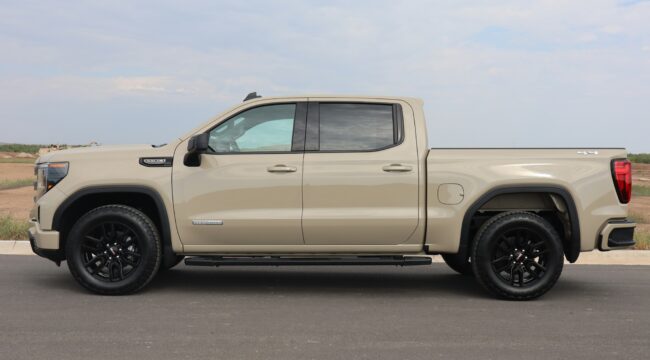
Keeping cargo secure in a pickup bed is not just about owning a strong strap. The strap needs a dependable place to attach, the anchor needs to match the truck, and the entire setup needs to be appropriate for the load you are carrying. That is why the best truck bed tie-down systems are usually a combination of properly rated tie-down points and straps rather than one universal product.
If you are comparing the best truck bed tie down system for your pickup, start by deciding whether you need an integrated setup or separate anchors and straps. The best truck bed tie-downs should match the truck’s actual anchor points, while the best heavy duty truck bed tie downs should be selected from the working-load information of the complete setup. The right setup can be as simple as a set of retractable bed-mounted straps or a pair of additional stake-pocket anchors used with conventional ratchet straps. For owners who regularly haul motorcycles, ATVs, lumber, tools, coolers, appliances, camping equipment, or other loose cargo, having accessible anchor points can make loading faster and more consistent.
For this guide, we looked at current product specifications, Amazon listings, manufacturer information, construction, load ratings, attachment style, installation, fitment, and day-to-day usability. We did not treat marketing language as hands-on testing, and we have not claimed to personally test these products.
One important distinction runs through the entire guide: break strength is not the same as working load limit. A higher break-strength number does not automatically mean that the product should be used at that number. Always follow the manufacturer’s stated working-load information and make sure the complete tie-down setup is appropriate for the cargo, anchor point, truck bed, and hardware.
If you own a compatible Ford pickup with a BoxLink-equipped bed and want an integrated setup, the Rhino USA Bed-Mounted Retractable Ratchet Straps are a particularly useful option because the straps are designed to mount in the bed and retract when not in use. For stake-pocket anchor points, the BullRing 4001-XT provides retractable anchors with a 1,000-pound working-load rating per anchor, subject to fitment. If you need a conventional set of ratchet straps, the AUGO 4-pack is a straightforward 15-foot option, while the Amazon Basics 12-pack makes sense when you want multiple straps available for lighter-duty cargo. For a compact retractable option, the Erickson Pro Series uses two 1-inch by 6-foot straps with a 500 lb working load limit per strap.
- Our Top Picks
- What Is a Truck Bed Tie-Down System?
- Types of Truck Bed Tie-Downs
- How We Chose
- Detailed Reviews
- Anchors vs. Straps: What You Actually Need
- Understanding Working Load and Break Strength
- Truck Bed Fitment and Installation
- How to Choose the Right Setup
- How to Use Truck Bed Tie-Downs Properly
- Maintenance and Replacement
- Frequently Asked Questions
Our Top Picks
These five products cover the main ways pickup owners secure cargo: integrated bed-mounted retractable straps, retractable stake-pocket anchors, conventional heavy-duty ratchet straps, and a larger multi-pack for general cargo. They are not interchangeable, so the right choice depends heavily on your truck and the type of load you carry.
BullRing 4001-XTRetractable stake-pocket anchors
AUGO 4-Pack Ratchet StrapsHeavy-duty general hauling
Amazon Basics 12-PackMultiple light-duty straps
Erickson Pro SeriesRetractable 1-inch tie-down straps
What Is a Truck Bed Tie-Down System?
A truck bed tie-down system is the hardware used to connect cargo to secure anchor points in a pickup bed. In the simplest setup, that means a strap on one end and a factory tie-down hook on the other. More complete systems can include dedicated anchors, retractable ratchets, stake-pocket fittings, track systems, or bed-mounted straps.
The phrase can therefore describe several different products. A set of ratchet straps is not an anchor system by itself, because it still needs a suitable attachment point. Likewise, a set of bed anchors is not a complete cargo-securement setup if you still need separate straps.
This distinction matters when shopping. Someone searching for the best truck bed tie downs may actually need additional anchor points. Another buyer searching for the best truck bed tie down straps may already have strong factory hooks and only need better webbing and ratchets.
The most convenient systems reduce the number of separate pieces you have to store. Bed-mounted retractable straps, for example, stay attached to the truck and can retract into their housings after use. Stake-pocket anchors solve a different problem by giving you accessible attachment points at the bed rail.
For everyday hauling, there is no need to make the setup more complicated than necessary. The goal is to have enough properly rated attachment points, use compatible straps, and keep the system in good condition.
Types of Truck Bed Tie-Downs
Retractable bed-mounted straps
These combine the anchor and strap mechanism into one unit. The base is mounted to the truck, while the strap can be pulled out, attached to the load, tensioned, and retracted when you are finished. This is the most integrated approach in the guide.
The major advantage is convenience. You do not have to keep a loose set of straps in the cab or toolbox, and there is less webbing lying around when the system is not being used. The main limitation is fitment: many bed-mounted retractable systems are designed for particular truck models and factory attachment systems.
Retractable stake-pocket anchors
Stake-pocket anchors replace or supplement the basic attachment points in the top rail of the truck bed. The ring flips up when needed and retracts when you are finished.
This style works well if you already own ratchet straps but want easier-to-reach anchor points. The anchor itself is not the strap, so you still need to select straps with appropriate ratings and hooks for your cargo.
Surface-mounted D-rings
Permanent D-rings can be bolted to the bed floor, side wall, or another suitable structure. They are useful when you need an attachment point in a particular location rather than at an existing stake pocket.
The trade-off is installation. A surface-mounted anchor may require drilling, backing hardware, or access to the underside of the mounting surface. The strength of the finished installation depends on more than the D-ring’s advertised rating; the mounting surface and hardware also matter.
Conventional ratchet straps
Traditional ratchet straps are the most flexible option. They can work with factory hooks, D-rings, stake-pocket anchors, trailer rails, and other compatible attachment points.
They also require more storage and setup than integrated retractable systems. For owners who haul different types of cargo, however, a good set of conventional straps can be more versatile because you can change the number, length, and hook style according to the job.
How We Chose
We focused on the features that determine whether a tie-down setup makes sense for a particular truck and type of cargo.
Attachment design was the first consideration. A retractable bed-mounted strap solves a different problem from a stake-pocket anchor or a loose ratchet strap, so we evaluated each product according to its intended role instead of comparing unrelated specifications as if they were identical.
Load information was another important factor. Where manufacturers or listings provide working-load or break-strength information, we distinguish between the two. Break strength describes a failure threshold and should not be treated as the normal working rating.
Fitment is particularly important for bed-mounted and stake-pocket products. A product that fits one generation of F-150, Silverado, Ram, Tacoma, or another pickup should not be assumed to fit a different generation just because the beds look similar.
Ease of use also matters. A tie-down that is difficult to reach, awkward to tension, or annoying to store may not be used consistently. Retractable systems score well on convenience because the hardware stays with the truck.
Finally, we considered whether the product fills a distinct role in a real truck-bed setup. We did not add products simply to make the list longer, and we did not claim hands-on testing that did not take place.
Detailed Reviews
1. Rhino USA Bed-Mounted Retractable Ratchet Straps — Integrated Ford Setup

The Rhino USA Bed-Mounted Retractable Ratchet Straps take the integrated approach to cargo securement. Instead of carrying a completely separate strap set and looking for attachment points every time you load the truck, the two retractable straps are designed to mount directly in compatible Ford truck beds.
The Amazon listing identifies this system for 2015 and newer Ford F-150 models and 2017 and newer Ford F-250 applications with compatible BoxLink mounting. That fitment restriction is one of the most important details to check before ordering. This is not a universal truck bed tie-down system.
The straps use an auto-retracting mechanism, which keeps excess webbing contained when the system is not being used. Rhino USA also lists 360-degree swivel capability, removable hardware, weather protection, and a lifetime replacement program. The listed strap size is 1 inch by 9 feet for the two-pack.
For a Ford owner who regularly hauls cargo, the integrated format can be more convenient than storing loose ratchet straps. You can pull the strap out when needed, position the hook or soft-loop attachment appropriately, tension the load, and retract the webbing after unloading.
The main reason not to buy this system is simply compatibility. If your truck does not have the required mounting arrangement, the retractable design does not give you an advantage. A universal strap set or separate anchor system would make more sense.
Who should consider it?
Consider it if you have a compatible Ford F-150 or F-250 with the required BoxLink-style mounting and want a cleaner, more permanent tie-down setup. It is especially relevant for people who secure cargo frequently and want to reduce loose strap storage.
Pros
- Integrated bed-mounted design
- Auto-retracting webbing
- 360-degree swivel design
- Removable and weather-protected system
- Useful for frequent cargo hauling
- Lifetime replacement program listed by Rhino USA
Cons
- Vehicle-specific fitment
- Designed around compatible Ford BoxLink beds
- Only two straps are included
- Higher upfront cost than basic loose straps
2. BullRing 4001-XT — Retractable Stake-Pocket Tie-Down Anchors

The BullRing 4001-XT takes a different route from the Rhino bed-mounted system. Instead of permanently carrying the strap itself, it provides retractable anchor points that sit in compatible truck-bed stake pockets. You then use your own ratchet straps, rope, or other suitable cargo restraints with those anchors.
The 4001-XT is a raised-fit design intended for specific older Ford, Chevrolet, GMC, and Ram applications. BullRing’s current fitment information lists applications including 1998–2014 Ford F-150, 1998–2016 Ford F-250/F-350 Super Duty, 1993–2011 Ford Ranger, 1999–2013 Chevrolet Silverado and GMC Sierra, and 1995–2008 Ram models. Because the exact bed configuration matters, the manufacturer’s fitment guide should be checked before ordering.
BullRing lists a 1,000-pound safe working load and 3,000-pound minimum break strength per anchor. Those figures are useful for understanding the product, but they do not mean a truck bed can safely handle any cargo up to those numbers. The complete setup includes the truck bed, stake pocket, anchor, strap, hook, and cargo, and the limiting component still matters.
The retractable ring is useful because it can stay out of the way when it is not needed. When raised, it provides a more accessible attachment point near the top rail. When lowered, it creates a cleaner bed rail with less hardware protruding into the cargo area.
Installation is generally intended to use existing stake-pocket locations rather than drilling a new anchor point. Some applications can have rail-cap or pocket-access considerations, so the exact installation instructions should be followed.
Who should consider it?
This is a good fit for truck owners who already own ratchet straps and want better or more accessible anchor points without installing a full track system. It is particularly useful when the factory bed hooks are inconveniently positioned.
Pros
- Retractable stake-pocket design
- 1,000-pound safe working load listed per anchor
- Uses existing stake-pocket locations on compatible trucks
- Stainless steel ring and chassis
- Low-profile appearance when retracted
- Lifetime warranty listed by BullRing
Cons
- Fitment is vehicle and generation specific
- It is an anchor set, not a complete strap system
- Raised-fit design is not interchangeable with every BullRing profile
- Some applications can require rail-cap access or trimming
3. AUGO Ratchet Straps Heavy Duty 4-Pack — General-Purpose Hauling

The AUGO 4-pack is a conventional ratchet-strap setup rather than a truck-specific anchor. That makes it much more flexible than vehicle-specific bed-mounted systems, provided your truck already has compatible attachment points.
The Amazon listing identifies the set as four 1-inch by 15-foot ratchet straps with a listed 2,200-pound break strength. It also includes safety-lock S-hooks and soft-loop tie-down straps. The manufacturer positions the straps for uses including trucks, trailers, motorcycles, appliances, moving, and other cargo.
The 15-foot length is practical for a pickup because it gives you room to route the webbing around larger objects without requiring an excessively long strap. At the same time, 1-inch webbing is easier to handle than many larger commercial straps.
Soft loops are particularly useful when you need to secure cargo without placing a metal hook directly against a painted or delicate attachment point. They can also make it easier to create a suitable connection around equipment where a standard S-hook is awkward.
One thing to keep in mind is the difference between the advertised break strength and the working load. The 2,200-pound figure is a break-strength number. It should not be interpreted as the amount of cargo that one strap can automatically secure. Follow the manufacturer’s working-load information and applicable cargo-securement guidance for the actual load.
Who should consider it?
The AUGO set is a practical option for owners who want a conventional set of truck bed tie down straps that can be moved between different attachment points. It is also useful as a secondary strap set if you already have a more permanent anchor system installed.
Pros
- Four 15-foot straps
- Listed 2,200-pound break strength
- Safety-lock S-hooks
- Soft loops included
- Works with many common truck and trailer applications
- Easy to store when not in use
Cons
- Requires suitable truck-bed anchor points
- 1-inch webbing is not a substitute for commercial heavy-load equipment
- Break strength should not be confused with working load
- Loose straps need to be stored and inspected between uses
4. Amazon Basics 1-Inch x 15-Foot Ratchet Tie-Down Straps — 12-Pack

The Amazon Basics 12-pack takes the simple multi-strap approach. Rather than being a specialized truck bed anchor or retractable system, it gives you a large number of conventional ratchet straps to keep available for moving, organizing, and securing lighter cargo.
The listed configuration is 1 inch wide and 15 feet long, with a 500-pound load capacity and 1,500-pound break strength per strap. The set contains 12 straps, which can be useful if you regularly have several pieces of cargo to secure or want spares available in the truck, garage, or workshop.
The larger quantity is the main attraction. A pickup owner does not necessarily need twelve straps for every trip, but having multiple straps available can be convenient when the load changes from one job to another. It can also make sense for someone who uses the truck for moving boxes, yard equipment, furniture, or other relatively light cargo.
The 500-pound listed load capacity is important because it places this product in a different category from some heavier-duty commercial tie-down assemblies. Buyers should not choose a strap based only on its break-strength number. Match the working-load information to the cargo and use enough properly rated tie-downs for the job.
Who should consider it?
This set is best suited to truck owners who value quantity and versatility for lighter-duty hauling. It is less compelling if you only need two or four premium straps for a specific heavy load.
Pros
- 12 straps in one set
- 15-foot length
- 500-pound listed load capacity per strap
- 1,500-pound listed break strength per strap
- Useful for general cargo and moving tasks
- Easy to keep spare straps available
Cons
- Lower load capacity than some heavier-duty options
- Requires separate truck-bed anchor points
- Large 12-pack may be unnecessary for occasional users
- Not an integrated retractable system
5. Erickson Pro Series Ratcheting Tie-Down Straps — Retractable Option
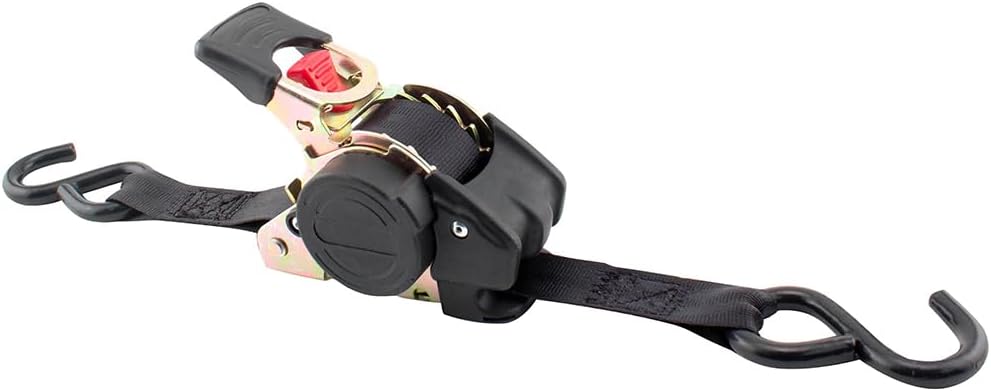
The Erickson Pro Series uses a retractable ratcheting design that stores unused webbing inside the housing. That makes the straps easier to keep organized while reducing loose webbing that can flap around during transport.
Amazon lists this version as a two-pack of black 1-inch by 6-foot straps. Each strap has a 500 lb working load limit and 1,500 lb load capacity, with vinyl-coated hooks intended to help protect contact surfaces.
The main advantage is compact storage. When the strap is not fully extended, the unused webbing stays contained in the housing rather than hanging loose in the truck bed or trailer.
As with every tie-down in this guide, the published load information should be checked against the actual cargo and the complete attachment system. A specialized strap does not make an unsuitable anchor point safe.
Who should consider it?
Consider this set if you want retractable straps for smaller or moderate loads and prefer a compact setup that is easy to store. The 6-foot length is better suited to relatively short tie-down runs than oversized cargo.
Pros
- Compact 1-inch x 6-foot format
- Retractable storage design
- 500 lb working load limit per strap
- Vinyl-coated hooks
- Easy to store when not in use
Cons
- Short 6-foot strap length
- Not intended for the heaviest commercial loads
- Still requires properly rated anchor points
- Capacity is lower than many 2-inch heavy-duty straps
Anchors vs. Straps: What You Actually Need
One of the easiest mistakes when shopping for truck bed tie-downs is treating an anchor and a strap as the same product.
An anchor is the fixed attachment point. It may be a factory hook, a stake-pocket ring, a D-ring, an L-track fitting, or a bed-mounted retractable mechanism.
A strap is the flexible restraint that wraps around or over the cargo and connects to those anchors. Ratchet straps add a mechanism that lets you tighten the webbing and maintain tension.
If your factory truck already has strong, conveniently located anchors, you may only need better straps. If the factory hooks are too low, too few, or poorly positioned, adding retractable anchors can make more sense.
A complete setup can therefore look like this:
- Factory or aftermarket bed anchors
- Ratchet straps with compatible hooks
- Soft loops when appropriate for the cargo
- Corner or edge protection where the webbing contacts sharp surfaces
- Enough tie-down points and straps for the cargo being secured
For people who want the fewest loose parts, a bed-mounted retractable system combines several of these functions. For people who want maximum flexibility, separate anchors and conventional straps are easier to change or replace independently.
Understanding Working Load and Break Strength
Load ratings are one of the most important parts of choosing tie-down equipment, but product listings can make the numbers confusing.
Break strength
Break strength, sometimes called minimum breaking strength, describes the force at which a component or assembly fails under a specified test condition. It is not a recommended everyday working load.
Working load
A working load limit is the rating intended for normal use under the manufacturer’s specified conditions. When a product provides a working-load number, that is much more useful for planning a real cargo-securement setup than simply looking at the breaking strength.
The complete system matters
A strap is only one part of the system. Imagine a high-strength strap connected to a weak factory hook or an inadequately mounted aftermarket D-ring. The weakest component can determine what the overall setup can safely handle.
The same applies to the truck bed itself. An anchor with a high published rating does not magically increase the strength of a thin or damaged mounting area. The anchor, fastener, bed structure, strap, hooks, and cargo all need to be appropriate for the job.
For heavy or unusual loads, use the manufacturer’s instructions and applicable cargo-securement requirements rather than estimating a safe load from a product’s break-strength number.
Truck Bed Fitment and Installation
Fitment is especially important with truck bed anchor systems. Pickup beds can change significantly between generations, and even two trucks with similar dimensions can use different stake-pocket shapes or factory cargo systems.
Check the exact year, make, and model
Do not assume that an anchor listed for a 2015–2024 truck automatically fits a 2025 or newer version. Verify the application against the manufacturer’s current fitment information.
Check the bed configuration
Look at the actual bed rather than relying only on the truck’s trim name. Bed length, rail caps, factory tie-down packages, liners, BoxLink systems, and other accessories can change the installation.
Inspect the attachment point
Before installing or using an anchor, inspect the mounting area for damage, corrosion, loose hardware, or modifications. An aftermarket anchor cannot compensate for a compromised mounting location.
Test clearance before final tightening
For retractable anchors and bed-mounted systems, operate the mechanism before loading cargo. Make sure the ring or strap can move through its full intended range and does not interfere with a tonneau cover, bed rack, toolbox, liner, or other accessory.
Do not improvise structural modifications
If an installation requires drilling, trimming, or backing hardware, follow the product’s instructions. Avoid creating a new anchor point by simply drilling into a convenient piece of sheet metal without understanding what is behind it and whether the structure is suitable.
How to Choose the Right Setup
Choose an integrated system for frequent hauling
If you secure cargo several times a week, an integrated bed-mounted retractable system can reduce setup time and storage clutter. The convenience is most valuable when the product fits your truck without modification beyond its intended installation.
Choose retractable anchors if you already own straps
If your current ratchet straps are in good condition but the factory anchor locations are inconvenient, retractable stake-pocket anchors can be the missing part of the setup. You get better access without replacing all your straps.
Choose conventional ratchet straps for flexibility
Loose ratchet straps are useful when you haul different types of cargo. You can change the number and arrangement of straps depending on the load, and replacing one damaged strap does not require replacing the entire anchor system.
Choose a larger multi-pack for light general use
If your truck is frequently used for moving boxes, yard equipment, furniture, and other lighter cargo, a multi-pack can be convenient. The important point is to stay within the product’s load information and use enough suitable straps.
Consider the hook style
S-hooks, J-hooks, flat hooks, snap hooks, and other end fittings are designed for different attachment points. Make sure the hook can fully engage the anchor without sitting in a way that could allow it to detach under movement.
Consider strap length
Ten feet can be enough for compact loads, while 15 feet gives you more flexibility around large objects. Extra length is not automatically better, though. Excess webbing should be controlled so it cannot flap into moving parts, the road, or another part of the truck.
Think about cargo protection
Strong straps can still damage cargo if the webbing passes over sharp corners or delicate surfaces. Use appropriate edge protection, soft loops, or other protective methods where necessary.
How to Use Truck Bed Tie-Downs Properly
Start by positioning the cargo so that it is stable before the straps are tensioned. The straps should restrain movement rather than compensate for cargo that is poorly positioned.
Attach each hook or fitting fully to a suitable anchor. If you are using soft loops, make sure the loop is positioned correctly and does not create an unintended sharp bend or pinch point.
Route the strap over or around the cargo according to the requirements of the load. Avoid placing the webbing over sharp edges without protection, and keep the strap away from hot exhaust components, moving parts, and areas where it could be cut or abraded.
Use the ratchet to remove slack and create the necessary tension. Do not treat maximum possible ratchet force as the goal. Over-tightening can damage cargo, deform equipment, or place unnecessary stress on anchor points.
After tightening, inspect every connection. The hook should be properly seated, the strap should lie flat where possible, and excess webbing should be secured.
Recheck the load after driving a short distance, especially if the cargo is large, flexible, or likely to settle. Long trips and changing conditions can also justify periodic checks.
When unloading, release the ratchet carefully and inspect the webbing before putting the straps away. Damaged straps should not be kept in service simply because they still appear to tighten.
Maintenance and Replacement
Tie-down equipment spends much of its life exposed to dirt, moisture, road spray, sunlight, and abrasion. Regular inspection is therefore more important than simply buying a product with a high advertised rating.
Inspect the webbing
Look for cuts, fraying, melted areas, severe abrasion, chemical damage, or other changes in the fabric. If the webbing has significant damage, replace the strap rather than trying to repair it.
Check hooks and ratchets
Hooks should not be badly bent, cracked, or excessively worn. Ratchet mechanisms should operate smoothly and lock properly. A stiff or damaged mechanism is a reason to inspect or replace the strap.
Keep retractable systems clean
Retractable anchors and bed-mounted ratchets can collect dust and grit. Keep the mechanism clean and follow the manufacturer’s maintenance instructions rather than flooding the housing with lubricant or cleaner that the manufacturer does not recommend.
Inspect fixed anchors
Check bolts, screws, stake-pocket fittings, and mounting surfaces periodically. If an anchor begins to move, rattle, or sit differently from normal, stop using it until the mounting is inspected.
Store loose straps correctly
Roll or bundle loose straps so they do not become tangled. Store them somewhere dry and protected from unnecessary UV exposure when possible. Keeping straps away from sharp tools and chemicals can also extend their usable life.
Frequently Asked Questions
What is the best truck bed tie-down system?
The answer depends on whether you need anchors, straps, or an integrated setup. A bed-mounted retractable system is convenient for compatible trucks, while separate retractable anchors and conventional ratchet straps are more flexible across different truck configurations.
What are the best truck bed tie downs?
Retractable stake-pocket anchors such as the BullRing 4001-XT are useful when you want additional accessible attachment points on a compatible truck. If you already have suitable factory anchors, you may not need aftermarket anchors at all.
What are the best truck bed tie-down straps?
For conventional straps, look at the load information, length, hook style, webbing width, ratchet mechanism, and included soft loops. The AUGO 4-pack and Amazon Basics multi-pack illustrate two different approaches to general-purpose hauling.
What are the best truck bed tie down anchors?
Retractable stake-pocket anchors are a convenient option when your truck has compatible pockets and you want the anchor to stay out of the way when unused. Always verify the exact vehicle fitment before ordering.
What are the best heavy-duty truck bed tie downs?
There is no single rating that makes a tie-down universally heavy-duty. Look at the working-load information for the complete assembly and make sure the anchor, strap, hook, mounting surface, and truck bed are all appropriate for the cargo.
What are the best retractable truck bed tie downs?
Retractable products fall into two main groups: bed-mounted retractable straps and retractable anchor rings. The Rhino USA bed-mounted system is designed for specific Ford applications, while the BullRing 4001-XT provides retractable stake-pocket anchors for its listed vehicle applications.
What is the best truck bed anchor system?
That depends on where you need your attachment points. Stake-pocket anchors are convenient near the bed rails, while surface-mounted D-rings or track systems can provide more positioning flexibility when properly installed.
What are the best ratchet tie downs for trucks?
For general pickup use, choose straps based on the cargo rather than the product’s marketing headline. Length, working load, hook style, webbing condition, and compatibility with the truck’s anchor points are all important.
Are truck bed tie-down anchors universal?
No. Some anchors are designed for specific truck years and bed configurations. Even products described as universal can have installation limitations. Check the exact dimensions and fitment information before ordering.
Is a higher break strength always better?
No. Break strength is not the same as working load. A tie-down should be selected and used according to the manufacturer’s working-load information and the requirements of the cargo-securement application.
Can I use ratchet straps with factory truck bed hooks?
Usually, provided the hooks and factory anchor points are suitable for the cargo and the strap’s end fitting can engage them properly. Inspect the factory hardware and follow the truck and strap manufacturer’s guidance.
How many tie-down straps do I need for a truck bed?
It depends on the cargo, its dimensions, weight, and the applicable cargo-securement requirements. Do not choose the number of straps simply because a particular kit contains four or twelve pieces. Use enough appropriately rated restraints for the load.
Should I buy retractable or traditional tie-down straps?
Retractable straps are convenient and reduce loose-webbing storage, but they can be vehicle-specific. Traditional straps are more portable and can be used with different anchor points. Your truck and hauling routine should determine which format makes more sense.
How do I keep truck bed tie-down straps from getting damaged?
Keep them away from sharp edges, hot components, chemicals, and excessive abrasion. Inspect the webbing regularly and replace straps that show significant cuts, fraying, melting, or other damage.
Final Thoughts
The best truck bed tie-down system is the one that matches your truck, your cargo, and the way you actually use the pickup. Some owners will benefit from a permanently mounted retractable setup, while others will get more flexibility from separate anchors and conventional ratchet straps.
Before buying, check the exact truck fitment, understand the difference between working load and break strength, inspect the mounting points, and make sure the straps you choose can properly connect to the anchors already in your bed. A little attention to those details can prevent an otherwise good tie-down product from becoming the wrong accessory for your truck.
If you want an integrated option for a compatible Ford bed, the Rhino USA Bed-Mounted Retractable Ratchet Straps are a useful example of how an anchor and strap can be combined into one setup.
For everyone else, the priority is simple: use sound anchor points, appropriately rated restraints, and equipment that is in good condition. A well-planned tie-down setup should make hauling cargo more predictable without adding unnecessary complexity to the truck.