A pickup truck is useful precisely because it can carry things that would be awkward or impossible to fit inside a car. The problem starts when the cargo is longer than the bed. Ladders, kayaks, canoes, lumber, conduit, trim boards and other long materials can extend well beyond the tailgate, leaving you with limited support and a setup that needs careful tie-downs.
A truck bed extender gives that extra length a more deliberate support point. Some models slide into a 2-inch hitch receiver and extend several feet behind the truck. Others mount inside the bed and swing over the open tailgate, creating a contained extension while keeping the receiver available for towing.
Those two approaches are quite different in everyday use. A hitch-mounted extender is usually more universal and can be moved from one vehicle to another with the right receiver. A bed-mounted design can feel more integrated and may work better when you already have a trailer hitch occupied by towing equipment. The right choice therefore depends less on a generic “best” label and more on the type of cargo you carry, how long it is, and what other accessories are already installed on your truck.
For this guide, we compared current product information from manufacturers and Amazon listings, looking at mounting style, supported load, adjustment range, construction, cargo support, installation, and compatibility with common truck setups. We did not treat manufacturer descriptions as hands-on testing, and we have not claimed to personally test these products.
Before ordering, check the exact product configuration and your truck’s receiver size, bed dimensions, payload limits, and other equipment. A bed extender can add useful support, but it does not increase the truck’s underlying payload capacity.
For a straightforward hitch-mounted option, the MaxxHaul 70231 combines adjustable width and height with a steel frame and a 2-inch receiver fit. The ECOTRIC 750 lb Truck Bed Extender is another hitch-mounted design with a higher stated capacity. The Lund 601021 HitchHand combines a hitch-mounted frame with adjustable wings and a fold-down work support. For long outdoor loads such as kayaks and boards, the lightweight aluminum Yakima LongArm adds up to four feet of support. If you prefer an in-bed design that uses the open tailgate as part of the extended cargo area, the AMP Research BedXTender HD Max is a different type of solution.
Our Top Picks
These five products cover the main ways truck owners add supported length behind or around the tailgate. The lineup includes adjustable steel hitch-mounted extenders, a lightweight aluminum option for outdoor gear, and an in-bed extender for owners who want to keep the trailer receiver available.
ECOTRIC 750 lbHeavy-duty hitch-mounted option
Lund 601021 HitchHandAdjustable hitch and work support
Yakima LongArmLightweight aluminum long-load support
AMP Research BedXTender HD MaxIn-bed tailgate extender
Types of Truck Bed Extenders
Truck bed extenders generally fall into a few recognizable designs. Understanding the mounting method first makes the rest of the buying decision much easier.
Hitch-Mounted Extenders
Hitch-mounted models slide into the truck’s receiver and place a support frame behind the bumper. They are popular because the same basic design can work across many trucks with a compatible receiver. Height and width adjustments are common, allowing the crossbar to line up more closely with the bed or the shape of the load.
The main trade-off is receiver access. Once the extender is installed, it occupies the hitch that you might otherwise use for a trailer, bike rack, cargo carrier, or another hitch accessory. If towing is part of the same trip, that limitation matters.
Bed-Rail or In-Bed Extenders
Bed-mounted designs attach inside the truck bed and usually swing outward over the lowered tailgate. They create a short extension at the rear of the bed without occupying the receiver. This can be useful for owners who tow regularly or who already have a hitch-mounted accessory.
These products are generally more dependent on the truck’s exact bed configuration. The mounting brackets need to line up with the bed rails or supplied hardware, so vehicle-specific fitment is more important than it is with many universal hitch models.
Multi-Position Extenders
Some hitch-mounted products can be positioned at several heights. A lower setting can support cargo at roughly bed or tailgate height, while a higher position can support long items above the bed rails. Certain systems can also be used near cab height when combined with an additional extension or rack.
This flexibility is useful when one truck handles different types of cargo. It also means the setup needs to be adjusted carefully for each load rather than simply left in one position for every job.
Kayak and Outdoor-Load Extenders
Outdoor-oriented extenders often use lighter aluminum construction and a wide crossbar. They are designed around long, relatively narrow loads such as kayaks, canoes, paddle boards, ladders, and lumber. Integrated tie-down points can make load securing easier.
These models can be excellent when weight matters, but the stated capacity can change with the height position. Always use the manufacturer’s rating for the exact configuration you are using.
Which Type Should You Choose?
Choose a hitch-mounted extender if you want flexibility
A hitch-mounted model is usually the simplest starting point for someone who wants one accessory that can support different long loads. It can be removed when the truck needs its receiver for another purpose, and many models offer adjustable width and height.
Choose an in-bed extender if you need to keep the hitch free
If you tow a trailer frequently, a receiver-mounted extender may create an immediate conflict. An in-bed design can leave the receiver available while still giving long cargo additional support over the tailgate.
Choose a wide, lightweight design for kayaks and boards
Kayaks, canoes and paddle boards benefit from a broad support surface. A product such as the Yakima LongArm uses a 60-inch crossbar and aluminum construction, which can be easier to handle than a heavier steel frame.
Choose a heavy-duty steel model for general work loads
If your truck routinely carries lumber, ladders, pipes or other job-site materials, a steel extender with adjustable support points can be more practical. Pay attention to the actual load rating, receiver class and the way the manufacturer defines the capacity.
Choose an in-bed swing-out design for contained cargo
An in-bed extender such as the AMP Research design can create a contained area when the tailgate is down and can be rotated inward when you want the tailgate closed. It is a different concept from a four-foot hitch extension and is better suited to owners who want short additional length at the back of the bed.
How We Chose
We focused on the characteristics that determine whether an extender is useful once it is installed on the truck, rather than selecting products simply because they appear frequently in search results.
- Mounting method: hitch-mounted versus in-bed designs and what each requires.
- Load capacity: the manufacturer’s stated capacity for the relevant position or configuration.
- Adjustment: available height, width and position changes.
- Construction: steel, aluminum and other materials used in the main support structure.
- Long-load support: how the product supports lumber, ladders, kayaks, pipes and similar cargo.
- Installation: receiver requirements, hardware and whether drilling or vehicle-specific mounting is involved.
- Access to other equipment: whether the extender leaves a hitch, tonneau cover or bed accessory usable.
- Practicality: removal, storage, tie-down points and visibility features.
We also prioritized products with clearly identifiable Amazon listings and verified the ASINs used in the links below. Product availability and configurations can change, so the Amazon listing should be checked again before purchase.
Detailed Reviews
1. MaxxHaul 70231 Hitch Mount Truck Bed Extender — Adjustable General-Purpose Option

The MaxxHaul 70231 is built around a straightforward idea: use the truck’s 2-inch receiver to create another support point behind the tailgate. Its steel frame can be adjusted for width and height, giving it more flexibility than a fixed crossbar.
The manufacturer lists a 300-pound load capacity and describes the product for ladders, racks, canoes, kayaks, long pipes and lumber. The width adjusts from 28-1/4 to 48-3/4 inches, while the height can be adjusted for different applications. Four quick-release clevis pins make assembly and disassembly relatively simple.
One useful feature is the fold-down side arms. In addition to helping contain a load, they can form a small work surface when the extender is configured for that use. Reflective tape and a supplied red flag are also intended to improve visibility around an overhanging load.
The main limitation is the hitch itself. The 70231 occupies the 2-inch receiver, so it is not a solution for a trip where the same receiver must simultaneously carry a trailer or another hitch accessory. The manufacturer also notes that the hitch pin is sold separately.
Who should consider it?
- Truck owners wanting an adjustable general-purpose hitch extender
- DIY users carrying lumber, ladders or long materials
- Owners who want removable support rather than a permanent bed installation
- Drivers who need width adjustment for different cargo
Who may want something else?
If keeping the receiver available is important, an in-bed extender may make more sense. If you mainly haul lightweight kayaks and want to minimize accessory weight, an aluminum design is worth considering.
Pros
- Adjustable width and height
- 2-inch receiver fit
- Steel construction
- Quick-release assembly
- Reflective safety features and fold-down arms
Cons
- Uses the truck’s hitch receiver
- Hitch pin is not included
- Heavier than aluminum alternatives
- Capacity still depends on the overall truck and load setup
2. ECOTRIC 750 lb Truck Bed Extender — Higher-Capacity Hitch-Mounted Design

The ECOTRIC hitch-mounted extender takes the adjustable steel-frame approach and gives it a higher stated distributed capacity than many entry-level models. The current Amazon listing identifies it as a 750-pound-capacity extender for applications including lumber, ladders, canoes, boats, kayaks and long pipes.
Its broad support structure can be adjusted to suit different cargo widths, and the hitch-mounted design makes it useful for trucks, SUVs and other vehicles equipped with a compatible receiver. A safety flag is included for loads that extend beyond the normal rear profile of the vehicle.
A higher product rating should not be confused with permission to carry any 750-pound load you can physically place on the frame. The vehicle’s payload, receiver rating, cargo position and the manufacturer’s instructions still apply. Long, concentrated or poorly secured loads can create forces that are very different from a static distributed weight.
The ECOTRIC is therefore most interesting for owners who need a more substantial hitch-mounted platform and understand that the extender’s rating is only one part of the complete hauling setup.
Who should consider it?
- Users who want a heavy-duty hitch-mounted frame
- Owners carrying long construction materials
- Drivers who need adjustable support for different load widths
- People who prefer a removable receiver-mounted solution
Who may want something else?
For lighter outdoor loads, an aluminum extender can be easier to handle. For regular towing, consider an in-bed design so the trailer receiver remains available.
Pros
- 750-pound stated distributed capacity
- Adjustable hitch-mounted design
- Steel construction
- Useful for a wide range of long cargo
- Safety flag included
Cons
- Occupies the receiver
- Heavier than aluminum designs
- Higher capacity does not increase the truck’s payload rating
- Exact receiver and vehicle compatibility still needs to be confirmed
3. Lund 601021 HitchHand — Adjustable Extender With Work-Support Function
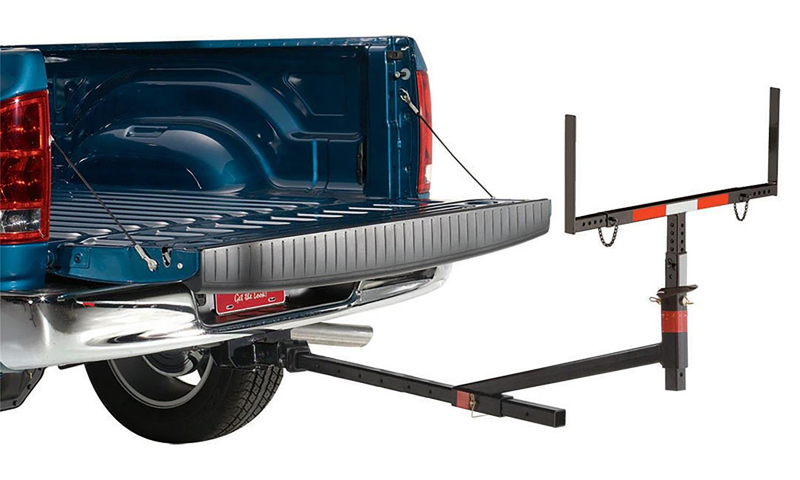
The Lund 601021 HitchHand is another hitch-mounted option, but its design adds a useful secondary purpose. In addition to extending the supported cargo area behind the truck, the adjustable side wings can fold down to create a portable sawhorse-style work support.
The product is designed for a standard 2-inch receiver and is listed with a 750-pound distributed load capacity. The wings adjust from approximately 27 to 49 inches, giving the frame room to accommodate different cargo widths. The design also adds ground clearance compared with some simpler receiver-mounted bars.
This makes the Lund interesting for people who use their truck for projects rather than only for recreational hauling. A contractor or DIY user may need an extender on the way home from a lumber yard and then want a temporary support surface once the material is unloaded.
As with other hitch-mounted products, the receiver is occupied during use. The frame also adds weight behind the truck, so it is worth considering where you will store it when the truck is being used for ordinary driving.
Who should consider it?
- DIY users who value a work-support function
- Owners carrying lumber and building materials
- Drivers who want adjustable side wings
- Users looking for a higher-capacity universal hitch-mounted design
Who may want something else?
If your main goal is transporting kayaks or paddle boards, the lighter Yakima design may be easier to handle. If you tow frequently, look at an in-bed extender instead.
Pros
- 750-pound distributed capacity
- Adjustable 27- to 49-inch wings
- Can function as a work support
- Fits a standard 2-inch receiver
- Useful for construction and DIY hauling
Cons
- Uses the hitch receiver
- More substantial than lightweight outdoor extenders
- Not designed as a permanent enclosed cargo system
- Long-load safety still depends on proper tie-downs
4. Yakima LongArm — Lightweight Aluminum Extender for Kayaks, Boards and Lumber
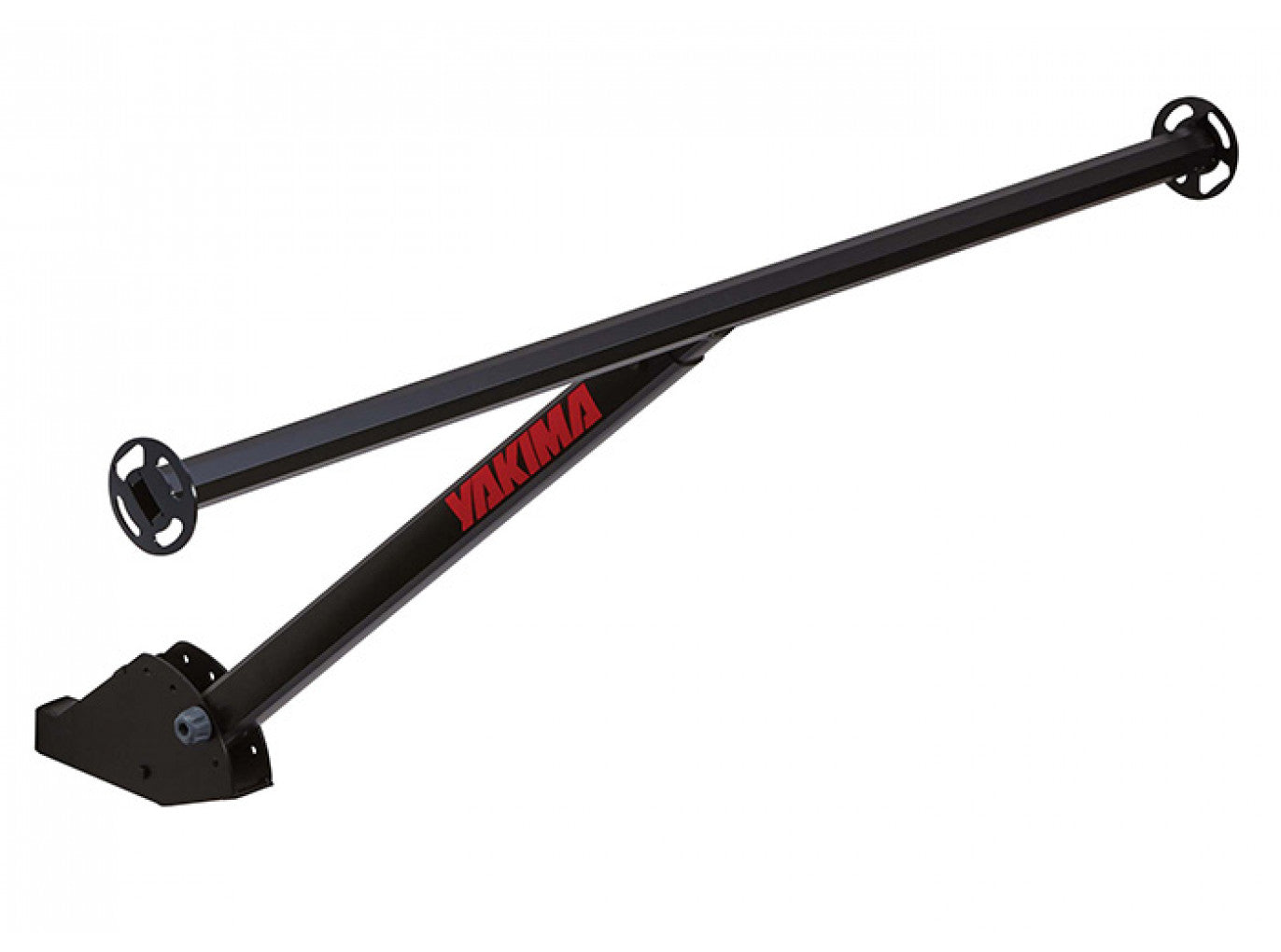
The Yakima LongArm takes a different approach from the heavy steel hitch racks. It uses aluminum construction and a 60-inch-wide crossbar to support long loads up to four feet beyond the truck bed. The manufacturer lists a 300-pound capacity in the lower positions and a 165-pound capacity when the system is raised to cab height with the appropriate extension.
Three main carrying positions give it more flexibility than a simple rear bar. At bed height it can support a load with the tailgate open. At bed-rail height it can work with compatible rack or tonneau-cover setups, and with the additional height extension it can support long gear toward the cab roof.
The LongArm is particularly well suited to kayaks, canoes, paddle boards, ladders and similar long objects. Its aluminum construction also keeps the unit relatively light, which matters when you are removing it from the truck after a trip.
There is a practical difference between the LongArm and a conventional heavy steel extender. The Yakima is designed around broad crossbar support and multiple carrying positions, rather than maximum general-purpose frame mass. If your typical load is a kayak or board, that can be an advantage. If you routinely carry dense construction materials, a heavier steel platform may be more appropriate.
Who should consider it?
- Kayak and canoe owners
- Paddle-board and outdoor-gear users
- Drivers who want a lighter extender
- Owners who need multiple load heights
- Users who want up to four feet of additional support
Who may want something else?
If your main concern is very heavy construction cargo, compare the steel options and their ratings. Also remember that the highest carrying position has a lower capacity than the lower positions.
Pros
- Up to four feet of additional support
- Lightweight aluminum construction
- 60-inch crossbar
- Multiple carrying positions
- Integrated tie-down points
Cons
- Lower capacity at the tallest position
- Uses the 2-inch hitch receiver
- Additional height extension is separate
- Not the most appropriate design for every heavy construction load
5. AMP Research BedXTender HD Max — In-Bed Extender That Leaves the Hitch Free
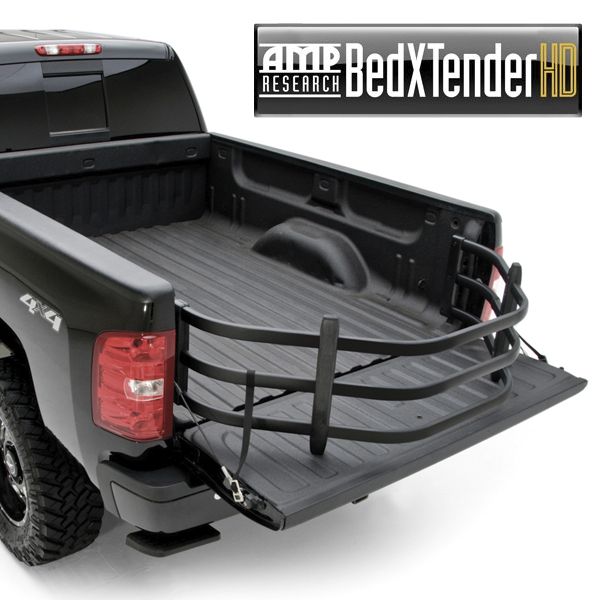
The AMP Research BedXTender HD Max is the outlier in this group because it does not slide into the hitch receiver. It mounts inside the truck bed and swings over the open tailgate, creating an enclosed extension area at the rear of the bed.
The U-shaped design is intended to use the tailgate as part of the extended cargo surface. With the tailgate down, the extender can provide up to about two feet of additional enclosed bed length. Rotated inward, the frame can also act as a barrier that helps contain cargo inside the bed.
That makes the AMP Research design interesting for truck owners who already use the receiver for towing. It also gives the product a more integrated appearance than a large hitch rack hanging behind the bumper.
The trade-off is fitment. The BedXTender HD Max is sold in vehicle-specific configurations, so you need to select the correct version for your truck rather than treating the product as a universal accessory. Bed-rail hardware and tonneau-cover clearance can also matter.
Who should consider it?
- Truck owners who want to keep the receiver free
- Drivers who like an in-bed, integrated design
- Owners carrying bikes, tools or shorter oversized cargo
- Users who want an extender that can also help contain cargo with the tailgate closed
Who may want something else?
If you need four feet of support for a long kayak or lumber, a hitch-mounted extender is more suitable. The AMP design is about extending the rear of the bed by a shorter distance and creating containment.
Pros
- Does not occupy the trailer hitch
- Provides up to about two feet of enclosed extension
- Can rotate inward for cargo containment
- Aluminum construction
- Vehicle-specific fit can provide a more integrated installation
Cons
- Requires correct vehicle-specific configuration
- Less extension than four-foot hitch designs
- Bed-rail and cover clearance must be checked
- Not intended as a universal hitch solution
Best Truck Bed Extender for Lumber, Kayaks and Long Loads
The right extender changes depending on the shape and weight of the cargo. There is a meaningful difference between carrying a bundle of lumber and carrying a long kayak, even when both items extend beyond the tailgate.
For lumber and construction materials
Lumber benefits from a wide, stable support point and plenty of places to secure straps. A steel hitch-mounted model such as the MaxxHaul 70231 or the higher-capacity ECOTRIC and Lund designs can make sense for general construction use. The key is to support the material at an appropriate height and secure the front and rear of the load so it cannot shift sideways or lift.
Do not assume that the extender’s maximum number is the amount of lumber your truck can carry. The truck’s payload rating, receiver rating, axle loading and the actual distribution of the material still apply.
For kayaks and canoes
Kayaks are long but relatively narrow, so a wide crossbar and appropriate tie-down points are more useful than a large steel containment frame. The Yakima LongArm is designed around this kind of load and offers multiple height positions. A hitch-mounted steel extender can also work, especially when the goal is simply to support the stern of a kayak behind a short bed.
For ladders and pipes
Ladders and pipes often benefit from adjustable height. If the support is too low or too high relative to the bed, the load can sit at an awkward angle. A multi-position extender gives you more room to line the cargo up, but you still need to check clearance around the cab and any roof-mounted equipment.
For occasional oversized cargo
If long loads are an occasional problem rather than a daily routine, a removable hitch-mounted extender is usually easier to justify than a permanent bed accessory. You can install it for a project and remove it when the truck returns to normal duties.
What to Consider Before Buying
Confirm the receiver size
Most of the hitch-mounted products in this category are designed for a standard 2-inch receiver, but you should confirm your truck before ordering. A receiver adapter can change the setup and may introduce additional considerations, so direct compatibility is preferable when possible.
Check the receiver’s own rating
An extender’s advertised capacity does not override the rating of your truck’s hitch receiver. Check the receiver label or vehicle documentation and use the lowest applicable limit.
Know your truck’s payload limit
Payload includes the cargo and accessories carried by the truck. A bed extender does not give the truck a higher payload rating. Long loads can also create leverage that changes the way weight is distributed across the vehicle.
Measure the bed height
The support bar needs to sit at a useful height relative to the truck bed. Measure from the receiver or bed surface according to the manufacturer’s instructions rather than estimating from photographs.
Measure the cargo width
Lumber bundles, kayaks and ladders all have different widths. An adjustable crossbar can make the setup more adaptable, but the available width still has limits.
Think about the extension distance
Some in-bed extenders add around two feet of supported length, while hitch-mounted designs can provide substantially more. Decide how much additional support you actually need before paying for a larger frame.
Check tonneau-cover compatibility
A hitch-mounted extender usually sits outside the bed and may work alongside a tonneau cover, but the load can still contact the cover or rails. Some multi-position systems specifically support use at bed-rail height. Measure the clearance rather than assuming compatibility.
Consider towing
If you tow a trailer, remember that a hitch-mounted extender occupies the receiver. An in-bed extender may be a better fit when towing and long-load carrying need to happen on the same trip.
Look at storage when removed
Steel extenders can be surprisingly large and heavy. Think about where the accessory will live when you are not hauling long cargo. A lighter aluminum model can be easier to remove and store.
Check visibility requirements
Long loads may extend beyond the normal rear profile of the vehicle. Visibility markings, flags and lighting requirements can vary depending on the load and jurisdiction. Follow the rules that apply where you are driving and the manufacturer’s safety instructions.
Consider tie-down points
Integrated loops or attachment points make it easier to route straps, but they do not replace good load planning. Use appropriate straps and secure the cargo so it cannot move forward, backward or sideways.
Decide whether you need a universal or vehicle-specific product
Universal hitch models are convenient because they depend mainly on receiver compatibility. Vehicle-specific bed extenders can provide a cleaner fit but require more careful selection. Neither approach is automatically better; the important thing is matching the product to your truck.
Installation and Fitment
Most hitch-mounted extenders are straightforward to install, but a simple installation should not be confused with a setup that requires no checking.
Inspect the receiver first
Make sure the receiver is in good condition and that the opening is free from debris. The extender should seat fully and use the appropriate hitch pin or supplied fastening hardware.
Set the correct height
Position the crossbar so that the load is supported without creating an unnecessary bend or steep angle. The manufacturer’s adjustment range is there to accommodate different truck heights and cargo arrangements.
Secure every adjustable component
Clevis pins, bolts, locking hardware and adjustable wings should all be fully seated before the load is added. Recheck them after the first short drive with the empty extender if the manufacturer’s instructions recommend it.
Check clearance
With the truck loaded, inspect clearance around the tailgate, bumper, exhaust, rear camera, lights, tonneau cover and any other equipment. A setup that fits when empty may behave differently once a long item is resting on it.
Vehicle-specific in-bed extenders
For an in-bed product such as the AMP Research BedXTender, follow the vehicle-specific mounting instructions exactly. Check the truck generation and bed configuration before beginning installation, and make sure the extender does not interfere with other bed accessories.
Using a Truck Bed Extender Safely
A bed extender is a cargo-support accessory, not a replacement for proper load securing. Long materials can create significant leverage and can affect vehicle handling if they are poorly supported or secured.
Use appropriate tie-downs
Secure the cargo at multiple points where appropriate. The exact number and type of straps should match the load. Do not rely on a single strap around a long, flexible object.
Keep the load centered
Whenever possible, position the load so its weight is distributed appropriately across the truck and support frame. Avoid placing a dense load far behind the bumper simply because the extender provides physical space for it.
Mark an overhanging load
Use the required flag, reflector or lighting for your jurisdiction and the particular load. Requirements differ, so check the applicable state or local rules rather than assuming one marking method works everywhere.
Check the load after starting
After driving a short distance, stop in a safe location and inspect the straps, pins and cargo position. Long loads can settle as the suspension moves, so an early check can catch a problem before it becomes serious.
Do not exceed any applicable rating
Use the lowest applicable rating among the truck, receiver, extender and any other component in the load system. If a manufacturer gives different capacities for different positions, follow the rating for the position you are actually using.
Maintenance and Long-Term Use
Truck bed extenders spend much of their life exposed to road spray, dirt and weather. A small amount of routine care can make the accessory easier to use and help reveal problems before the next long haul.
Keep the receiver connection clean
Remove dirt and corrosion from the receiver and extender tube before installation. A poor connection can make an accessory difficult to seat correctly.
Inspect pins and hardware
Check hitch pins, clevis pins, bolts and adjustment holes for wear or damage. Replace hardware according to the manufacturer’s instructions rather than improvising a substitute.
Look for corrosion
Powder-coated steel can still develop corrosion if the coating is damaged. Inspect high-contact areas and exposed edges, especially if the extender is used in winter or around saltwater.
Protect aluminum components
Aluminum is lighter than steel, but it still benefits from cleaning after exposure to road grime, salt and other contaminants. Follow the manufacturer’s cleaning recommendations.
Store the extender securely
When the extender is removed, keep it somewhere dry where it will not be knocked over or damaged. Large steel frames can be awkward to handle, so storing them in a stable position also reduces the chance of injury or property damage.
Final Thoughts
A truck bed extender can turn a short pickup bed into a much more capable hauling platform, but different designs solve different problems. A hitch-mounted steel frame is useful when you want adjustable support for lumber, ladders and general oversized cargo. A lightweight aluminum system can make more sense for kayaks, boards and other long recreational gear. An in-bed extender can be the better fit when keeping the trailer receiver free matters.
The MaxxHaul 70231, ECOTRIC, and Lund HitchHand all use the receiver-mounted approach, but their adjustment and design details differ. The Yakima LongArm takes the lightweight, long-load approach, while the AMP Research BedXTender HD Max keeps the receiver available with an in-bed mounting design.
Before buying, measure the truck, confirm the receiver and bed configuration, consider your tonneau cover and other accessories, and check the load ratings that apply to your setup. Most importantly, treat the extender as part of the cargo-securing system rather than as permission to carry more weight than the truck is designed to handle.
Frequently Asked Questions
What is the best truck bed extender?
There is no single extender for every truck and load. Hitch-mounted models such as the MaxxHaul 70231, ECOTRIC and Lund 601021 provide adjustable rear support, the Yakima LongArm is designed around long outdoor loads, and the AMP Research BedXTender HD Max uses an in-bed mounting system.
What is the best truck bed extender for lumber?
A hitch-mounted steel extender with adjustable width and height can be useful for lumber because it creates a broad support point behind the tailgate. The MaxxHaul, ECOTRIC and Lund options in this guide are all designed for long materials such as lumber, but the correct choice depends on your truck’s ratings and the dimensions of your load.
What is the best truck bed extender for kayaks?
A wide crossbar and appropriate tie-down points are useful for kayaks. The Yakima LongArm is specifically designed for kayaks and similar long outdoor gear and can provide up to four feet of additional support.
Can a truck bed extender fit any truck?
Universal hitch-mounted models can fit many trucks with a compatible 2-inch receiver, but you still need to confirm the receiver, clearance and vehicle ratings. In-bed extenders are more dependent on the exact truck and bed configuration.
Do truck bed extenders work with a tonneau cover?
Many can, but compatibility depends on the extender position, the cover design and the load. Check the product instructions and measure the available clearance before ordering.
Can I tow a trailer with a hitch-mounted bed extender installed?
Generally, not at the same time if the extender occupies the only receiver. If towing and long-load support are both required, consider an in-bed extender or another setup specifically designed to preserve receiver access.
How much weight can a truck bed extender hold?
Capacity varies by product and configuration. The products in this guide range from 300-pound ratings on certain configurations to 750-pound distributed ratings on some steel hitch-mounted models. The truck’s payload and receiver ratings still apply.
Does a bed extender increase my truck’s payload?
No. It only provides another point of cargo support. The truck’s original payload, axle and receiver limits remain in effect.
Do I need a red flag on an extended load?
Requirements for flags, reflectors and lighting vary by jurisdiction and the type of load. Check the current rules where you will drive and follow the manufacturer’s safety guidance.
Are steel or aluminum truck bed extenders better?
Steel generally offers a heavier-duty feel and is common on general-purpose hitch frames. Aluminum reduces weight and can be easier to remove, which is useful for outdoor gear. The right material depends on the cargo and how often the extender is installed and removed.
Can a truck bed extender be left installed all the time?
Some owners may leave an extender installed for frequent use, but it can reduce receiver access, add weight and affect rear clearance. If you do not need it regularly, removing and storing it may be more practical.
How do I secure lumber on a truck bed extender?
Use appropriate tie-downs at suitable points on both the truck and extender, keep the load supported and centered, and follow the load-securing requirements that apply to your route. A bed extender does not eliminate the need to secure the front of a long load.
Can a truck bed extender be used on an SUV?
Some universal hitch-mounted models are marketed for trucks, SUVs and vans with compatible receivers. Confirm the receiver size, vehicle clearance and the manufacturer’s stated application before using one on an SUV.
Are hitch-mounted bed extenders easy to remove?
Many are designed for relatively quick installation and removal using hitch pins or clevis pins. Heavier steel models can still be awkward to handle, so storage and lifting should be considered.