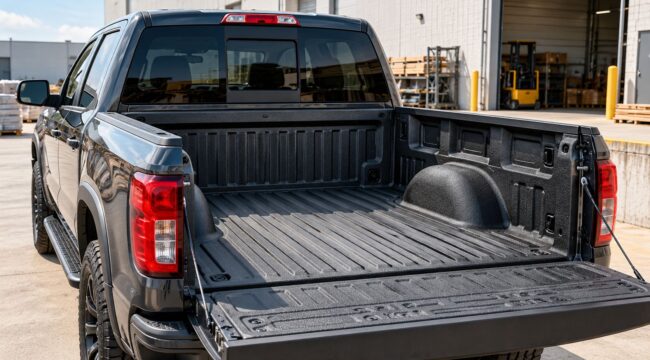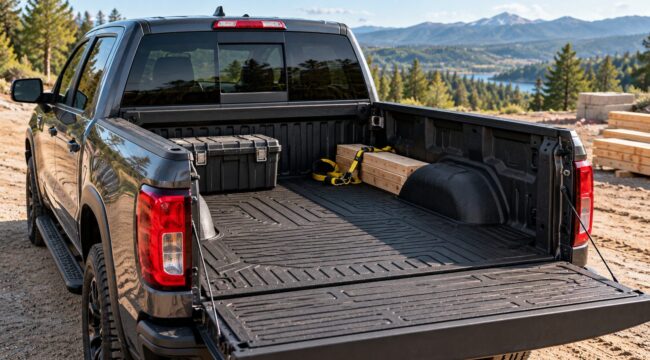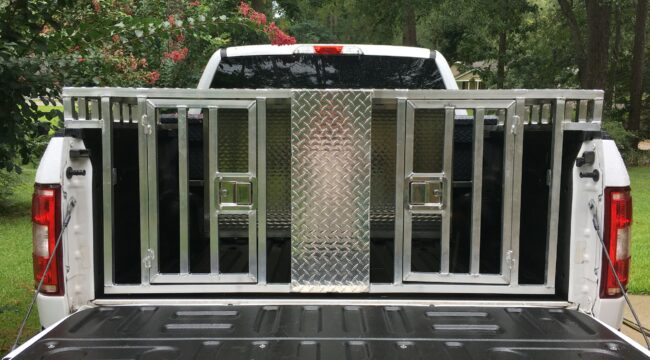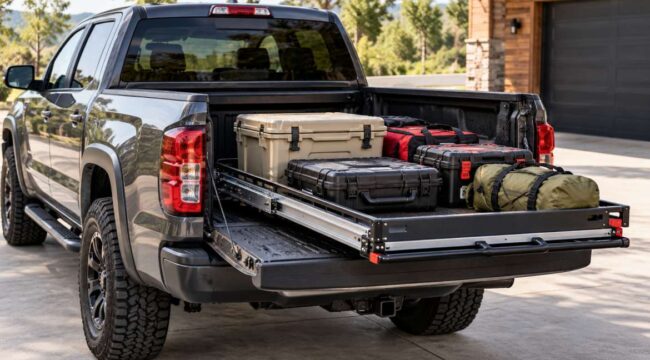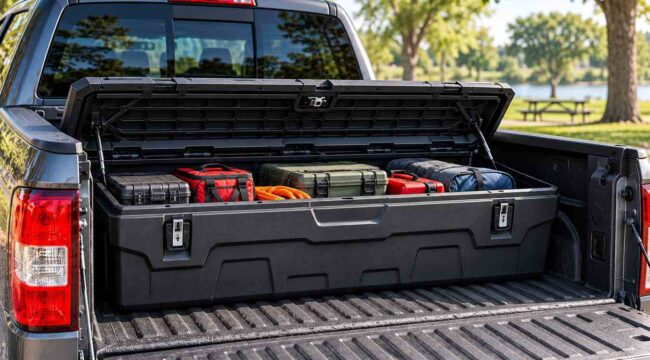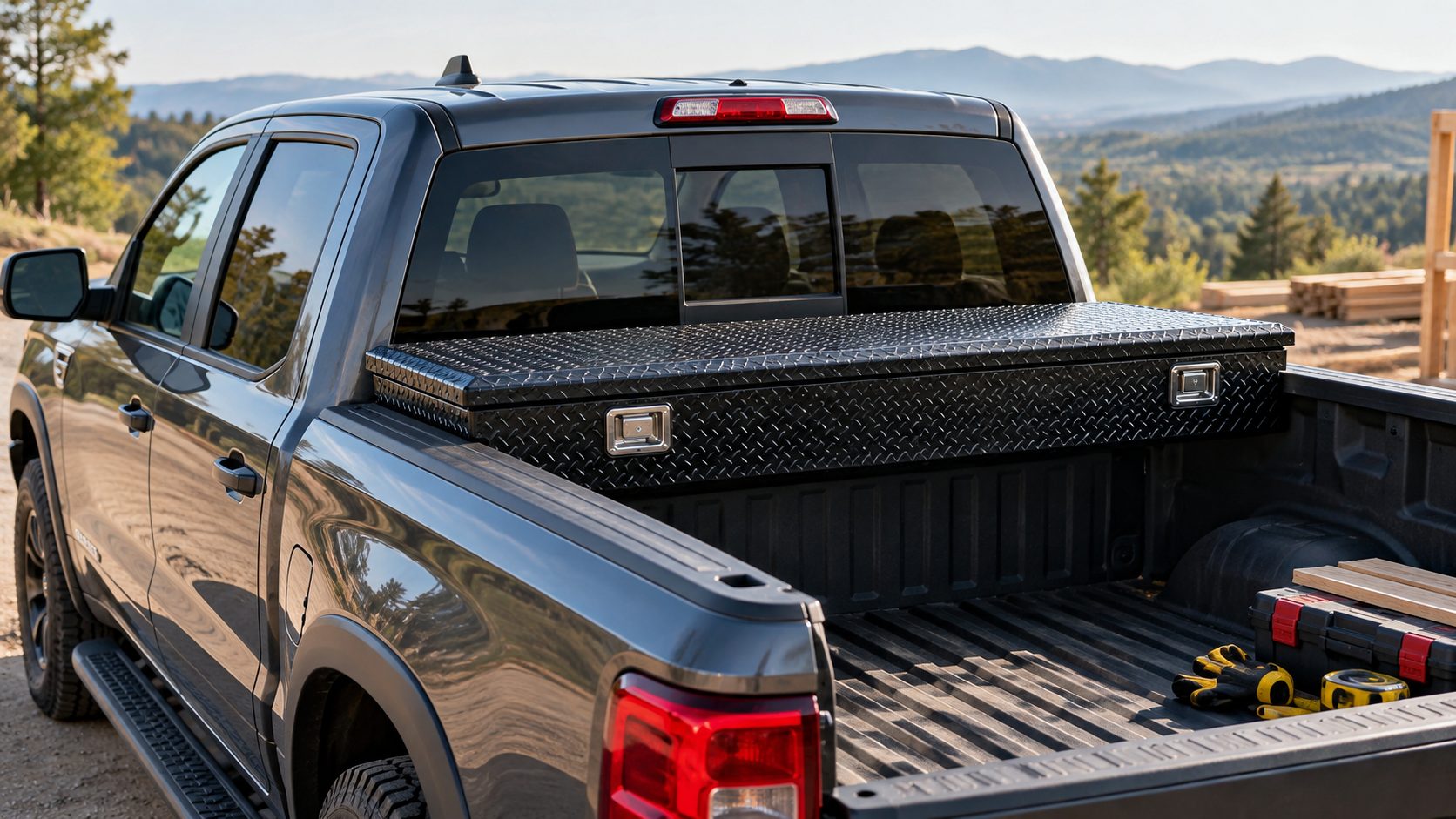
A truck bed tool box is one of those accessories that can make a pickup noticeably easier to live with. Instead of letting sockets, drills, recovery gear, tie-downs, work gloves, and small parts roll around the bed, a dedicated box gives those items a defined place and keeps them separated from the rest of your cargo. A good box can also keep tools out of direct weather and out of sight when the truck is parked.
The challenge is finding one that matches the truck rather than simply buying the biggest box that will fit. Crossover boxes sit across the bed behind the cab, while side-mount, chest, and under-bed designs use the available space differently. Within the crossover category, low-profile lids can improve rear visibility, aluminum keeps weight down and resists corrosion, and deeper boxes trade some clearance for additional storage.
For this guide, we looked at current product information from manufacturers and major truck-accessory retailers, paying particular attention to construction, dimensions, storage layout, lid operation, sealing, security features, installation, warranty coverage, and fitment. We did not treat manufacturer marketing claims as hands-on test results, and we have not claimed to personally test these boxes.
The five products below cover several common priorities, from low-profile aluminum storage to larger crossover boxes for work trucks. Because truck beds vary so much, the product that looks ideal on paper still needs to match your exact truck and bed configuration.
If you are shopping for the best truck bed tool boxes, start with the way you use your pickup. Think about the tools you carry, how much bed space you can give up, whether rear-window visibility matters, and whether you need a box that can work alongside a tonneau cover or other bed accessories.
For a full-size pickup where low-profile storage and corrosion-resistant aluminum are priorities, the UWS EC10481 is a strong place to start. Its 69-inch-class crossover design, one-piece aluminum tub, RigidCore lid, MicroSeal gasket, pull handles, and 8.4-cubic-foot capacity make it a well-rounded option. The Dee Zee Red Label low-profile crossover is another aluminum choice with a practical layout and a long-running crossover design. If you want a more security-focused professional box, the Weather Guard 131 series deserves a look. For larger full-size-bed storage, the Buyers Products Diamond Tread Crossover offers a larger-capacity work-truck approach, while the Better Built crossover gives buyers another straightforward aluminum option.
Our Top Picks
These five boxes represent different ways of approaching truck-bed storage. The descriptions are based on current published specifications and product information rather than hands-on testing.
Types of Truck Bed Tool Boxes
The phrase truck bed tool box covers several designs. Understanding the basic layouts first makes it easier to compare individual models without getting distracted by brand names or feature lists.
Crossover or saddle boxes
A crossover box stretches across the truck bed, usually just behind the cab, and rests on the bed rails. The box occupies some of the space above the bed while leaving most of the floor available for larger cargo. This is the traditional pickup toolbox layout and remains popular because tools are easy to reach from the side of the truck.
Many crossover boxes are available in standard and low-profile versions. A low-profile lid sits lower relative to the bed rails, which can preserve more of the view through the rear window. The trade-off is that the lower profile can reduce usable vertical space inside the box.
Side-mount boxes
Side-mount boxes attach along one side of the bed rather than spanning its width. They can be useful when you want quick access to smaller tools without reaching across the truck. They also leave the center of the bed open for large cargo.
The downside is capacity. A side box normally cannot hold as much bulky equipment as a large crossover box, so it works better when your storage needs are focused on hand tools and smaller supplies.
Chest boxes
A chest-style toolbox sits on the bed floor instead of resting primarily on the rails. This gives you a different shape and can make sense when you want a box that is independent of the cab-to-bed clearance area. Some chest designs can also work with particular tonneau covers because they stay below the bed rails.
The main compromise is floor space. A chest box takes up an area that could otherwise be used for cargo, pallets, coolers, or other large items.
Under-bed boxes
Under-bed storage places the box below the main bed area, typically using space around the frame or service-body structure. It is particularly useful for work trucks where keeping the bed floor completely open is important.
This style is less common for everyday half-ton pickup owners because installation can be more involved and vehicle compatibility is more specialized. For a normal pickup, a crossover box is usually the simpler starting point.
Which Type Should You Choose?
Start with your routine rather than the product name.
Choose a crossover box for general-purpose tool storage
If you carry drills, sockets, hand tools, straps, electrical supplies, or jobsite equipment and want those items in one secure location, a crossover box is the most straightforward choice. It offers useful capacity without taking over the entire bed floor.
Choose low profile when rear visibility matters
A high toolbox can become a noticeable obstruction in the rear window. A low-profile design lowers the top of the box while keeping the basic crossover layout. That makes it particularly appealing for daily-driven pickups where you use the rear window often.
Choose a side box when bed-floor space is the priority
If you haul bulky equipment and only need a modest amount of tool storage, a side-mount box can preserve more usable floor area. You also get quick access from outside the truck.
Choose a chest box when cover compatibility matters
A chest can make sense when you want storage that sits below or near the bed-rail level. However, compatibility with tonneau covers depends on the dimensions and mounting position, so check the exact combination before buying.
How We Chose
We focused on characteristics that are useful after the toolbox is installed, not just features that look impressive in a product listing.
Construction was one factor. Aluminum is common because it offers a useful balance between strength, weight, and corrosion resistance. We also looked at how the lid is reinforced, how the box is sealed, and how the locking hardware is arranged.
Storage capacity was another consideration, but we did not assume that the biggest number is automatically better. A deep box can hold more equipment, but it can also make it harder to see or reach smaller tools. Internal trays and compartments can be more useful than a few extra inches of empty volume.
We also considered access. A lid that opens widely with gas struts can be easier to use when your hands are full. Handles on both sides are helpful for a crossover box because you can open it from whichever side of the truck you are standing on.
Finally, we looked at fitment, installation, weather sealing, warranty information, and compatibility considerations. Truck tool boxes are not truly universal just because they are sold as crossover boxes. Bed length, rail shape, wheel-well spacing, cab configuration, factory cargo systems, and tonneau covers can all change the installation.
We did not assign artificial numerical scores to these products. The goal is to explain where each design makes sense and what you should verify before ordering.
Detailed Reviews
1. UWS EC10481 — Low-Profile Aluminum Crossover
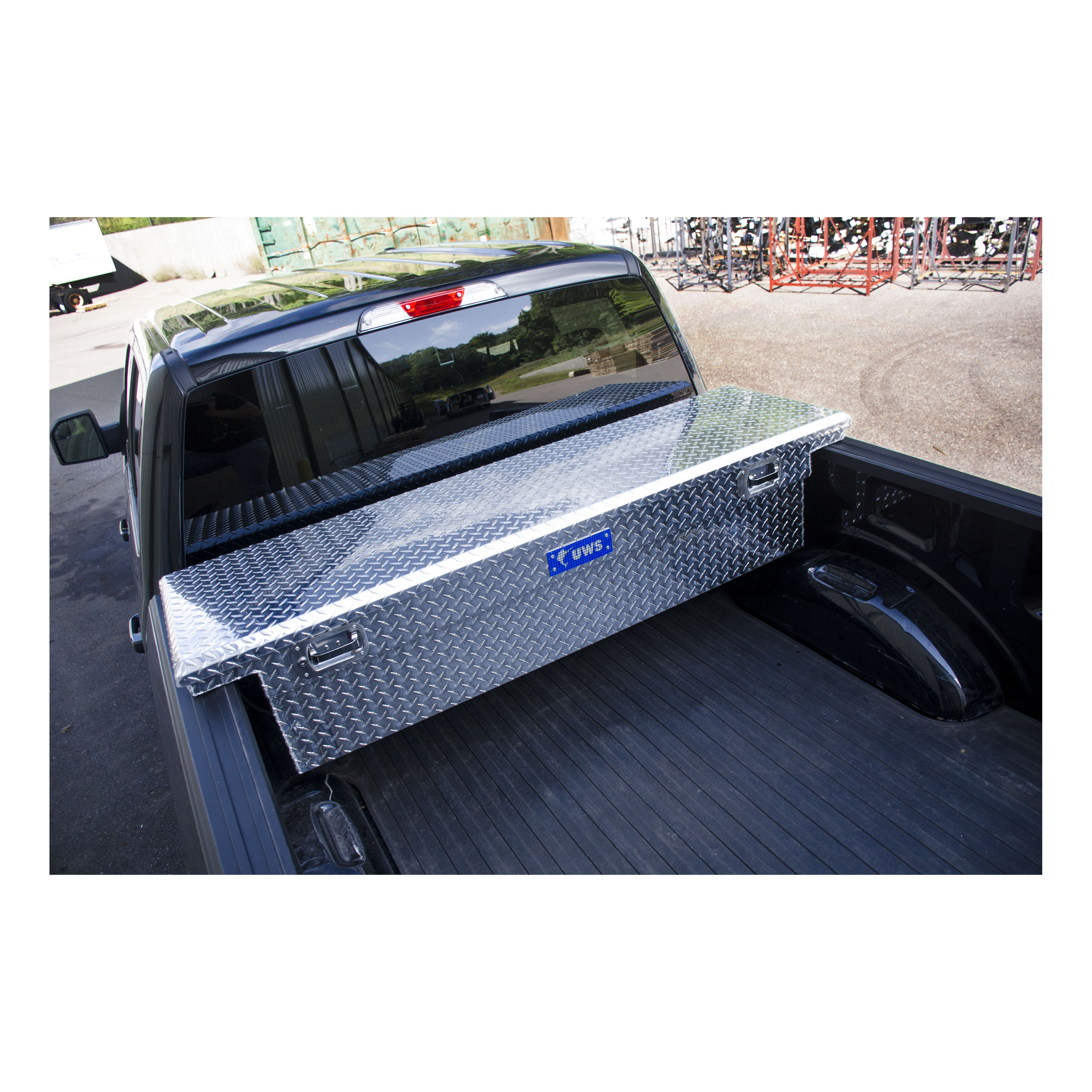
The UWS EC10481 is a good example of why low-profile crossover boxes remain popular. It provides a substantial amount of enclosed storage without rising as high as a standard-height toolbox, which can make a noticeable difference when you rely on the rear window for visibility.
UWS lists the EC10481 at roughly 70 inches overall, 20 inches wide, and 14.5 inches high, with 8.4 cubic feet of available storage. The box uses a 0.058-inch one-piece aluminum tub and a RigidCore foam-filled lid. The lid opens to 90 degrees and uses self-opening struts, while a MicroSeal gasket is designed to help keep moisture and dirt out.
The pull-handle version is especially convenient if you tend to open the box with gloves on. The connecting rod allows access from either side, and the interior layout includes tool trays, screwdriver holders, and a three-compartment sliding tray for smaller items.
Who should consider it?
The EC10481 makes the most sense for a full-size pickup owner who wants a relatively low box with useful capacity and aluminum construction. It is also worth considering if rear-window visibility is important but you still need more storage than a slim side box can provide.
Pros
- Low-profile crossover layout
- 0.058-inch one-piece aluminum tub
- 8.4 cubic feet of listed capacity
- RigidCore lid and MicroSeal gasket
- Pull handles and access from either side
- Limited lifetime warranty listed by UWS
Cons
- Large footprint may not suit smaller beds
- Still occupies some bed-rail space
- Exact fitment varies by truck
- Premium pricing compared with basic steel boxes
2. Dee Zee Red Label — Low-Profile Crossover

The Dee Zee Red Label line is built around the familiar crossover format, but the low-profile versions are designed to reduce the amount of the box that rises above the bed rails. That makes the design useful for drivers who want a traditional toolbox without a large visual obstruction.
Current listings for the Red Label low-profile crossover describe a heavy-duty aluminum body, a reinforced crowned lid, gas shocks, lockable paddle handles on applicable versions, and a removable plastic tool tray. The DZ8170LB, for example, is listed at about 69.75 inches long and 20 inches wide, with an 8-cubic-foot class capacity.
One reason to consider the Dee Zee is the straightforward nature of the design. There are no complicated moving panels or drawers to maintain. The box opens from the top, the tools stay contained, and the removable tray gives you a place for smaller items that would otherwise disappear under larger equipment.
Who should consider it?
This is a sensible choice for someone who wants a conventional aluminum crossover box with a lower profile and does not need a specialized storage system. It can work well for work tools, emergency equipment, recovery gear, or general truck supplies.
Pros
- Classic low-profile crossover format
- Aluminum construction
- Reinforced lid design
- Gas-shock-assisted opening
- Removable tray on applicable models
- Wide range of truck fitments
Cons
- Capacity and hardware vary by exact model
- Some listings use different dimensions for different versions
- Fitment must be checked by truck and bed
- Not as floor-space efficient as a side box
3. Weather Guard 131 Series — Security-Focused Low Profile
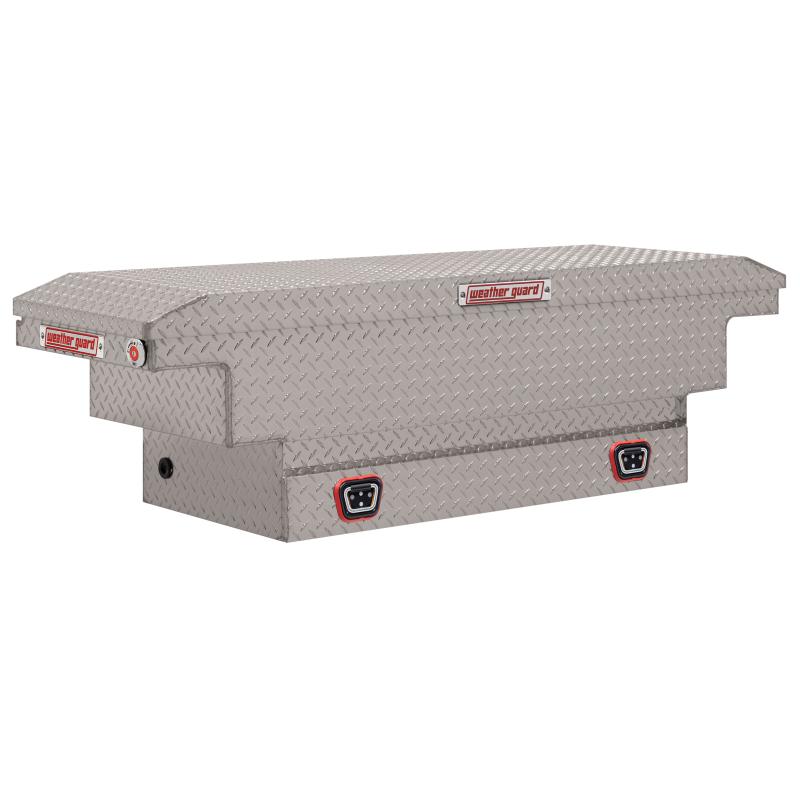
Weather Guard’s 131 series takes the low-profile crossover idea in a more professional-work-truck direction. The 131-52-04 is a compact low-profile aluminum model with an 8-cubic-foot class capacity and a textured matte black finish. Current product information emphasizes its locking system, weather sealing, and jobsite-oriented construction.
The box uses a push-button locking system on the current 131 series, with a codeable lock option that can be useful for fleets or owners who want a consistent keying setup across multiple boxes. The lid opens to about 90 degrees, and Weather Guard lists a full weather seal along with an optimized latching system.
One detail worth paying attention to is fitment. The 131-52-04 is a compact box intended for certain smaller or midsize applications, while similar-looking Weather Guard models use different dimensions and fit different full-size pickups. The model number matters here. Buying based only on a product photo can easily lead to the wrong box.
Who should consider it?
The Weather Guard 131 series is most interesting for owners who put a higher priority on security, weather resistance, and professional-grade construction than on keeping the purchase price low. It can also make sense for someone building a truck around organized work equipment.
Pros
- Low-profile aluminum crossover design
- Strong emphasis on lock and weather sealing
- 90-degree lid opening
- Powder-coated finish on applicable models
- Limited lifetime warranty listed for the series
- Fleet-friendly lock options
Cons
- Higher price than basic crossover boxes
- Exact model fitment is important
- Compact versions have less capacity than deep boxes
- Professional features may be unnecessary for casual users
4. Buyers Products Diamond Tread Crossover — Large Work-Truck Storage
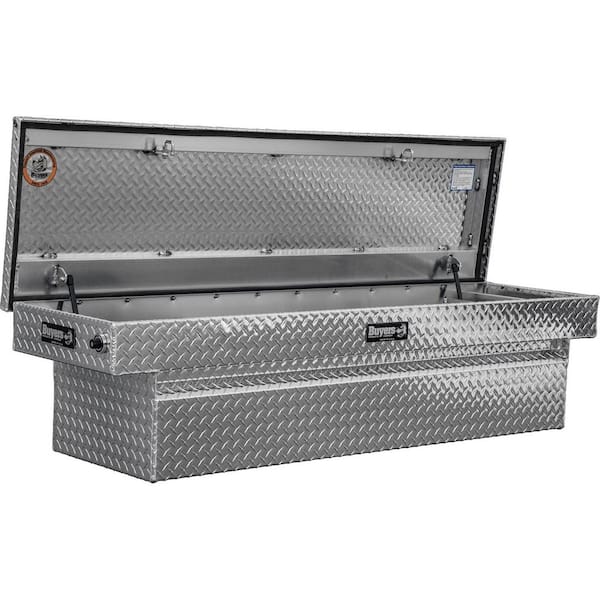
Buyers Products offers crossover boxes aimed more directly at work-truck and fleet use. The Diamond Tread Aluminum Crossover series is available in several dimensions, finishes, and capacities, giving buyers more flexibility than a single universal box.
The 1709440 family is a large aluminum crossover configuration for full-size pickups. Buyers Products describes the construction as corrosion-resistant diamond-tread aluminum and lists gas shocks that open the lid to 90 degrees. Push-button locks are positioned for access from either side, while a weather-resistant seal and a lockable tray help protect and organize equipment.
Buyers Products also lists pre-drilled mounting holes and included hardware, which simplifies the basic installation. Even so, you should still compare the box dimensions with your truck before ordering because the published applications are tied to specific bed lengths and full-size pickup configurations.
Who should consider it?
This type of box is aimed at owners who need a lot of enclosed storage and are comfortable giving a larger portion of the bed-rail area to the toolbox. Contractors, tradespeople, and people who carry a broad collection of tools are more likely to benefit from the capacity than a driver who only needs a few emergency items.
Pros
- Large crossover storage format
- Corrosion-resistant aluminum construction
- Gas-assisted 90-degree lid
- Lockable tray and tool organization
- Multiple sizes and finishes available
- Made in the USA according to Buyers Products
Cons
- Large models are heavier
- Can use significant bed-rail space
- Not intended for every truck size
- Higher cost on larger configurations
5. Better Built Crossover — Straightforward Aluminum Storage
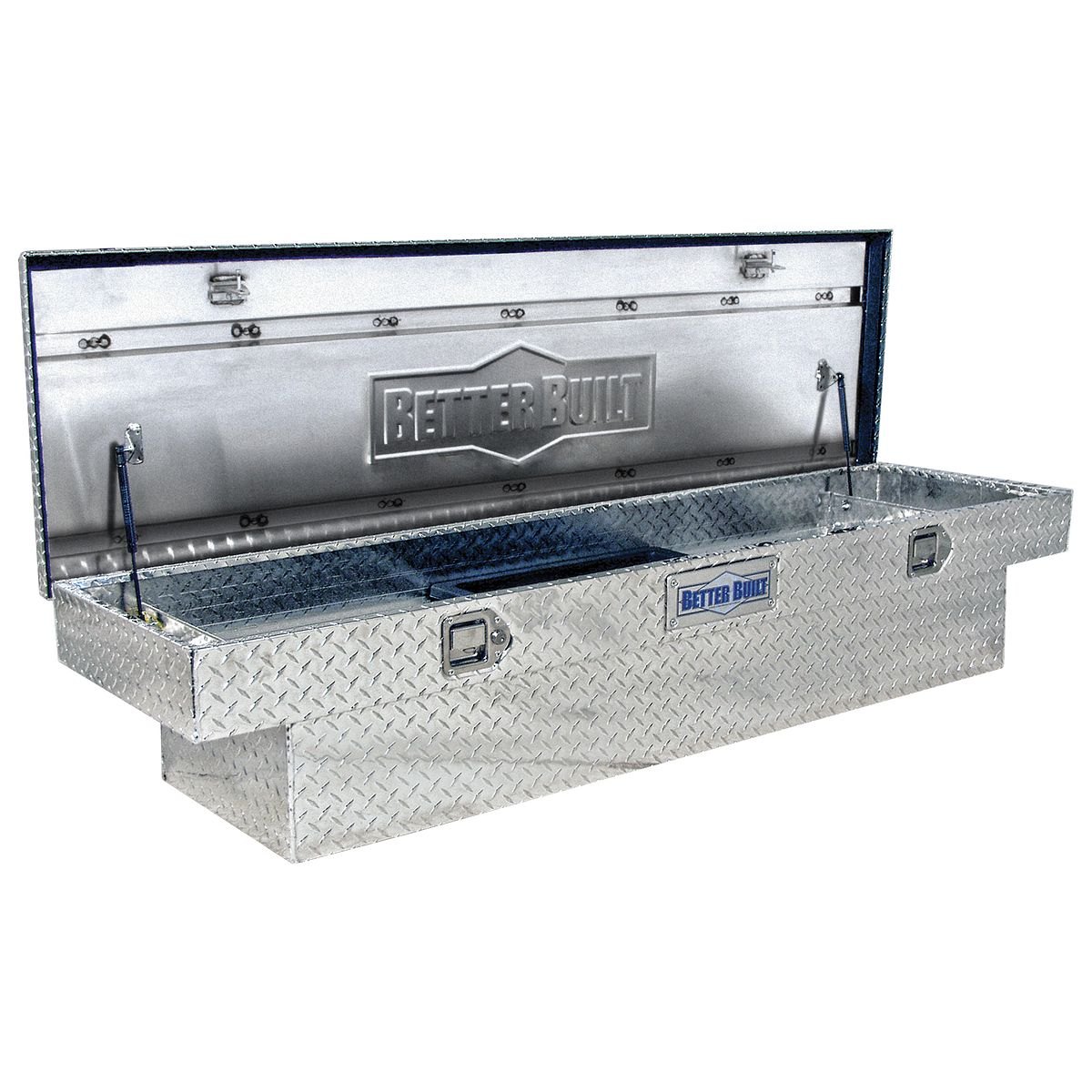
Better Built has been making traditional crossover boxes for decades, and the current aluminum models keep the basic formula simple: a rigid metal tub, a single lid, locking hardware, gas-assisted opening, and a weather seal.
Model numbers and dimensions vary across the Better Built range, so it is important to select the exact box rather than treating every crossover model as interchangeable. The aluminum models use diamond-tread construction, and current listings describe features such as stainless steel paddle latches, auto-lift shocks, a reinforced lid, and weather-resistant perimeter sealing.
The appeal here is straightforward utility. You are not paying for a complex storage system. The box is there to keep tools together, provide a lockable compartment, and make access easier than digging through loose gear in the bed.
Who should consider it?
A Better Built crossover is worth considering if you want a conventional aluminum box and prefer a simple, serviceable design. It is especially relevant to buyers comparing several mainstream aluminum crossover boxes rather than looking for a specialized fleet system.
Pros
- Traditional crossover layout
- Diamond-tread aluminum options
- Gas-assisted lid opening
- Lockable paddle handles
- Weather-resistant sealing
- Multiple sizes and configurations
Cons
- Model range can be confusing
- Some versions are no longer widely stocked
- Fitment varies by box dimensions
- Warranty coverage depends on the specific model
Why Low Profile Matters
A low-profile truck toolbox is not simply a shorter version of a standard box. The lower lid changes how the box interacts with the rear window, bed rails, and cargo above the bed.
For a daily driver, the biggest benefit is usually visibility. A tall crossover box can occupy a noticeable portion of the rear window, especially on trucks with smaller cabs or certain seat positions. Lowering the lid can reduce that obstruction while still giving you enclosed storage.
There is a trade-off. The space you save above the box has to come from somewhere, and a low-profile box can have a shallower upper section. If you carry large cordless-tool cases, tall bottles, compressors, or other bulky equipment, measure those items before choosing the box.
Low profile also does not mean every box will sit at exactly the same height. Manufacturers use different dimensions and mounting arrangements, so compare the published overall height and bed-rail position for the exact model.
If your truck has a rear window that you rely on heavily, the difference can be worthwhile. If visibility is not a concern and you need maximum storage volume, a deeper box may be more useful.
Aluminum vs. Steel Truck Tool Boxes
Aluminum is common in pickup tool boxes because it offers corrosion resistance without the weight of a comparable steel construction. That does not mean aluminum boxes are light in absolute terms. A large crossover box can still be a substantial piece of equipment once the lid, hardware, trays, and mounting brackets are included.
Steel has its own advantages. It can provide a very rigid structure and is often used in heavy-duty work boxes, but the finish becomes especially important because scratches or damaged coatings can expose the underlying metal to corrosion. Steel boxes can also add more weight to the truck.
For most everyday pickup owners, aluminum is a practical middle ground. It is particularly attractive if the truck spends time outdoors, sees winter road conditions, or is used around wet jobsites.
Look beyond the material name, though. Tub construction, welded seams, lid reinforcement, gasket quality, latch design, and mounting hardware all influence how the finished box performs. Two aluminum boxes can feel very different in use.
What to Consider Before Buying
1. Measure the truck bed before choosing a box
Start with the inside width between the bed rails and the space available behind the cab. Do not rely on the advertised bed length alone. The shape of the rails, wheel wells, bedliner, and factory cargo systems can affect the usable mounting area.
2. Match the box to your bed length
Manufacturers commonly offer different crossover lengths for compact, midsize, and full-size pickups. A box can be too long for one application and too short for another even when both trucks are described as having a six-foot bed.
3. Check the cab and rear-window clearance
Measure the distance from the bed rails to the cab and consider how the lid opens. A box that fits the bed width can still have clearance issues when the lid is raised or when a rack is installed behind the cab.
4. Decide whether low profile is actually useful
If you drive the truck every day and depend on the rear window, low profile is often worth prioritizing. If your main goal is maximum tool volume, compare the internal dimensions rather than choosing low profile automatically.
5. Think about the tools you actually carry
Make a quick list of the largest items you want to store. A box that is technically large enough may still be frustrating if your drill cases, sockets, jacks, or power tools do not fit through the opening. Internal trays are helpful for small tools, but they also divide the available space.
6. Check the lid and latch design
A lid that opens to 90 degrees can make a big difference when you are loading tools from the side. Gas struts or self-opening mechanisms reduce the effort required, while dual handles or a connecting rod can let you open the box from either side.
7. Look closely at weather sealing
Gaskets and seals help, but no toolbox should be treated as magically waterproof. Installation, lid alignment, drain paths, damaged seals, and how the box is mounted all affect real-world water resistance. If a particular tool cannot get wet, use an additional waterproof case inside the box.
8. Consider security realistically
A locking toolbox is useful because it puts a physical barrier between your equipment and casual access. It is not a substitute for vehicle security or a guarantee against theft. Pay attention to latch construction, lock access, hinge protection, and whether the box can be mounted securely to the truck.
9. Check tonneau-cover compatibility
This is one of the most commonly overlooked issues. A crossover box can interfere with a tonneau cover’s clamps, rails, canister, or folding panels. Some toolboxes are specifically designed to work with certain covers, while others are not. Verify the combination before ordering rather than assuming that two individually compatible products will work together.
10. Think about racks and other bed accessories
Bed racks, ladder racks, fifth-wheel equipment, cargo-management rails, and sliding systems can change the amount of space available around the toolbox. If you plan to add another accessory later, check whether the toolbox leaves enough room for it.
11. Check the mounting method
Some boxes use pre-drilled slots and supplied hardware, while others may require a separate mounting kit or drilling depending on the truck. A no-drill installation is convenient, but the exact mounting method still needs to be confirmed for your truck.
12. Compare warranty terms
Warranty length can look impressive until you read the exclusions. Check whether the warranty covers the finish, hardware, seals, and structural components separately. Also check whether replacement parts are readily available.
13. Consider weight
A large aluminum crossover box can weigh dozens of pounds before you put anything inside. Add tools and the load can become significant. Keep the truck’s payload rating in mind, especially if you already carry a heavy rack, trailer equipment, or other accessories.
14. Think about access from both sides
If you work around the truck frequently, being able to open the box from either side is more than a convenience. It can save time and reduce the need to walk around the vehicle every time you need a wrench or fastener.
Installation and Fitment: What Buyers Often Miss
Installing a crossover toolbox is usually straightforward, but the first step should always be a fitment check rather than reaching for a drill. Read the manufacturer’s application information and compare the actual box dimensions with your truck.
Before tightening anything, place the box where you expect it to sit and check the cab clearance, tailgate clearance, rail shape, bedliner thickness, and access to the mounting points. Open the lid fully and make sure it does not contact the cab or a rack.
If your truck has an over-the-rail bedliner, the added thickness can change how the clamps or brackets sit. Some applications may require a specific mounting method. Do not remove or cut a bedliner simply because a generic installation video shows it; follow the instructions for your exact box and truck.
Once the position is confirmed, tighten the mounting hardware evenly. The goal is to hold the box securely without distorting the tub or over-tightening hardware against the bed rails. Recheck the hardware after the first few drives and periodically afterward.
If you are not comfortable drilling or modifying the truck, choose a model and mounting system designed for the installation you want. Paying a professional for a clean installation can also be worthwhile, particularly on a new truck or an expensive toolbox.
Maintenance and Long-Term Use
Truck tool boxes do not require complicated maintenance, but a few simple habits can make them easier to live with.
Keep the lid seal clean. Dust, sand, and dried mud can prevent a gasket from making even contact, and repeatedly closing a dirty seal can accelerate wear. A soft cloth and mild cleaner are usually enough for routine cleaning; follow the manufacturer’s instructions for the finish and gasket material.
Check the hinges, gas struts, handles, and mounting hardware occasionally. If a lid begins to feel different or a handle becomes harder to operate, address it early rather than waiting until the mechanism fails.
Do not overload the lid. Toolboxes are designed to carry equipment inside the tub, while the lid’s job is to close and protect the opening. Sitting or standing on the lid can bend components that are not designed to support body weight.
For aluminum boxes, inspect the mounting points and any areas where dissimilar metals touch. Keeping the mounting hardware clean and correctly tightened helps prevent movement and unnecessary wear. If the finish becomes scratched, deal with the damaged area according to the manufacturer’s recommendations.
Finally, keep the interior organized. A toolbox can become just as frustrating as an open truck bed if every tool is thrown into one pile. Use the supplied tray for small items and consider separate cases for electrical parts, fasteners, recovery equipment, or other categories you carry regularly.
Frequently Asked Questions
What is the best truck bed tool box?
There is no single box that fits every truck or owner. A low-profile aluminum crossover such as the UWS EC10481 is a practical starting point for many full-size pickups, while the Dee Zee, Weather Guard, Buyers Products, and Better Built options above suit different combinations of capacity, security, and budget. Exact fitment should decide the final choice.
What are the best pickup truck bed tool boxes for everyday use?
For everyday use, a crossover box is often convenient because it keeps tools behind the cab without using most of the bed floor. Look for a manageable height, easy lid operation, good sealing, and a mounting system that works with your truck.
What is the best low profile truck bed tool box?
A low-profile box should be judged by more than height. The UWS EC10481 and Dee Zee Red Label low-profile designs are examples of the category, while Weather Guard offers low-profile aluminum boxes with a stronger emphasis on security. The correct fit depends on your truck.
What is the best aluminum truck bed tool box?
Aluminum is a broad category rather than a single product. UWS, Dee Zee, Weather Guard, Buyers Products, and Better Built all offer aluminum crossover boxes. Compare the exact model’s construction, dimensions, lid design, warranty, and fitment instead of choosing based only on the brand.
What is the best crossover truck tool box?
The best crossover box for you depends on the amount of storage you need and how much bed-rail space you can give up. Low-profile models are useful when rear visibility matters, while deeper boxes make more sense when storage volume is the priority.
Are aluminum truck tool boxes strong enough?
Quality aluminum boxes can provide substantial strength for normal tool storage, especially when the tub and lid are properly reinforced. Features such as one-piece tubs, reinforced lids, welded seams, and strong mounting points matter just as much as the word aluminum in the product description.
Do truck tool boxes keep tools dry?
A well-sealed box can greatly reduce exposure to rain, road spray, dust, and dirt, but it should not be assumed to be completely waterproof. Seal condition, lid alignment, mounting, and weather conditions all affect the result.
Can I use a truck tool box with a tonneau cover?
Sometimes. The answer depends on the toolbox dimensions and the tonneau’s mounting system. Check both manufacturers’ compatibility information before buying. Folding, rolling, and retractable covers can all have different clearance requirements.
Does a low profile toolbox reduce storage space?
Usually, some vertical space is sacrificed to keep the lid lower. That can be a good trade if rear visibility matters, but measure your tallest tools before buying so you do not discover that the box is too shallow for the equipment you actually carry.
Do crossover tool boxes require drilling?
It depends on the model and truck. Some boxes use pre-drilled mounting slots and supplied hardware, while others may need a particular mounting kit or drilling. Always follow the installation instructions for the exact application.
How much does a truck bed tool box cost?
Prices vary widely with size, material, finish, security features, and brand. Basic crossover boxes can cost considerably less than professional-grade aluminum boxes, while large or specialized models can cost substantially more. Compare the complete feature set rather than choosing from price alone.
How do I measure for a crossover tool box?
Measure the available width between the bed rails where the box will sit, check the front-to-back clearance behind the cab, and account for bedliner thickness and factory accessories. Then compare those measurements with the manufacturer’s fitment guide and the box’s overall dimensions.
Final Thoughts
The best truck bed tool boxes are the ones that solve a real storage problem without creating a new one. A box that is too tall can interfere with visibility, one that is too large can make loading awkward, and one that does not match your tonneau cover or bed accessories can become an expensive compatibility headache.
If low-profile aluminum storage is your main priority, the UWS EC10481 is a useful model to compare because it combines a lower crossover profile with an aluminum tub, organized interior, and weather-sealing features. The Dee Zee Red Label offers a more traditional crossover approach, while the Weather Guard 131 series puts more emphasis on security and professional use.
For owners who need a larger work-truck storage solution, the Buyers Products Diamond Tread Crossover is worth comparing with the Better Built crossover range. Both illustrate why checking dimensions and exact model numbers matters more than choosing a box based on a generic product photo.
Before you order, measure the truck, check the bed length, inspect your factory accessories, and confirm compatibility with any tonneau cover or rack you already own. That short checklist can save far more frustration than trying to solve a fitment problem after delivery.
A good toolbox should make the truck easier to use. Once the fit is right, the lid is easy to operate, and the tools have a sensible home, the accessory largely disappears into your routine—which is exactly what good truck storage should do.