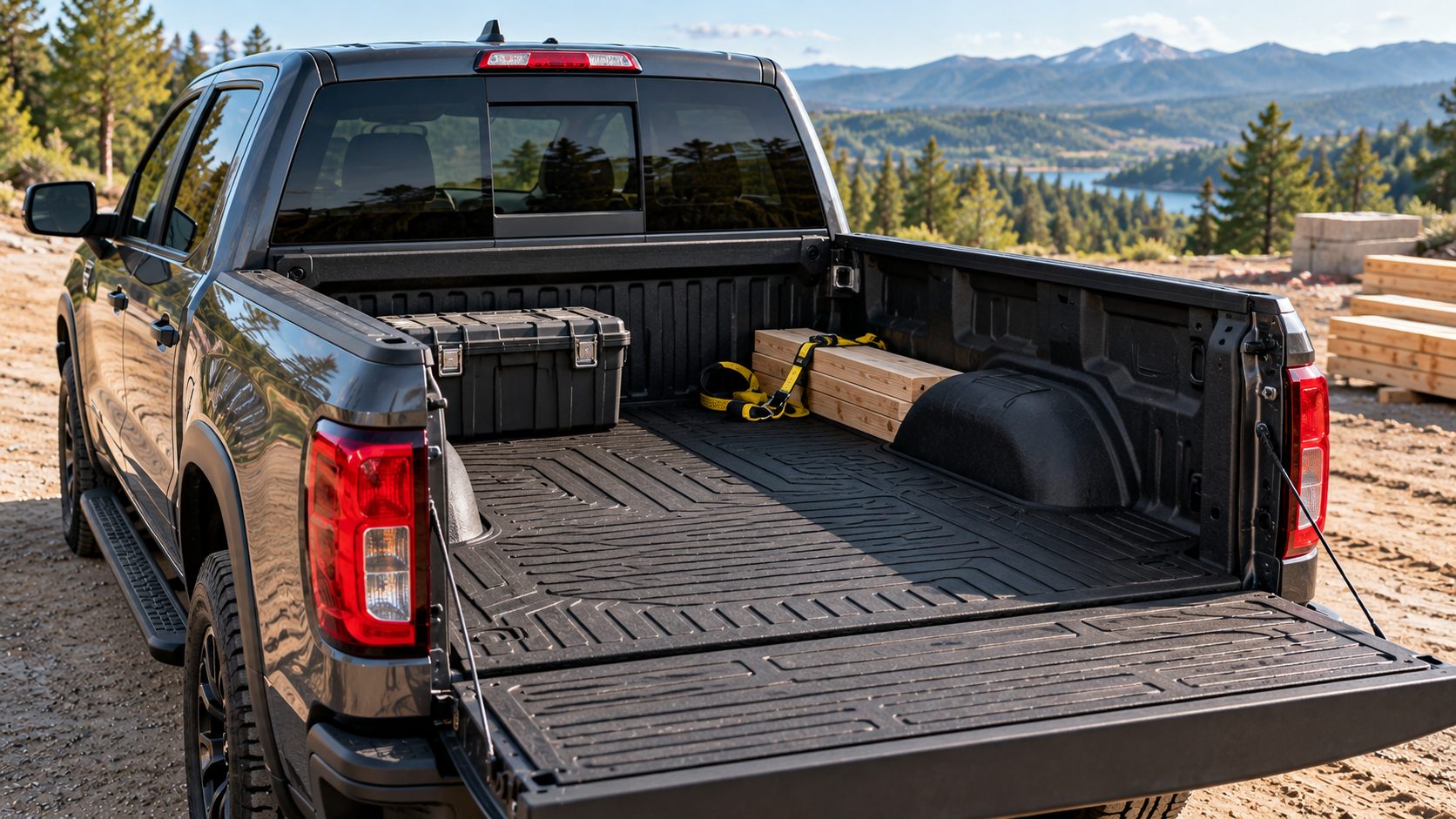
A truck bed takes a surprising amount of abuse. Lumber, toolboxes, coolers, bags of soil, camping gear and loose equipment can scratch the floor, dent the metal and leave behind dirt, water or spilled fluids. A good bed mat adds a protective layer without permanently changing the truck, while also giving cargo a less slippery surface.
The difficult part is choosing the right kind of mat. Traditional rubber mats are heavy, thick and built for hard work. Molded thermoplastic mats can offer a cleaner, more precise fit with less weight. Padded options such as BedRug Impact are aimed at owners who spend time kneeling in the bed or want extra cushioning for cargo.
There is also a fitment issue that is easy to underestimate. A truck bed mat is not simply a rectangle. Wheel-well contours, bed length, factory outlets, drop-in liners, spray-in coatings and generation changes can all affect compatibility. A mat that fits a 5.5-foot F-150 is not automatically suitable for a 6.5-foot bed, even if the truck model is the same.
For this guide, we compared current manufacturer and retailer information for construction, thickness, traction, moisture management, installation, cleaning, warranty coverage and fitment. We did not treat manufacturer marketing claims as hands-on test results, and we have not claimed to personally test these mats.
If you are shopping for the best truck bed mats, start with how you actually use the pickup. A contractor carrying heavy tools has different needs from a weekend camper, and someone who wants a low-maintenance rubber floor may prefer a very different material from someone who regularly kneels in the bed.
For heavy everyday use, the Husky Liners Heavy Duty Bed Mat is a strong option because its rubberized DuraGrip HD construction, anti-skid surface and AirDry Nibs are designed around bed and cargo protection. The Dee Zee Heavyweight Bed Mat is a traditional thick rubber choice for owners who want a dense, work-focused mat. The WeatherTech TechLiner takes a thinner thermoplastic approach, while the Rough Country Rubber Bed Mat emphasizes thick recycled-rubber construction and vehicle-specific fitment. If cushioning and a more comfortable work surface matter most, the BedRug Impact Bed Mat is worth considering.
Our Top Picks
These five mats cover different priorities rather than pretending that one material is ideal for every truck. The descriptions are based on published specifications and current product information, not hands-on testing.
Types of Truck Bed Mats
The term truck bed mat covers several different constructions. Understanding the differences first makes it much easier to judge the individual products.
Rubber bed mats
Traditional rubber mats are the workhorse of the category. They tend to be thick and heavy, which helps them stay in place while absorbing the impact of tools, equipment and other cargo. A textured upper surface can also help reduce sliding, while molded or cleated sections underneath can create an air gap and help moisture move away from the bed.
The trade-off is weight. A thick rubber mat can be awkward to remove when you want to clean underneath it. It also normally protects the bed floor rather than the entire bed, leaving the sidewalls and upper portions of the bed exposed.
Molded thermoplastic mats
Thermoplastic mats use materials such as TPE or other engineered polymers to create a lighter, more molded product. WeatherTech’s TechLiner is an example: it is custom fit for individual truck applications, uses a flexible UV-resistant material and is designed to install without drilling.
This style can look cleaner and can be easier to handle than a thick rubber mat. The compromise is that a thin molded mat does not provide the same cushioning and mass as a 3/8-inch rubber work mat.
Padded truck bed mats
Padded mats are designed around comfort as well as protection. BedRug Impact, for example, combines a TPO composite surface with a thick padded layer. That can be useful for owners who kneel in the bed, camp with the tailgate down or regularly handle cargo that benefits from cushioning.
Padded construction is not automatically better for every job. If your bed regularly carries sharp scrap metal, muddy equipment or heavy loose material, a dense rubber surface may be easier to hose down and less precious about abuse.
Universal trim-to-fit mats
Universal mats are sold in large sheets that can be cut to fit a particular truck. They can be inexpensive and useful for older pickups, trailers or unusual cargo areas where a molded vehicle-specific mat is difficult to find.
The downside is obvious: the final fit depends on the person doing the measuring and trimming. If you want a clean edge around wheel wells and factory contours, a custom-fit mat is usually easier.
Which Type Should You Choose?
Think about the truck bed as a working surface rather than simply another part of the vehicle. What lands on it, how often you clean it, and whether you need to climb into it should determine the mat material.
| Your priority | Type to consider | Why |
|---|---|---|
| Heavy tools and equipment | Thick rubber | Dense construction, impact absorption and good grip. |
| Low profile and easy handling | Molded thermoplastic | Generally thinner and easier to lift than heavy rubber. |
| Kneeling or camping | Padded mat | More cushioning and a softer work surface. |
| Older or unusual truck | Trim-to-fit | Flexible sizing when a custom application is unavailable. |
| Wet or muddy work | Rubber or molded polymer | Simple hose-down cleaning and fewer absorbent surfaces. |
There is no need to choose a mat based on a single specification. A very thick mat can be excellent for impact protection but annoying if you remove it frequently. A thin molded mat can be convenient and precise but may not cushion a dropped engine component as well as a heavy rubber mat.
How We Chose
We focused on factors that actually affect ownership rather than simply counting features. The first was construction: rubber, thermoplastic and padded materials behave differently under cargo. We also looked at fitment because a high-quality mat is not useful if it does not match the bed length or liner configuration.
We then considered traction, moisture management, installation, cleaning and warranty coverage. A mat that stays slightly elevated can help prevent moisture from remaining trapped against the bed, while a textured top can make a noticeable difference when carrying loose boxes or equipment.
We also looked at how the products fit into different use cases. The goal was not to produce five versions of the same recommendation. Instead, the list includes a heavy-duty rubberized option, a dense traditional rubber mat, a thin molded polymer option, another heavy-duty rubber choice and a padded alternative.
Product specifications and fitment can change by truck application. Whenever we mention a part number or example vehicle, treat it as an example and verify your exact truck on the manufacturer’s or retailer’s current fitment selector before ordering.
Detailed Reviews
1. Husky Liners Heavy Duty Bed Mat — Heavy-Duty Rubberized Protection
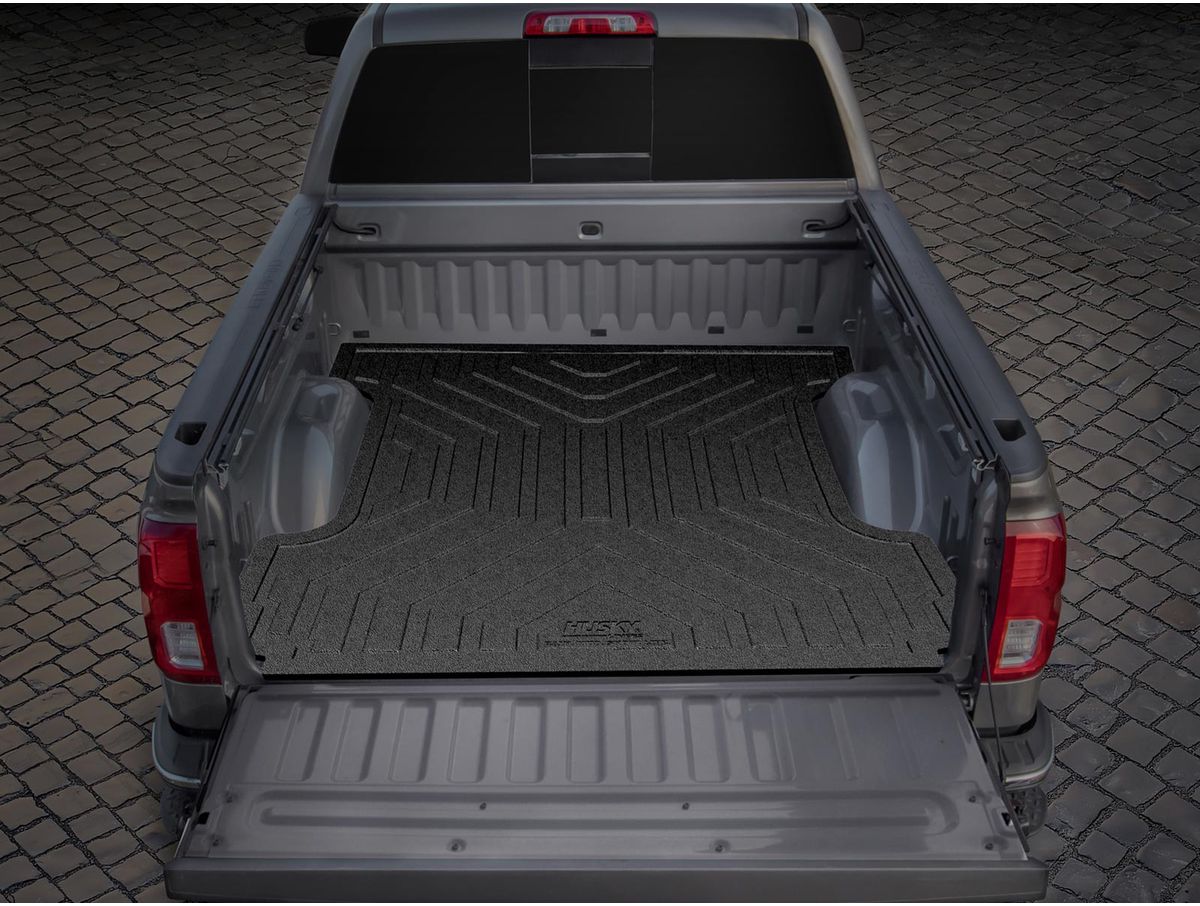
The Husky Liners Heavy Duty Bed Mat is aimed squarely at owners who expect the truck bed to work for a living. Its rubberized DuraGrip HD construction is designed to absorb impact while giving cargo a textured surface to resist sliding. Husky also uses AirDry Nibs underneath the mat, which lift it slightly so air can circulate between the mat and the bed.
That combination addresses several common problems at once. Heavy equipment can hit the bed floor hard, loose boxes can move under braking, and water can become trapped beneath a flat rubber sheet. The Husky design does not eliminate those problems completely, but its construction is clearly intended around them.
The current 16008 example fits 2015–2026 Ford F-150 applications with the 5’7-inch bed, including listed Raptor and Lightning applications depending on model year. Husky specifically says this version is for spray-in or non-liner applications and will not work with a drop-in bed liner. That fitment warning is important because the product name alone does not tell you which bed configuration you need.
Installation is one of the simpler parts of the product. Husky describes a drop-in installation with the mat pre-cut to the vehicle’s bed dimensions, and the mat can be removed when you need to clean underneath. The manufacturer also lists a limited lifetime warranty to the original purchaser under its stated conditions.
Who should consider it?
It makes sense for work trucks, owners who haul tools and equipment regularly, and anyone who wants a grippy surface with substantial impact protection without permanently coating the bed.
Pros
- Rubberized DuraGrip HD construction
- AirDry Nibs help air circulate underneath
- Textured anti-skid surface
- Easy drop-in installation
- Limited lifetime warranty
Cons
- Exact fitment varies by truck
- Will not fit over a drop-in bed liner
- Heavy-duty rubber is heavier than thin polymer mats
- Primarily protects the bed floor rather than the entire bed
2. Dee Zee Heavyweight Bed Mat — Thick True-Rubber Work Mat

Dee Zee’s Heavyweight bed mat represents the traditional rubber approach: substantial thickness, a dense construction and a surface intended to keep cargo from moving. The DZ86973 example is listed as a custom-fit mat and uses a 3/8-inch cord-enhanced rubber compound.
The thickness matters when the bed is used for hard work. A dense rubber layer can absorb some of the shock from equipment and provide a forgiving surface for cargo that would otherwise contact painted metal directly. Dee Zee also uses rubber cleats on the underside to help hold the mat in place and promote drainage.
One thing to keep in mind is that Dee Zee has many part numbers because truck beds vary. The DZ86973 example fits particular Silverado and Sierra applications from earlier model years, while other Dee Zee mats cover other pickups and bed lengths. Do not treat the ASIN or part number in this article as a universal fitment.
Depending on the application, trimming may be required, particularly on certain short-bed configurations. That is not unusual for a heavy rubber mat, but it does make careful measurement more important. Once installed, the mass of the rubber is part of what keeps the mat settled in the bed.
Who should consider it?
It is a good category match for work trucks that routinely carry lumber, machinery, tools or other heavy cargo and for buyers specifically looking for a traditional rubber truck bed mat.
Pros
- 3/8-inch cord-enhanced rubber construction on the example
- Designed for abrasion and impact resistance
- Cleated underside helps with drainage and movement
- Custom-fit applications
- Traditional heavy-duty design
Cons
- Heavy to remove and clean
- Some applications may require trimming
- Vehicle-specific part numbers can be confusing
- Does not replace sidewall protection
3. WeatherTech TechLiner — Low-Profile Molded Protection

WeatherTech’s TechLiner takes the opposite approach from a thick rubber mat. It is a thinner, custom-fit thermoplastic liner designed to follow the contours of a particular truck bed. WeatherTech describes the material as recyclable, odorless, flexible and UV resistant, with a soft-touch surface intended to help reduce cargo movement.
The low-profile design can appeal to owners who want protection without adding a large amount of material to the bed. WeatherTech says the TechLiner installs without drilling or sprays and uses a hook-and-loop attachment system for applicable applications. A tailgate piece is also available for many configurations.
The manufacturer currently offers TechLiner fitments across a wide range of pickups, including F-150, Silverado, Sierra, Ram, Tundra, Ranger and Super Duty applications. The exact part number changes with the truck and bed configuration. The Amazon link used here is an example listing, not a universal TechLiner fitment.
WeatherTech also states that TechLiner is intended for painted beds or spray-in liners and will not fit properly with a drop-in plastic liner. For trucks with a fifth-wheel or gooseneck setup, WeatherTech’s application notes should also be checked before ordering.
Who should consider it?
It suits owners who want a cleaner, thinner bed-protection layer, especially when easy handling and a molded appearance matter more than the mass of a traditional rubber mat.
Pros
- Custom-fit vehicle-specific design
- Thin, low-profile construction
- Flexible and UV resistant
- No drilling or spray installation
- Easy to remove when needed
Cons
- Less cushioning than thick rubber
- Exact part number depends on the truck
- Not designed for drop-in bed liners
- Tailgate coverage may be an additional piece
4. Rough Country Rubber Bed Mat — Heavy-Duty Value
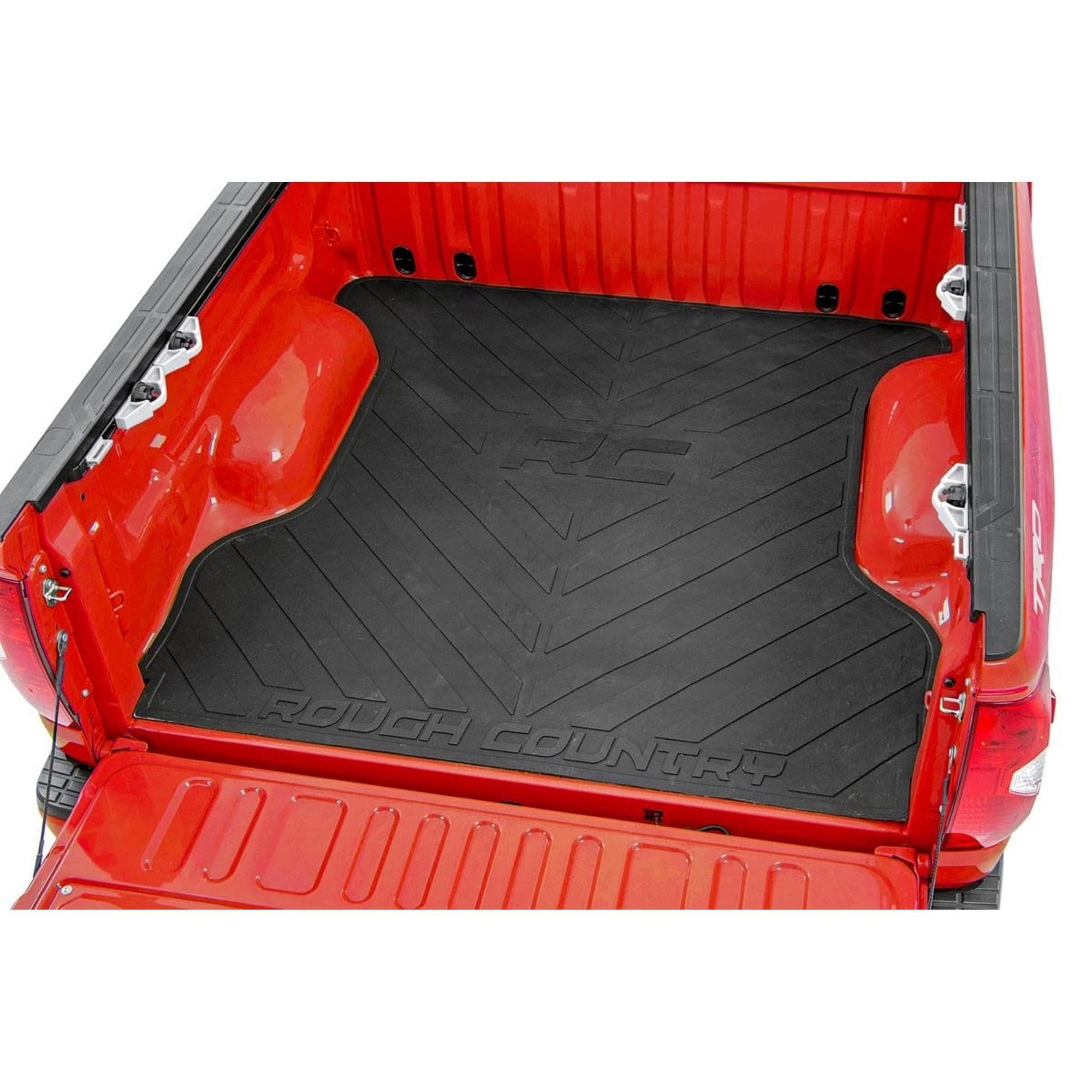
Rough Country’s truck bed mat range is built around thick, molded rubber protection. Current product information describes a 3/8-inch-thick Nyracord rubber construction, a textured non-skid surface and a drop-in installation. The company also lists a limited lifetime replacement warranty for manufacturer defects.
The range is unusually broad, with separate applications for common full-size pickups, midsize trucks and heavy-duty models. That makes it useful for shoppers who want the same general style of mat across different truck platforms, but it also means you need to select the correct configuration.
For example, Rough Country’s current Silverado/Sierra 1500 application is listed for 2019–2026 trucks and warns against models equipped with a drop-in bed liner or CarbonPro bed. Other part numbers cover F-150, Ram, Tundra, Tacoma and Super Duty applications. The Amazon ASIN used here is an example Silverado/Sierra listing, so it should not be treated as a universal product link for every truck.
The mat’s heavy rubber construction is particularly suited to owners who prioritize abrasion resistance and a strong physical barrier. It is less attractive if you frequently need to remove the mat by yourself or want a very thin, almost invisible layer.
Who should consider it?
It is a sensible choice for owners who want a thick rubber mat, strong traction and a straightforward drop-in installation at a relatively accessible price point.
Pros
- 3/8-inch heavy-duty rubber construction
- Textured non-skid surface
- Custom molded applications
- Simple drop-in installation
- Limited lifetime replacement warranty
Cons
- Heavy compared with thin polymer mats
- Fitment varies by bed length and truck
- Some applications exclude drop-in liners
- Floor-focused protection leaves upper bed areas exposed
5. BedRug Impact Bed Mat — Padded Protection for Work and Recreation
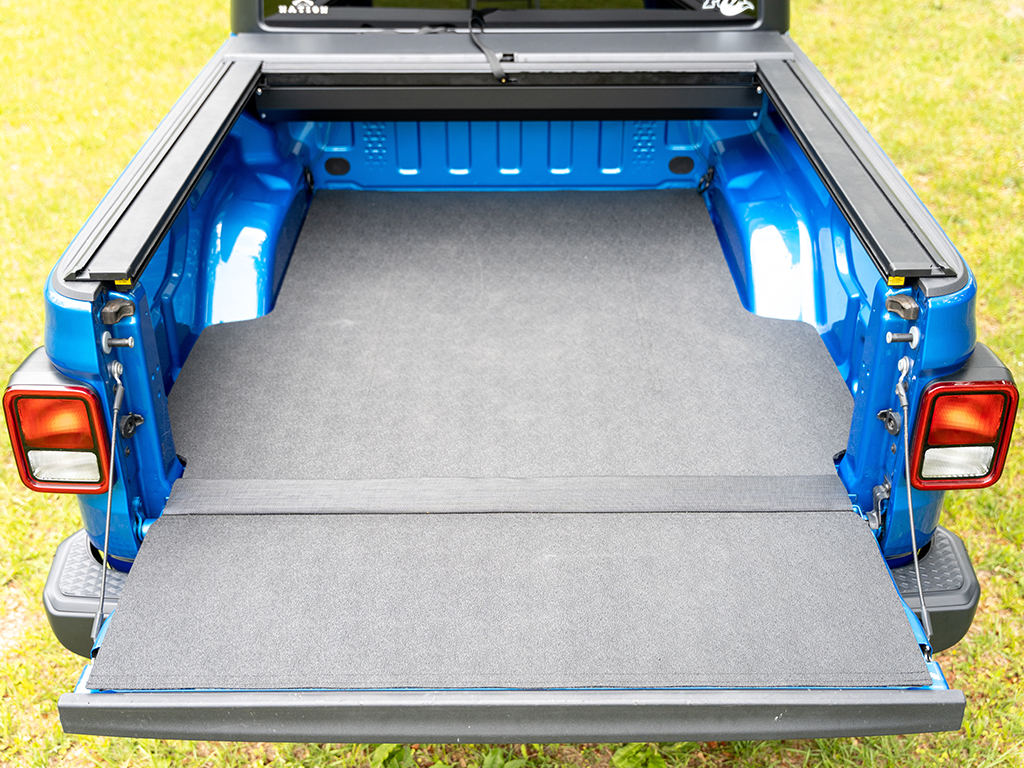
BedRug Impact is different from a conventional rubber mat because its main selling point is the combination of protection and cushioning. The Impact Mat uses a TPO composite surface over a 3/4-inch padded layer, creating a more comfortable surface for kneeling, loading and recreational use.
BedRug describes the Impact Mat as suitable for trucks with no bed liner or a spray-in liner, with vehicle-specific fitment. The current product design also incorporates a tailgate piece and integrated gap coverage on applicable kits. Installation uses hook-and-loop fasteners rather than drilling, although spray-in surfaces may require the manufacturer’s supplemental installation approach.
The padded construction does not mean it is delicate. BedRug states that the Impact surface is designed for exterior use and resistant to water, chemicals and stains. It is still a different type of product from a 3/8-inch rubber mat, though, and owners who regularly haul abrasive scrap may prefer a dense rubber surface.
Another benefit is comfort. If you frequently reach into the bed, kneel while working, or use the truck for camping and tailgating, a padded floor can be noticeably nicer than bare metal, spray-in coating or hard plastic.
Who should consider it?
It is particularly interesting for owners who want bed protection but also use the pickup for camping, recreation, loading delicate cargo or jobs that involve spending time inside the bed.
Pros
- 3/4-inch padded construction
- Anti-skid TPO composite surface
- More comfortable for kneeling
- Vehicle-specific fitment
- Tailgate and gap coverage on applicable kits
Cons
- More expensive than basic rubber mats
- Not the first choice for extremely abrasive cargo
- Exact kit varies by truck
- Installation on spray-in liners may need an additional kit
Why Rubber Still Makes Sense for Heavy-Duty Use
Rubber remains popular because it solves several truck-bed problems with one fairly simple material. A thick rubber mat has enough mass to stay put, enough resilience to cushion impacts, and enough texture to reduce cargo movement. It also tends to be straightforward to clean.
For owners searching specifically for the best rubber truck bed mat, thickness is useful but should not be the only number you compare. A thicker mat can provide more cushioning, but it is also heavier. Look at the underside as well. Drainage features or raised nibs can be valuable because a completely flat sheet can trap moisture between the mat and the bed.
Rubber also has a practical advantage when the truck is used for dirty work. Mud, sawdust and loose material can usually be swept or hosed away. If you routinely carry oily or chemical-contaminated equipment, check the manufacturer’s chemical-resistance information rather than assuming every rubber compound behaves the same way.
There is a limit, however. A bed mat protects the floor. It does not turn the entire truck bed into an armored enclosure. If you regularly carry cargo that strikes the sidewalls, a mat may need to be paired with a bed liner or other side protection.
Fitment and Bed-Liner Compatibility
Fitment is probably the most important part of buying a truck bed mat. A product can have excellent material and still be the wrong choice if its wheel-well contours, bed length or liner compatibility do not match your truck.
Match the exact bed length
Full-size pickups commonly have multiple bed lengths. A 5.5-foot or 5’7-inch bed is not interchangeable with a 6.5-foot or 8-foot bed. Midsize trucks have their own dimensions, and even two trucks with similar advertised bed lengths can have different wheel-well shapes.
Always use the manufacturer’s vehicle selector. Treat the ASINs in this article as specific listing examples, not universal identifiers for an entire product family.
Check the existing bed liner
A bare painted bed and a spray-in liner are often compatible with many bed mats, while a molded drop-in plastic liner can be a different story. Husky specifically excludes drop-in liners for the 16008 example, and WeatherTech says TechLiner is designed for painted or spray-in beds rather than drop-in liners.
Do not assume that a mat can simply be placed on top of whatever is already in the truck. Extra layers can change the fit around wheel wells and bed rails, and some mats rely on specific attachment points.
Look for factory equipment
Bed outlets, cargo-management systems, fifth-wheel hardware, gooseneck equipment, factory steps and other accessories can affect compatibility. A product that works on a standard bed may need a different version when the truck has an unusual factory option.
What to Consider Before Buying
1. Material
Rubber is the straightforward heavy-duty choice. Thermoplastic is attractive when low weight and molded fit matter. Padded TPO designs are better suited to owners who want comfort as well as protection.
2. Thickness
Thickness affects cushioning, weight and handling. A 3/8-inch rubber mat provides a substantial barrier, while a thinner molded polymer mat can be easier to lift and may preserve more of the original bed feel.
3. Traction
A bed mat should not become an ice rink for cargo. Textured surfaces, ribs and anti-skid patterns can help reduce movement. If you haul heavy equipment, pair the mat with proper tie-downs rather than relying on surface grip alone.
4. Drainage
Water trapped under a mat is undesirable. Raised underside features can allow air and moisture to move beneath the mat. Even with a drainage-friendly design, remove the mat occasionally and inspect the bed.
5. Tailgate coverage
Some bed mats stop at the bed floor, while others have a separate or integrated tailgate section. If the tailgate is a major loading surface for your work, full coverage may be worth prioritizing.
6. Installation
Most custom-fit mats are simple drop-in products, but not all are identical. Some use hook-and-loop fasteners, some rely mostly on their molded shape and weight, and universal mats may need trimming or drilling.
7. Cleaning
Think about the mess you normally carry. A contractor hauling soil may prefer a surface that can be hosed down. A camper who wants a comfortable place to sit may value cushioning more than the fastest possible cleanup.
8. Warranty
A long warranty is useful, but read what it actually covers. Manufacturer warranties can apply only to the original purchaser and original vehicle, and normal wear, misuse or improper installation may be excluded.
9. Price
Do not compare mats only by sticker price. A cheap universal sheet may require trimming and provide a less precise fit, while a vehicle-specific mat costs more but can save time and provide better coverage. Compare the complete setup you need.
Installation and Fitment: What Buyers Often Miss
Before installing any mat, clean the truck bed. Dirt trapped underneath can act like sandpaper, especially when the mat moves slightly under heavy cargo. Let the bed dry if the manufacturer’s instructions call for a dry surface.
Test-fit the mat before forcing it into position. The corners should sit naturally around the wheel wells and the tailgate opening should align with the intended edge. If the mat appears too short or too wide, stop and verify the part number instead of cutting immediately.
For a molded mat, give it time to relax if it arrives rolled or folded. Warm conditions can help flexible materials settle into their intended shape. Follow the manufacturer’s instructions rather than applying heat directly with a high-temperature tool.
If the product requires trimming, measure twice and cut conservatively. Removing material is easy; putting it back is not. Use the truck bed itself as the reference only when the manufacturer specifically calls for trimming.
After installation, check that factory tie-downs, drains and access points remain usable. Load a few normal items and drive carefully at first. If the mat shifts, curls or interferes with a tailgate or accessory, address the fit before using the truck for heavy hauling.
Maintenance and Long-Term Use
Good maintenance for a truck bed mat is mostly about cleaning and inspection. Pull the mat out occasionally and remove dirt, gravel and leaves from underneath. This is especially important after wet or muddy use.
For rubber mats, a hose and mild cleaner are usually enough for routine cleaning. Avoid aggressive chemicals unless the manufacturer says the material can handle them. Strong solvents can affect rubber, coatings, adhesives or nearby bed finishes.
Molded thermoplastic mats are similarly easy to clean, but inspect the edges and attachment points for damage. If a hook-and-loop fastener becomes loose, replace or repair it according to the manufacturer’s instructions rather than allowing the mat to move around.
Padded mats deserve a little more attention around seams and edges. Keep abrasive debris from accumulating around the perimeter and follow the manufacturer’s care guidance for the surface material.
Finally, inspect the bed itself. A mat can hide small scratches or moisture underneath it. Removing the mat periodically gives you an opportunity to catch corrosion, paint damage or trapped debris before a small problem becomes expensive.
Frequently Asked Questions
What are the best truck bed mats?
The right choice depends on how you use the truck. Husky Heavy Duty and Dee Zee Heavyweight are strong examples for hard work, WeatherTech TechLiner is a thinner molded option, Rough Country offers thick rubber mats for many applications, and BedRug Impact adds substantial cushioning. Fitment should be the deciding factor after you identify the material you want.
What are the best pickup truck bed mats for everyday use?
For general pickup use, a custom-fit rubber or thermoplastic mat is usually the easiest place to start. It protects the floor, reduces cargo movement and can be removed for cleaning. Choose the material based on whether you prioritize heavy impact protection, low weight or cushioning.
What is the best rubber truck bed mat?
Husky Heavy Duty, Dee Zee Heavyweight and Rough Country’s heavy-duty mats are all worth comparing. Husky emphasizes rubberized DuraGrip HD and moisture management, Dee Zee uses a thick cord-enhanced rubber compound on its Heavyweight example, and Rough Country offers 3/8-inch Nyracord rubber on many current applications.
What is the best heavy duty truck bed mat?
A thick rubber mat is usually the most straightforward choice for heavy-duty hauling. Dee Zee Heavyweight, Husky Heavy Duty and Rough Country are good examples of this approach. The exact model still needs to match your truck’s bed length and existing liner.
Are truck bed mats worth it?
They can be, especially if you regularly haul tools, equipment, lumber or other cargo that can scratch or dent the bed. A mat is also relatively easy to remove compared with permanent bed protection. It does not protect the entire bed, so consider what parts of the truck are actually exposed to your cargo.
Will a truck bed mat prevent dents?
A thick mat can absorb some impact and reduce direct contact between cargo and the metal bed, but it cannot guarantee that the bed will not dent. Heavy or concentrated loads can still damage the truck. Use proper tie-downs and distribute heavy cargo when possible.
Can I put a bed mat over a spray-in liner?
Many mats are designed to work with spray-in liners, but the answer is product-specific. Husky’s 16008 example is intended for spray-in or non-liner applications, while WeatherTech says TechLiner can be used with most spray-in liners. Always confirm the exact product instructions.
Can I put a bed mat over a drop-in liner?
Do not assume so. Some custom-fit mats specifically exclude drop-in liners because the extra plastic layer changes the dimensions. Husky 16008 and WeatherTech TechLiner are examples where the manufacturer provides a specific warning. Check before buying.
Are thicker truck bed mats better?
Not automatically. More thickness can improve cushioning and impact resistance, but it also increases weight and can make the mat harder to remove. If you mostly carry light cargo, a thinner molded mat may be more convenient.
Do truck bed mats trap water?
Any mat can trap debris or moisture if the underside is not allowed to dry. Designs with raised nibs, cleats or drainage channels are intended to improve airflow and drainage. Removing the mat occasionally and cleaning underneath it is still good practice.
Do truck bed mats work with tonneau covers?
Usually the two accessories can coexist, but compatibility depends on the exact products. A mat normally sits on the bed floor, while a tonneau cover attaches at the bed rails. Check for interference around clamps, cargo-management hardware and tailgate components.
How do I measure for a truck bed mat?
Start with the manufacturer’s fitment selector rather than measuring alone. Confirm year, make, model, cab and bed length, then verify the bed-liner type and factory options. For universal mats, measure the usable floor area and account for wheel wells and tailgate clearance before cutting.
Can I cut a custom truck bed mat?
Only if the manufacturer says trimming is allowed. A custom-molded mat is normally shaped for a specific truck, and cutting it can remove important coverage or change how it sits. Universal mats are the safer choice when trimming is expected.
Final Thoughts
The best truck bed mat is the one that matches both the truck and the work you ask it to do. A thick rubber mat makes a lot of sense when the bed regularly sees tools, equipment and rough cargo. A molded thermoplastic mat can be preferable when you want a lower-profile, easier-to-handle layer. And a padded design can be surprisingly useful when the truck doubles as a camping or recreation vehicle.
For heavy everyday use, the Husky Liners Heavy Duty Bed Mat is a strong example of a rubberized work-focused design. The Dee Zee Heavyweight takes the traditional thick-rubber route, while the WeatherTech TechLiner offers a thinner molded alternative.
If you want another thick rubber option, the Rough Country Rubber Bed Mat range is worth checking. For owners who want more cushioning and a comfortable work surface, the BedRug Impact takes a different approach.
Before ordering, verify the truck year, generation, bed length and existing liner. Check whether you have a drop-in or spray-in liner, and look at factory equipment that could interfere with the mat. That short fitment check is more important than choosing a product simply because it has the thickest material or the longest feature list.
A good bed mat should make the pickup easier to use, not add another problem to manage. Get the fit right, clean underneath it occasionally, and choose a material that matches your cargo. Once those basics are covered, even a simple mat can make a noticeable difference in how confidently you use the truck bed.