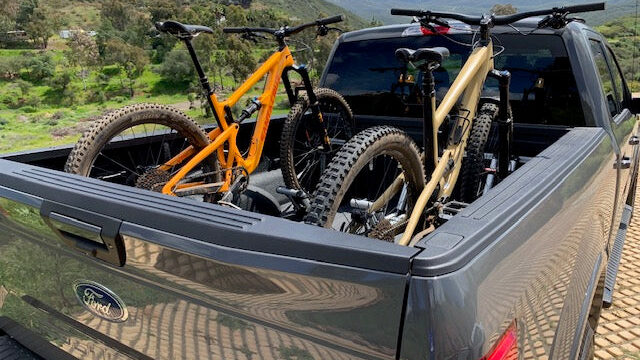
Taking a bike to a trailhead, campground, race, or weekend ride is one of the things a pickup truck does particularly well. The bed gives you room for bikes and the rest of your gear, but simply laying a bicycle in the bed is not always a good solution. Bikes can slide, handlebars can clash, wheels can move, and an expensive frame can end up rubbing against the truck or another bike.
A dedicated truck bed bike rack solves that problem by giving the bike a defined mounting point. Depending on the design, it can hold the bike by the front wheel, fork, tires, or another part of the bicycle while leaving useful space in the rest of the bed.
The challenge is that truck bed bike racks are not all designed for the same job. A compact side-mounted rack can be excellent when you carry one bike and need the rest of the bed for tools or camping gear. A three-bike wheel-mount rack makes more sense for a family or riding group. A fork-mount rack can provide a simple, low-profile setup, but you have to remove the front wheel and make sure the axle interface matches your bike.
For this guide, we researched current Amazon-listed products and checked their specifications against available manufacturer information. We focused on five different approaches rather than filling the list with nearly identical racks. If you are comparing the best bike rack for pickup truck use or the best bike rack for pickup bed setups, the goal is the same: choose a rack that actually fits your truck, bike, and normal way of traveling.
If you carry several bikes and want to keep the front wheels installed, the Pipeline Racks 3-Bike Truck Bed Rack uses a wheel-mount design and is sized for full-size beds 59 inches or wider. For one bike, the Thule Insta-Gater Pro holds a bike up to 50 pounds without frame contact and accepts tires up to 5 inches wide. The INNO RT201 is a compact one-bike mount that keeps the front wheel installed and leaves most of the bed available. The JOYTUTUS Truck Bed Bike Rack is a three-bike tire-retention design for full-size pickups, while the Swagman PICKUP is a two-bike fork-mount rack with a 45-pound-per-bike stated capacity.
- Our Top Picks
- What Is a Truck Bed Bike Rack?
- Types of Truck Bed Bike Racks
- How We Chose
- Detailed Reviews
- Truck Bed Bike Rack Comparison
- How to Choose the Right Rack
- Truck Bed Bike Racks and Tonneau Covers
- Using a Rack for an Electric Bike
- Choosing a Rack for a Mountain Bike
- Installation and Loading Tips
- Common Mistakes to Avoid
- Bike Security
- Maintenance and Storage
- Frequently Asked Questions
Our Top Picks
If you are comparing the best truck bed bike racks, these five options cover the main ways people carry bikes in a pickup bed. Pipeline Racks and JOYTUTUS use wheel or tire retention so the front wheel can stay installed. Thule also keeps the front wheel installed but uses a ratcheting arm that grabs the wheel near the tailgate. INNO takes a compact side-mount approach, while Swagman uses traditional fork mounts.
Thule Insta-Gater ProSingle-bike wheel-grab system; up to 50 lb and 5-inch tires
INNO RT201 Velo GripperCompact one-bike side mount with no front-wheel removal
JOYTUTUS 3-Bike Truck Bed Bike RackTire-retention system for full-size pickups; up to three bikes
Swagman PICKUP Fork Mount Bike RackTwo-bike telescoping fork mount with 45-lb-per-bike capacity
What Is a Truck Bed Bike Rack?
A truck bed bike rack is a mounting system that secures one or more bicycles inside a pickup bed. Instead of allowing the bike to lie loose on the floor, the rack keeps it in a predictable position and reduces movement while the truck is being driven.
That sounds straightforward, but the way a rack holds the bicycle can make a major difference in everyday use. Some racks grab the front tire, some clamp the fork after the wheel is removed, and some hold the bike near the side of the bed. There are also larger systems that span the bed and support several bikes at once.
The best choice therefore depends on several measurements and specifications. You need to consider the truck’s usable bed width, the bike’s wheel and tire size, the bike’s weight, the number of bikes you normally transport, and whether the truck has a tonneau cover or other bed accessories.
There is also a practical question that product descriptions sometimes overlook: how much of the truck bed do you still need for other things? A rack that carries three bikes may be useful for a family ride, but a single side-mounted carrier may be a better fit for someone who uses the same truck for work during the week and cycling on weekends.
A truck bed bike rack should also not be treated as a universal security system. A rack can hold a bicycle in position, but theft protection depends on the specific locking features, the truck, the bike, and where the vehicle is parked. For longer stops, a separate quality cable or chain lock can add another layer of security.
Types of Truck Bed Bike Racks
Wheel-mount racks
Wheel-mount racks secure the bike using its tires rather than clamping the frame or removing the front wheel. This is attractive when you want quick loading and do not want to deal with loose front wheels in the bed.
The Pipeline Racks system is a good example of this style. Its wheel cradles are arranged across the truck bed and can hold multiple bikes. Because the rack is designed around the wheels, it can also avoid the need to match a particular front-fork axle standard.
Wheel-grab or upright racks
A wheel-grab rack holds a bike upright by the front wheel. The Thule Insta-Gater Pro is an example. The bike remains assembled, and the ratcheting arm secures the wheel without contacting the frame.
This format is particularly convenient for a single bike. It can also be useful for bikes with different fork standards because the rack is not relying on a fork skewer to hold the bicycle.
Side-mounted racks
A compact side-mounted system can be a practical truck bed bike mount when you want one bicycle secured without giving up the center of the bed. These systems attach to the side rail or another suitable area of the bed and keep the bike close to the truck wall. The main advantage is space efficiency. Much of the bed floor remains available for coolers, tools, luggage, camping equipment, or other cargo.
The INNO RT201 is built around this idea. It is designed for one bike and has a stated 33-pound maximum capacity, so it is important to compare the bike’s actual weight with the rack before buying.
Fork-mount racks
Fork-mount racks secure the bicycle at the front fork. The front wheel is removed, and the fork is attached to a skewer or compatible axle mount. The rear wheel remains on the truck bed.
This approach can provide a low, controlled mounting position and is familiar to cyclists who already use fork mounts on other vehicle racks. The trade-off is that you need to verify axle compatibility and find a place for the front wheel while traveling.
Multi-bike bed racks
When two, three, or more bikes need to travel together, a wider bed rack can be more practical than installing several individual mounts. Multi-bike systems need careful attention to handlebar clearance, wheel position, bed width, and bike-to-bike contact.
More capacity also does not automatically mean better fit. A three-bike rack designed for a full-size pickup may not be appropriate for a narrow compact bed. Always check the rack’s stated fit range before ordering.
How We Chose
We researched Amazon-listed products and then checked important specifications against manufacturer information where available. We did not treat customer-review anecdotes or generic marketing language as technical specifications.
Fit was one of the first things we considered. A rack that does not fit the truck bed or bike is not useful regardless of its construction.
Bike capacity and weight limits were also important. The difference between one 50-pound bike and two 45-pound bikes is significant, especially if you are considering an electric bike.
Mounting method was another key factor. We included wheel-mount, wheel-grab, side-mount, and fork-mount designs so you can compare the advantages and limitations of each.
Bed-space use matters in a pickup because the truck often carries more than bicycles. A compact mount that leaves most of the floor open can be more useful than a large rack for some owners.
Finally, we looked for products with identifiable Amazon listings and verifiable ASINs. Specifications can change, so we recommend checking the current Amazon listing and the manufacturer’s current fit information before purchasing.
We also want to be clear about the testing basis for this guide: we did not conduct a hands-on laboratory test of these five racks. The comparisons below are based on published specifications, product information, and practical compatibility considerations rather than a claim of personal road testing.
Detailed Reviews
1. Pipeline Racks 3-Bike Truck Bed Rack
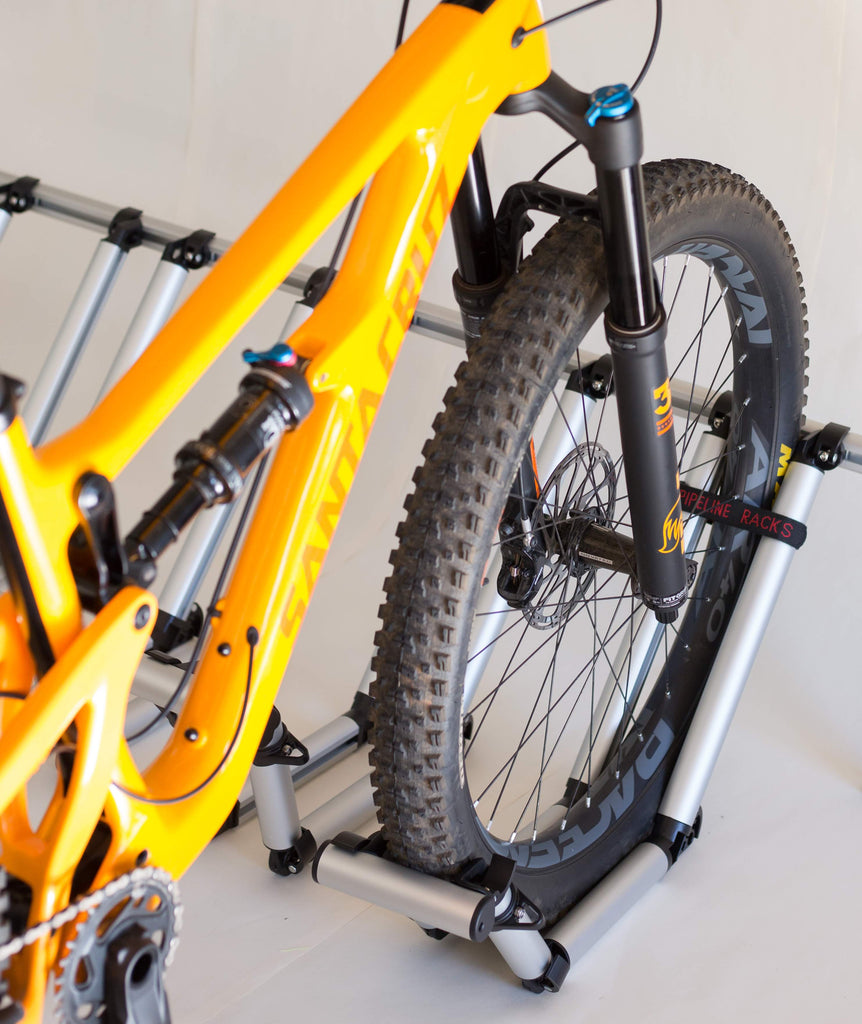
The Pipeline Racks 3-Bike Truck Bed Rack is built for riders who need more than a single-bike mount. Its main advantage is the wheel-mount layout: the bikes are held by their wheels, so you can load them without removing the front tires.
The full-size three-bike version is designed for truck beds measuring 59 inches or wider. Pipeline lists compatibility with 20- to 29-inch wheel diameters and tire widths from 0.75 to 2.8 inches. An optional fat-tire conversion kit extends the stated tire-width compatibility to 5 inches.
The recommended three-bike arrangement places two bikes facing forward and one facing rearward. That arrangement helps make use of the available bed width and can reduce handlebar conflicts compared with placing all three bikes in the same direction.
The rack is made from aluminum, and the manufacturer describes the design as rust resistant. Installation is drill-free, using straps and the included mounting hardware rather than requiring permanent holes in the truck bed.
One detail worth checking is bed width. The product is not a universal three-bike rack for every pickup. Pipeline’s own fit guide separates sub-compact, compact, and full-size beds by width, so measure the truck at the correct location before ordering.
The rack is also listed for mountain bikes, road bikes, cruisers, BMX bikes, fat-tire bikes, and e-bikes. That does not mean every e-bike configuration is automatically suitable. The bike’s weight, wheel size, tire width, and the exact rack configuration still need to be within the stated limits.
The published Amazon listing identifies ASIN B003YGSXME. Because product configurations can change, confirm that the listing you purchase corresponds to the three-bike full-size version described here.
Who should consider it?
Consider Pipeline Racks if you regularly carry two or three bikes, have a sufficiently wide truck bed, and want to keep the front wheels installed. It is particularly relevant for families, riding groups, and owners who prefer wheel retention over fork mounting.
Pros
- Three-bike capacity
- Wheel-mount design keeps front wheels installed
- 20- to 29-inch wheel compatibility
- Standard tire width up to 2.8 inches
- Optional fat-tire conversion to 5 inches
- All-aluminum construction
- No drilling required
Cons
- Requires a full-size bed at least 59 inches wide for this version
- Three-bike loading needs careful handlebar spacing
- Fat-tire compatibility requires the optional conversion kit
- Large rack is unnecessary if you normally carry one bike
2. Thule Insta-Gater Pro
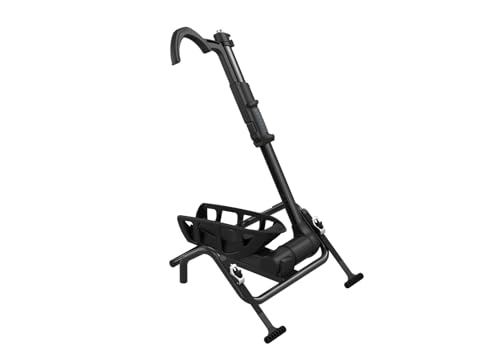
The Thule Insta-Gater Pro takes a very different approach. It is a single-bike upright carrier that secures the front wheel with a ratcheting arm, so you do not need to remove the front wheel before loading the bike.
Thule lists a maximum bike weight of 50 pounds, wheel sizes from 20 to 29 inches, and tire widths up to 5 inches. The manufacturer specifically lists mountain, downhill, e-bike, and fat-bike applications among the intended uses.
One of the most useful features is that the rack does not clamp the bicycle frame. The ratcheting arm secures the wheel instead. That can be important for riders who do not want a rack pressing directly against a carbon frame.
The rack is designed to fit pickup tailgates and does not require bolting or drilling. It also includes a lock compatible with Thule’s One-Key system. That provides a built-in layer of security, although Thule itself notes that a rack lock is not a guarantee against theft and recommends additional cable or wheel locks for added protection.
The main limitation is capacity. This is a one-bike rack, so it is not the right format if you routinely travel with three or four bicycles. It is much more appealing when your normal use is one bike and you value quick loading.
The 50-pound limit also deserves attention for e-bike owners. A 50-pound rating does not mean every electric bike will fit; you need to weigh the complete bike in the configuration you transport, including accessories that remain attached.
The current Thule specification lists the rack at 40.6 by 18 by 6.7 inches and 11 pounds. The published Amazon listing associated with this model is ASIN B0051PDK3I.
Who should consider it?
Consider the Insta-Gater Pro if you carry one bike, want to keep the front wheel installed, prefer wheel rather than frame contact, and need compatibility with wider tires or a heavier bike within the 50-pound limit.
Pros
- 50-pound maximum bike weight
- 20- to 29-inch wheel compatibility
- Up to 5-inch tire width
- No front-wheel removal
- No frame contact from the ratcheting arm
- No drilling or bolting
- Integrated One-Key-compatible lock
Cons
- One-bike capacity
- Not a solution for a family or group carrying several bikes
- 50-pound limit may exclude heavier e-bikes
- Still requires careful truck and tailgate fit checking
3. INNO RT201 Velo Gripper Truck Bed Bike Rack
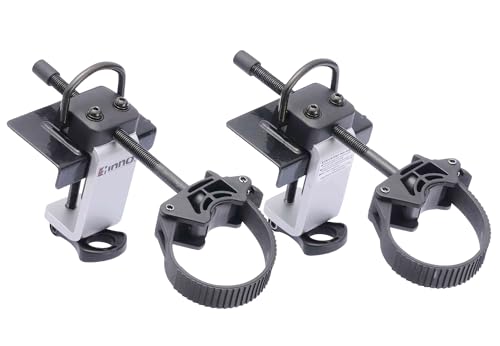
The INNO RT201 is designed around one simple idea: keep the bike to the side of the truck bed so you can use most of the remaining floor for other cargo.
INNO describes the RT201 as a one-bike mount for standard truck beds. It does not require front-tire removal, works with different types of bikes, and has a stated maximum weight capacity of 33 pounds.
The mount uses a ratcheting fork holder and attachment hardware that clamps to the truck-bed side area. The bike remains upright with both wheels installed. A D-ring is included for tie-down straps, and the system is intended to work with standard bicycle cable locks.
The compact layout is the reason to look at this product rather than a larger cross-bed rack. If you carry a cooler, toolbox, luggage, camping boxes, or other equipment in the bed, having the bike occupy a narrow area along the side can make the rest of the bed easier to use.
There are some important limitations. The 33-pound capacity is lower than the limits of the Thule and Swagman products in this guide. That makes the RT201 a poor choice for many heavier e-bikes, even if the bike physically fits.
You should also check your truck’s rail configuration before buying. The RT201 is intended for standard truck beds, while INNO also sells related products for C-channel systems. Do not assume that every INNO Velo Gripper product is the same mount.
The RT201’s published Amazon ASIN is B002MZQTL0.
Who should consider it?
Consider the RT201 if you carry one relatively light bike and want to preserve as much truck-bed floor space as possible. It is especially interesting for owners who use the pickup for both cycling and everyday cargo hauling.
Pros
- Compact one-bike design
- Leaves most of the bed floor available
- No front-wheel removal
- No drilling required
- Works with standard bicycle cable locks
- D-ring included for additional tie-down use
Cons
- 33-pound maximum stated capacity
- One-bike capacity
- Requires compatible truck-bed side mounting
- Less suitable for heavier e-bikes
4. JOYTUTUS 3-Bike Truck Bed Bike Rack
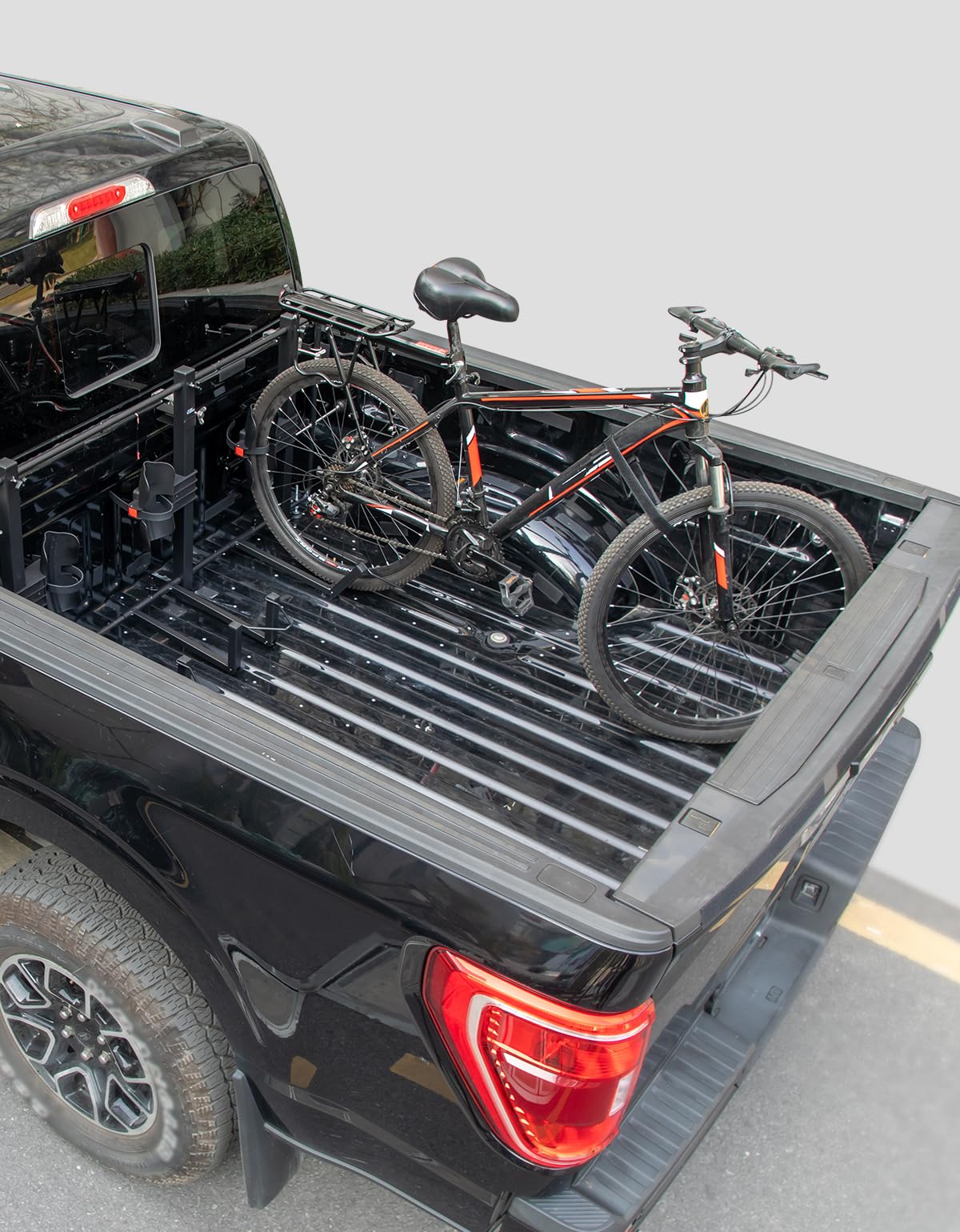
The JOYTUTUS truck bed rack is another multi-bike design, but its mounting method is different from the Pipeline system. It uses tire retention, with a tire-locking clamp and a fixed tire bracket designed to reduce movement.
The product is designed for full-size pickups and is listed as compatible with common full-size truck families including Ford, Chevrolet, GMC, Dodge/Ram, and Toyota. Because pickup beds differ even within the same model family, the manufacturer’s vehicle compatibility information should still be checked before purchase.
The rack can carry up to three bikes, but the weight limit is particularly important. Available product information recommends bikes under 33 pounds each. That is a significant limitation for anyone considering an electric bike, and the listing specifically excludes fat-tire e-bikes.
The tire-based design means the front wheels stay on the bikes. That is convenient when you want to load quickly and do not want to carry several loose wheels in the bed. It also avoids the need to match a fork mount to a specific axle standard.
The rack uses an anti-wobble and anti-rollover approach, including tire retention and an additional front-wheel strap. The manufacturer also describes a no-drill installation.
The trade-off is that this is a fairly substantial system compared with a single-bike side mount. If you only carry one bicycle, much of its capacity will go unused. If you regularly carry several standard-weight bikes, however, the format is more relevant.
The Amazon listing for this product is ASIN B0CQ1TSZWY.
Who should consider it?
Consider JOYTUTUS if you have a full-size pickup, regularly transport up to three standard-weight bikes, and want to keep the front wheels installed. It is much less suitable for heavy e-bikes because of the 33-pound-per-bike guidance.
Pros
- Up to three bikes
- No front-wheel removal
- Tire-retention design
- Anti-wobble and anti-rollover features
- No drilling required
- Fits common full-size pickup configurations
Cons
- Recommended for bikes under 33 pounds
- Not intended for fat-tire e-bikes
- Primarily aimed at full-size pickups
- More involved than a simple one-bike side mount
5. Swagman PICKUP Fork Mount Bike Rack
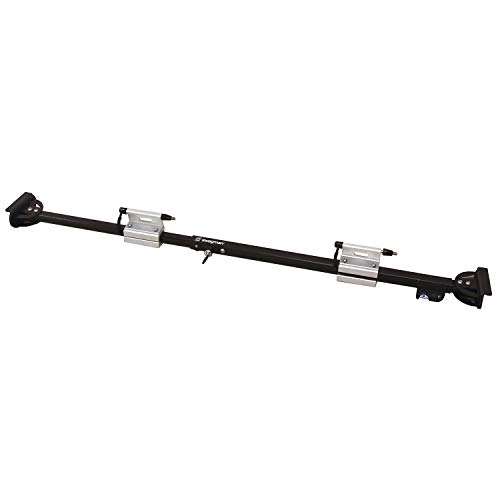
The Swagman PICKUP is a straightforward fork-mount rack for pickup trucks. It carries up to two bikes and uses a telescoping bar that presses into the truck bed rather than requiring holes to be drilled into the bed.
Swagman currently lists a 45-pound-per-bike weight limit and says the rack fits most mid-size and full-size pickup beds. The standard version uses 9mm quick-release fork mounts, so the front wheel must be removed before loading the bicycle.
That fork-mount arrangement has a familiar advantage: once the fork is secured to the skewer, the bike sits in a low and predictable position. The fork blocks can be adjusted along the bar to accommodate the bikes and help manage handlebar spacing.
The telescoping bar and press-fit installation make the system removable. Swagman also includes an integrated lock that secures the rack to the truck bed. Additional fork mounts can be purchased separately if you want to expand the system to a third bike.
The main compatibility issue is the 9mm quick-release fork. Modern mountain bikes and road bikes increasingly use thru-axles, so you should identify your bike’s front axle standard before ordering. A rack that uses a 9mm quick-release mount is not automatically compatible with a 12mm or 15mm thru-axle fork.
The Amazon listing associated with the Swagman PICKUP is ASIN B00I25NI4K.
Who should consider it?
Consider the Swagman PICKUP if you want a simple two-bike fork-mount rack, your bikes use compatible 9mm quick-release forks, and you do not mind removing the front wheels during loading.
Pros
- Two-bike capacity
- 45-pound-per-bike stated limit
- Fits most mid-size and full-size pickups
- Telescoping bar
- No drilling required
- Integrated rack lock
- Can be expanded with an additional fork mount
Cons
- Standard mount uses 9mm quick-release forks
- Front wheels must be removed
- Loose wheels need storage space in the truck bed
- Thru-axle bikes need compatible mounting hardware
Truck Bed Bike Rack Comparison
| Product | Mount Type | Bike Capacity | Front Wheel | Important Fit Detail |
|---|---|---|---|---|
| Pipeline Racks 3-Bike | Wheel mount | 3 | Stays on | Full-size version needs 59-inch-plus bed width; 20-29 in. wheels |
| Thule Insta-Gater Pro | Wheel-grab upright | 1 | Stays on | 20-29 in. wheels, tires up to 5 in., 50 lb max |
| INNO RT201 | Side mount | 1 | Stays on | 33 lb max; standard truck beds |
| JOYTUTUS 3-Bike | Tire mount | 3 | Stays on | 21.5-31.5 in. tires; under 33 lb per bike |
| Swagman PICKUP | Fork mount | 2 | Removed | 9mm quick release; 45 lb per bike |
How to Choose the Right Truck Bed Bike Rack
1. Start with the number of bikes
This sounds obvious, but it is the easiest way to eliminate unsuitable racks. If you always carry one bike, a large three-bike system adds size and complexity without giving you much benefit. If you routinely travel with a partner or children, a single-bike carrier can quickly become inconvenient.
Think about your normal use rather than the largest group you might transport once a year. If you usually carry one bike and occasionally carry a second, you can compare a two-bike system with the possibility of adding a second mount later.
2. Measure the truck bed
Do not rely only on the advertised bed length. Bike racks often depend on the width between the bed walls, the shape of the rails, and the position of the wheel wells or other accessories.
For example, Pipeline’s full-size three-bike rack requires a bed width of at least 59 inches. Its fit guide specifically recommends measuring across the bed floor at the front wall. That is a good example of why a generic “full-size truck” description is not enough by itself.
Also check for a spray-in or drop-in bed liner, bed rail caps, a toolbox, sliding tie-downs, storage boxes, or other equipment that changes the available mounting area.
3. Check your bike’s weight
Weight becomes especially important when you are shopping for an electric-bike carrier. Two racks can look similar while having very different load limits.
The Thule Insta-Gater Pro is listed for one bike up to 50 pounds. The Swagman PICKUP is listed at 45 pounds per bike. INNO RT201 has a 33-pound maximum, and JOYTUTUS recommends bikes under 33 pounds. Those differences are significant.
Weigh the complete bicycle in the condition in which you transport it. If you leave a battery, rack bag, water bottle, lock, or other accessories on the bike, include them in the total.
4. Check the wheel and tire size
Wheel diameter and tire width are separate measurements. A rack can accept a 29-inch wheel but still be unsuitable for a very wide tire.
The Thule Insta-Gater Pro accepts 20- to 29-inch wheels and tires up to 5 inches wide. Pipeline’s standard tire-width range is up to 2.8 inches, with an optional conversion kit extending to 5 inches. JOYTUTUS lists a 21.5- to 31.5-inch tire range.
Measure the actual tire, especially if you ride a plus-size or fat bike.
5. Identify the front axle standard
This matters most with fork-mount racks. A 9mm quick-release fork is not the same as a 12mm or 15mm thru-axle fork.
The Swagman PICKUP standard configuration uses 9mm quick-release fork mounts. If your mountain bike uses a thru-axle, you need to confirm whether a compatible mount or adapter is available before buying.
Wheel-mount and wheel-grab designs can be easier in this respect because they do not depend on the fork axle interface.
6. Decide whether you want to remove the front wheel
Removing a wheel is not necessarily bad. Fork-mount systems can be stable and compact, and some riders prefer the low position of a fork-mounted bike.
But if you frequently stop at trailheads, load the bike in a hurry, or do not want loose wheels taking up bed space, a wheel-retention design can be more convenient.
7. Consider the amount of bed space you need
Pickup owners often use the bed for more than bikes. Camping trips may involve coolers, tents, chairs, storage boxes, recovery gear, and tools. Work trucks may need the entire floor during the week.
A side-mounted system such as the INNO RT201 is designed around this problem. It keeps one bike near the bed side instead of occupying a large central section.
8. Think about frame contact
Not every cyclist wants a rack to clamp directly onto the bicycle frame. This is particularly relevant when you have an expensive painted frame or a carbon frame.
The Thule Insta-Gater Pro uses a ratcheting arm that secures the wheel without frame contact. Wheel-mount systems such as Pipeline and JOYTUTUS also focus their retention around the tires.
Fork-mount racks are a different case because they secure the front fork. That is not inherently a problem, but the mount must be compatible with the fork and installed correctly.
9. Check how the rack interacts with your tailgate
Some racks depend on the tailgate for their installation or positioning. Others sit across the bed or clamp to the side rail. Before ordering, understand whether the tailgate must remain closed, partially open, or in a particular position during installation.
This matters if you use a tailgate extender, camping accessory, or other equipment that changes the tailgate area.
10. Consider how often you remove the rack
If the truck is your daily work vehicle, you may want a rack that can be removed quickly. A permanently installed or bulky system can become annoying if it interferes with normal cargo.
No-drill and clamp-on designs are often attractive for this reason, but they still need to be installed and checked correctly each time they are repositioned.
Truck Bed Bike Racks and Tonneau Covers
A tonneau cover can make bike transport more complicated because the rack, bicycle, and cover all compete for the same vertical space.
There is no universal answer to the question of which is the best bike rack for truck bed with tonneau cover. The correct combination depends on the height of the rack, the position of the bike, the type of cover, and whether the cover needs to roll, fold, retract, or hinge into a particular position.
Before buying, measure the clearance between the bed floor and the closed cover. Then measure the height of the bike at the point where the rack will hold it. Remember that handlebars and saddles can be substantially higher than the rack itself.
A low side-mounted system can sometimes make it easier to preserve cover clearance, but you should not assume compatibility simply because a rack is described as compact. The exact truck and cover combination still needs to be checked.
Also consider whether the cover must remain fully functional while the bike is loaded. A setup that technically fits but prevents the cover from closing may not be useful for everyday travel.
Using a Rack for an Electric Bike
Electric bikes require extra attention because their weight can exceed the limits of many traditional bike mounts.
Start with the actual weight of the e-bike. Do not rely on the fact that a product page mentions e-bikes. The rack still has a maximum capacity, and the complete bike must remain below it.
The Thule Insta-Gater Pro is listed for one bike up to 50 pounds and is specifically described for e-bikes. Pipeline also lists e-bikes among the compatible bike types, with its wheel and tire compatibility still applying.
By contrast, the JOYTUTUS model in this guide is recommended for bikes under 33 pounds and specifically excludes fat-tire e-bikes. The INNO RT201 has a 33-pound maximum, which also makes it unsuitable for many heavier electric bikes.
The Swagman PICKUP’s 45-pound-per-bike limit gives it more capacity than the 33-pound options, but its standard 9mm quick-release fork mount creates a separate compatibility question.
For any heavy e-bike, check three things before buying: the bike’s total weight, the rack’s per-bike limit, and the physical compatibility of the bike’s tires, wheels, and mounting interface.
Choosing a Rack for a Mountain Bike
Mountain bikes are generally well suited to truck-bed transport because their larger tires and upright position work naturally with many bed-mount systems. The main question is how you want to secure the bike.
A wheel-mount system is convenient because the front wheel stays installed. This can be useful for modern mountain bikes with different thru-axle standards because the rack does not need to grip the fork axle.
A fork-mount rack can also work very well, particularly if you already use a 9mm quick-release front wheel. It creates a low, predictable mounting point but requires the wheel to be removed.
Wide mountain-bike tires need special attention. A rack that accepts standard 2.3- or 2.4-inch tires may not accept a very wide 2.8-inch or fat tire. Check the actual measured tire width rather than assuming all mountain bikes fit.
Suspension and handlebar height can also affect tonneau-cover clearance. A bike that fits the rack can still be too tall for a closed cover.
Installation and Loading Tips
Measure before installing
Confirm the rack’s required bed width and mounting area before tightening anything. This is particularly important with telescoping racks and systems that depend on a specific rail position.
Protect the truck’s contact points
Check that rubber pads, clamps, straps, and other contact surfaces are correctly positioned. Dirt trapped between a clamp and the truck can cause scratches over time.
Load the bike carefully
Keep the bicycle centered and make sure the tires, fork, or wheel grabber is seated exactly as the rack instructions specify. Do not improvise a mounting position because it appears to fit.
Secure the rear wheel
Some racks provide a specific rear-wheel strap or another retention point. Use it when supplied. The front mount controls the bike, but the rear wheel can still move if it is not restrained properly.
Check handlebar clearance
With multiple bikes, rotate or stagger the bikes as required to keep handlebars, pedals, saddles, and frames from touching each other.
Recheck after a short drive
After installing the rack and loading the bikes, drive a short distance and stop somewhere safe to inspect the mounting points. Look for loose straps, shifted bikes, or movement that was not present during installation.
Use additional restraints when appropriate
A rack’s mounting system is the primary attachment point, but additional straps can help control wheel movement or add security. Follow the rack manufacturer’s instructions rather than assuming that more straps are always better.
Common Mistakes to Avoid
Buying by the truck model alone
Two trucks with the same name can have different bed configurations, rail systems, or accessories. Always check measurements and the exact rack fit guide.
Ignoring the bike’s actual weight
This is one of the biggest mistakes with electric bikes. A bike can fit physically and still exceed the rack’s rated capacity.
Forgetting the front-wheel storage problem
Fork-mount racks require the front wheel to come off. If you have limited bed space, two or three loose wheels can become an unexpected inconvenience.
Assuming all thru-axles are the same
Thru-axle diameter and spacing vary. If the rack uses a fork mount, verify the exact interface.
Overlooking the tonneau cover
A rack can be perfectly compatible with the truck but incompatible with your cover. Check the height of the complete loaded bike.
Putting too many bikes on a rack
Do not exceed the rack’s stated capacity just because an additional bike appears to fit physically. Capacity is determined by the rack design and mounting system, not available space alone.
Skipping the final inspection
Always check the rack and bike before driving away. A clamp that looks tight from a distance may not be fully engaged.
Bike Security
A truck bed puts a bicycle inside the vehicle’s cargo area, but that does not make the bike theft-proof. If you stop somewhere while the bike remains in the truck, consider how the rack and bicycle can be secured.
The Thule Insta-Gater Pro includes a One-Key-compatible lock. The Swagman PICKUP includes an integrated rack lock. The INNO RT201 is designed to work with standard bicycle cable locks and includes a D-ring for tie-down use.
Even when a rack includes a lock, consider using an additional quality cable or chain through the bicycle frame and an appropriate secure point when the situation calls for it. A rack lock and a bicycle lock serve different purposes.
Security is also about visibility. If you are leaving the truck unattended, a tonneau cover or other appropriate cargo-covering solution can reduce how visible the bicycle is, but only if the loaded bike and rack physically fit under the cover.
Maintenance and Storage
Truck beds are exposed to dust, rain, mud, road salt, and temperature changes. A bike rack therefore deserves occasional maintenance even if it appears simple.
Check bolts, clamps, straps, locking mechanisms, rubber pads, and adjustment points for damage or unusual wear. If a strap becomes frayed or a locking component no longer works correctly, replace the damaged component before transporting a bike.
Keep fork mounts and wheel cradles free of dirt that could prevent a secure fit. If the rack uses a telescoping bar, inspect the adjustment points periodically and keep them operating according to the manufacturer’s instructions.
When you are not using a removable rack, store it somewhere dry. This is particularly useful for keeping small hardware together and preventing straps from becoming tangled or damaged.
For racks that remain installed in the truck, periodically inspect the contact points between the rack and the bed. Dirt or moisture trapped between surfaces can cause cosmetic damage over time.
Frequently Asked Questions
What is the best truck bed bike rack?
There is no single rack that fits every pickup and bike. Start with the number of bikes, bed width, bike weight, tire size, axle type, and whether you need to keep the front wheel installed. The five racks in this guide use different mounting approaches for those different requirements.
What is the best bike rack for a pickup truck?
The answer depends on the pickup and the bike. A full-size truck carrying three standard bikes may need a completely different system from a midsize truck carrying one lightweight bike. Measure the bed and check the rack’s capacity before choosing.
What is the best bike rack for pickup bed use?
For pickup-bed use, compare wheel-mount, wheel-grab, side-mount, and fork-mount designs. Wheel and wheel-grab racks let you keep the front wheel installed, while fork mounts require wheel removal but can provide a low mounting position.
What is a truck bed bike carrier?
A truck bed bike carrier is another term for a system that secures one or more bicycles inside a pickup bed. It can be a simple fork mount, a side-mounted carrier, or a larger rack spanning the bed.
What is a truck bed bike mount?
A truck bed bike mount is the part of a carrier that actually holds the bicycle. Depending on the design, it may grip the wheel, tire, fork, or another part of the bike.
Can I use a truck bed bike rack with a tonneau cover?
Sometimes. The rack and fully loaded bicycle must fit below or within the operating range of the cover. Measure the available height and check whether the cover can still close and lock correctly.
What is the best electric bike rack for truck bed use?
Start with the e-bike’s actual weight and compare it with the rack’s maximum capacity. The Thule Insta-Gater Pro is listed for one bike up to 50 pounds, while the JOYTUTUS and INNO RT201 options in this guide have lower weight limits.
Can I carry an e-bike on the Swagman PICKUP?
Only if the complete bike stays within the rack’s 45-pound-per-bike limit and its front fork is compatible with the standard 9mm quick-release mount or an appropriate compatible mounting solution. Weight and axle compatibility both matter.
What is the best mountain bike rack for truck use?
For a mountain bike, look at tire width, wheel size, bike weight, and axle type. Wheel-mount systems can be convenient because the front wheel stays installed, while fork mounts can work well if the bike uses the required fork interface.
What should I look for in the best truck bed bike mount?
Look for a mount that matches your truck-bed width, bike weight, wheel and tire size, and the amount of bed space you need. A wheel-grab or tire-mount system can keep the front wheel installed, while a fork mount may be preferable if you want a low mounting position and have a compatible axle.
What should I look for in the best truck bed bike carrier?
Start with capacity and fit rather than the carrier’s appearance. Check the number of bikes, maximum weight, tire width, axle compatibility, installation method, and whether the carrier leaves enough room for your other truck-bed cargo.
Do I have to remove the front wheel with a truck bed bike rack?
No. Pipeline Racks, Thule Insta-Gater Pro, INNO RT201, and JOYTUTUS are all designed around mounting approaches that keep the front wheel installed. The Swagman PICKUP is a fork-mount system and requires front-wheel removal.
Do truck bed bike racks require drilling?
Not necessarily. The products covered here use straps, clamps, press-fit telescoping bars, or tailgate-based mounting rather than requiring permanent holes. Always follow the installation method for the specific model.
Are truck bed bike racks safe for carbon frames?
Some mounting methods avoid direct frame contact, which can be useful for carbon bikes. The Thule Insta-Gater Pro, for example, uses a wheel-grabbing arm rather than clamping the frame. Regardless of rack type, follow the bicycle manufacturer’s guidance for transport and mounting.
Can I carry three bikes in a truck bed?
Yes, provided the truck bed and rack are designed for it. Pipeline Racks and JOYTUTUS both offer three-bike configurations, but their fit and weight requirements are different. Multiple bikes also require careful handlebar and frame clearance.
How do I choose a rack for a short-bed pickup?
Measure the usable width and length of the bed and consider how much room the bikes will leave for other cargo. A compact side-mounted system can be useful when floor space is limited, while a wider multi-bike rack may need a larger bed.
Can I leave the bike rack installed all the time?
Some owners do, but it depends on how often the truck is used for other cargo. If the rack reduces useful bed space or interferes with tools and equipment, a removable no-drill system may be more convenient.
Should I use a separate lock with a truck bed bike rack?
A separate lock can provide additional security, especially when the truck will be unattended. Even racks with integrated locks should not be considered theft-proof.
How do I stop bikes from hitting each other?
Use the rack’s recommended bike arrangement and adjust the mounting positions so handlebars and frames do not overlap. With three bikes, facing one bike in the opposite direction can help create additional clearance.
Can a truck bed bike rack work with a bed liner?
Many can, but the exact fit depends on the rack. A drop-in or spray-in liner can change the usable width and the position of mounting surfaces, so check the manufacturer’s compatibility information.
Is a wheel-mount rack better than a fork mount?
They solve different problems. Wheel mounts let you keep the front wheel installed and avoid fork-axle compatibility issues. Fork mounts can provide a low and familiar mounting position but require wheel removal and compatible fork hardware.
How often should I inspect a truck bed bike rack?
Inspect it before every trip. A more detailed check of straps, clamps, locks, pads, and adjustment points is also worthwhile periodically, particularly after driving in rain, mud, or road salt.
Final Thoughts
The right truck bed bike rack is the one that matches the way you actually use your pickup. There is a big difference between carrying one lightweight road bike, transporting a heavy e-bike, and loading three mountain bikes for a family weekend.
Start with the basics: measure the truck bed, count the bikes, weigh the bikes, check tire and wheel sizes, and identify the front axle type if you are considering a fork mount. Then think about how much bed space you need for everything that is not a bicycle.
If you want a multi-bike system, a compact one-bike mount, or a traditional fork-mount setup, there are several sensible ways to configure a pickup for bike transport. The important part is matching the rack to your truck, bike weight, tire size, axle type, and the amount of bed space you still need. For a single-bike setup, the Thule Insta-Gater Pro is one option to compare when its 50-pound capacity and tire-size range fit your bike.
Whichever direction you take, verify the current product specifications and the fit for your exact truck and bicycle before ordering. A few minutes spent measuring the bed and checking the bike’s weight and mounting interface can prevent a much more frustrating installation later.