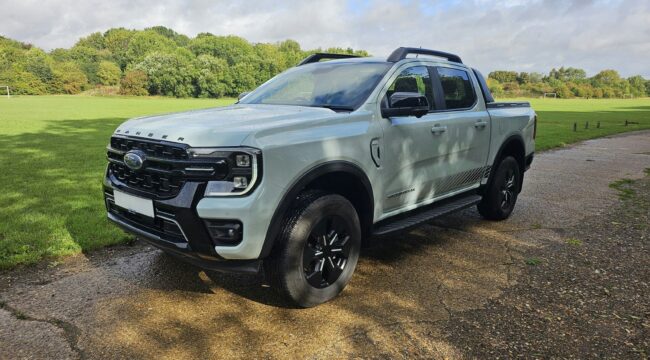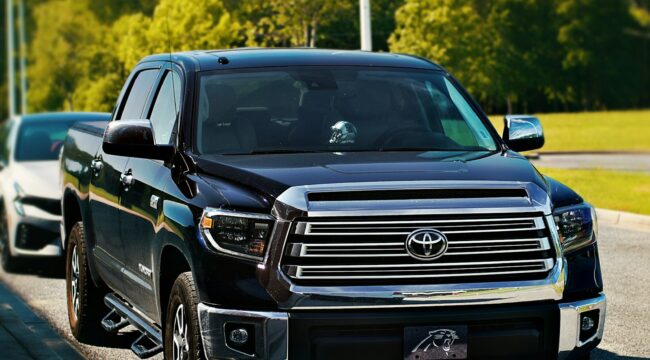
Choosing the right tonneau cover for a Toyota Tundra starts with one thing: fitment. The Tundra has gone through three distinct generations, and bed lengths and equipment can vary within each generation. A cover that fits a 2022–2026 truck should not be assumed to fit a 2021 model, and even within the same generation the bed length matters.
In this guide, we compare five Tundra tonneau covers covering 2000–2026 trucks. We look at hard folding, soft roll-up and soft tri-fold designs, with attention to bed length, generation, installation, cargo access, weather protection and everyday usability.
🏆 Quick Answer
For a newer Tundra with the specified 5’7″ bed, the BAKFlip MX4 is a hard-folding option with rigid panels, automatic latching and full bed access when folded. The Tyger Auto T1 and T3 offer softer alternatives for 2022–2026 5.5-foot beds. Owners of 2007–2021 Tundras can look at the generation-specific BAKFlip MX4, while first-generation owners with a 6.5-foot Fleetside bed can consider the KUIPERAUTO soft roll-up cover.
Table of Contents
- Our Top Picks
- Types of Tundra Tonneau Covers
- Which Type Should You Choose?
- How We Chose
- Detailed Reviews
- Tundra Generations and Tonneau Cover Fitment
- Tundra Bed Lengths and Rail Variants
- What Makes a Tundra Tonneau Cover Weather Resistant?
- What to Consider Before Buying
- Installation and Fitment Tips
- Soft vs. Hard Tundra Tonneau Covers
- Maintenance and Long-Term Use
- FAQs
- Final Thoughts
Our Top Picks
These five covers represent different Tundra generations, bed lengths and cover styles. The links in this section take you to the matching detailed review on this page rather than directly to Amazon, so you can compare the products before checking the current listing.
Tyger Auto T1Soft roll-up cover for 2022–2026 Tundra 5.5′ bed
Tyger Auto T3Soft tri-fold cover for 2022–2026 Tundra 5.5′ bed
BAKFlip MX4Hard folding cover for 2007–2021 Tundra 6’7″ bed
KUIPERAUTOSoft roll-up cover for 2000–2006 Tundra 6.5′ Fleetside bed
Types of Tundra Tonneau Covers
Hard Folding Covers
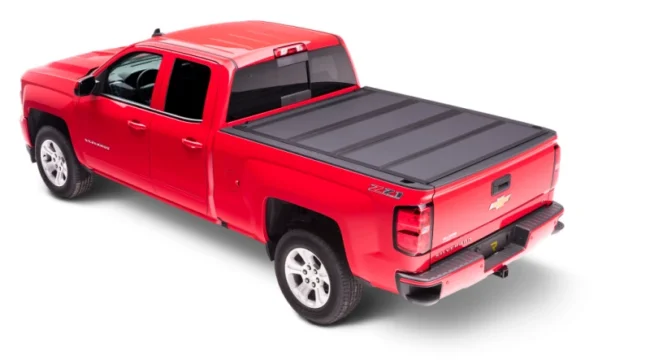
Hard folding covers use rigid panels and are useful when you want a more substantial barrier over the bed. They can also fold toward the cab when you need access to the cargo area. The BAKFlip MX4 is an example, with aluminum-based panels, automatic latching and a folding design.
Soft Roll-Up Covers
Soft roll-up covers use flexible vinyl attached to side rails and roll toward the cab. They are generally lighter than hard covers and are convenient when you need frequent full-bed access. The Tyger Auto T1 uses 24-ounce marine-grade vinyl, support bars and adjustable tension.
Soft Tri-Fold Covers
Soft tri-fold covers fold into sections instead of rolling into one bundle. They can be convenient for drivers who want quick access while keeping the cover attached to the truck. The Tyger Auto T3 combines dual-coated vinyl with aluminum framing and crossbars.
Generation-Specific Covers
Generation-specific fitment is particularly important on a Tundra. The 2007–2021 and 2022–2026 trucks have different body designs, so model year alone is not enough unless the listing explicitly covers the required application.
Hard folding covers are especially useful when the bed normally stays covered but occasionally needs to carry larger items. Because the panels fold toward the cab, you can switch between a closed cargo area and a more open bed without taking the entire cover off. The downside is that the folded panels remain part of the setup and add more weight than a flexible cover.
Soft roll-up covers are often easier to live with when access is frequent. The material rolls into a compact bundle near the cab, leaving a large portion of the bed opening available. That can be helpful for work equipment, camping gear or other cargo that changes from trip to trip. The flexible construction is also easier to handle when the cover needs to be removed.
Soft tri-fold covers sit between those approaches. They open quickly and keep the cover attached to the truck, but the folded sections occupy some space at the front of the bed. They can be a practical choice for everyday cargo when you want simple operation without the weight of rigid panels.
Which Type Should You Choose?
Choose a hard folding cover if you prefer rigid construction and a more substantial physical barrier. A soft roll-up makes sense when low weight and full bed access are more important. A soft tri-fold is useful when you want a quick folding design without the weight of rigid panels.
Before choosing the style, confirm your Tundra’s generation and bed length. Once fitment is established, consider how often you open the bed, the type of cargo you carry, your security expectations and your budget.
Think about the way the cover will be used on an ordinary week, not only on the day you install it. A driver who carries groceries and small equipment may value quick access and low weight, while someone who leaves tools in the bed may place more importance on a rigid closed surface. If the truck regularly carries tall loads, make sure the folded or rolled cover will not interfere with the way those loads are secured.
It is also worth checking how the cover works with accessories you already own. Bed racks, toolboxes, cargo dividers and some factory rail systems can change the available mounting space. A tonneau cover that fits the truck by itself may not be compatible with every accessory combination, so check both manufacturers before buying.
Think about the way the cover will be used on an ordinary week, not only on the day you install it. A driver who carries groceries and small equipment may value quick access and low weight, while someone who leaves tools in the bed may place more importance on a rigid closed surface. If the truck regularly carries tall loads, make sure the folded or rolled cover will not interfere with the way those loads are secured.
It is also worth checking how the cover works with accessories you already own. Bed racks, toolboxes, cargo dividers and some factory rail systems can change the available mounting space. A tonneau cover that fits the truck by itself may not be compatible with every accessory combination, so check both manufacturers before buying.
How We Chose
We selected products with clearly stated Tundra fitment and deliberately included multiple generations and cover formats. We compared manufacturer-published information for bed application, construction, mounting, cargo access, weather-related design features and stated load information where available.
We also verified the Amazon identifiers used for the products in this article. Because Amazon listings can contain several size and year variations, buyers should still use the listing’s vehicle-fitment information before placing an order.
We gave fitment more weight than generic feature lists because a cover cannot be useful if the rails, clamps or panel dimensions do not match the truck. We also separated products by generation and bed application instead of treating a manufacturer’s entire Tundra catalog as one interchangeable product.
Construction was another important consideration. Hard covers and soft covers solve different problems, so the goal was not to make every product look equivalent. The reviews explain the practical tradeoffs of each format, including access, handling, installation and the limitations buyers should understand before ordering.
Detailed Reviews
BAKFlip MX4 — 2022–2026 Toyota Tundra 5’7″ Bed
The BAKFlip MX4 is a hard folding cover for the 2022–2026 Tundra application identified with the 5’7″, approximately 66.7-inch bed. It is aimed at owners who want rigid panels, a low-profile appearance and the ability to fold the cover toward the cab.
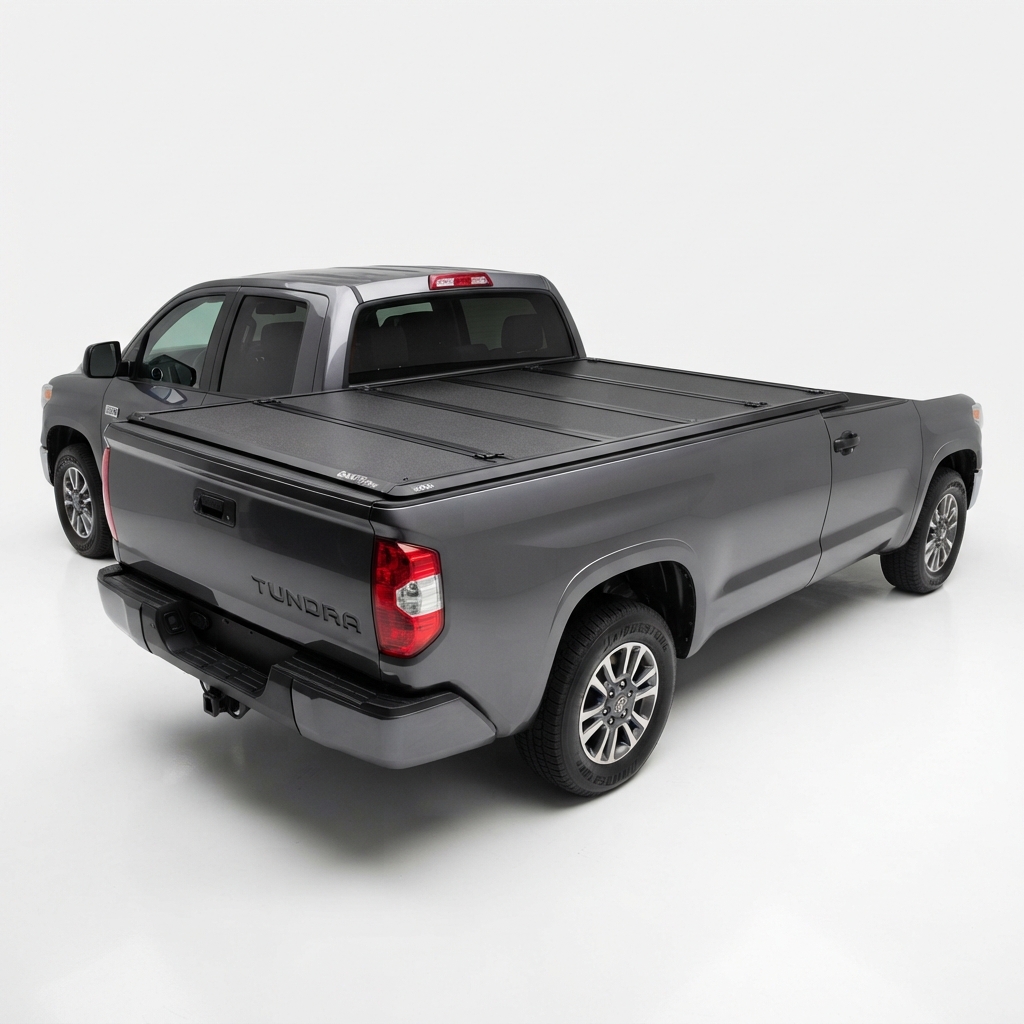
BAK lists aluminum-based panels with reinforced construction, an automatic latching system, perimeter seals, tight-fit clamps and an integrated drainage system. The applicable MX4 is also listed with a 400-pound evenly distributed load capacity. Folding the cover toward the cab provides full bed access when needed.
The Amazon listing used here is model 448440. It is specifically associated with the 2022–2026 Tundra 5’7″ bed application. Confirm your truck’s exact bed and rail configuration before ordering.
Who should consider it? Owners of newer Tundras who want a rigid folding cover rather than flexible vinyl.
Pros
- Rigid hard-folding construction
- Automatic latching system
- Full bed access when folded
- Stated 400-pound evenly distributed capacity
- Specific 2022–2026 application
Cons
- More expensive than most soft covers
- Bed length must be matched precisely
- Rigid panels add weight
Tyger Auto T1 Soft Roll-Up — 2022–2026 Toyota Tundra 5.5′ Bed
The Tyger Auto T1 is a soft roll-up cover designed for the 2022–2026 Tundra with the 5.5-foot, 67-inch bed. Its main advantage is simple access: the cover rolls toward the cab instead of requiring the entire assembly to be removed.
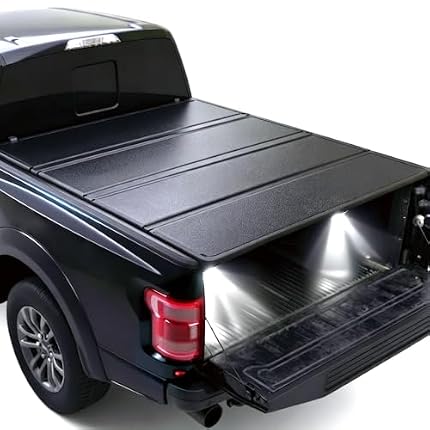
Tyger specifies dual-coated 24-ounce marine-grade vinyl, aircraft-grade aluminum side rails and stainless-steel clamps. Horizontal crossbars support the cover when it is closed. Side Velcro seals, a tailgate latch lock and adjustable tension are also part of the design.
The installation is designed to be no-drill, although Tyger notes that over-the-bedrail bedliners may require small holes for the clamps. Check your bedliner before installation.
Who should consider it? Tundra owners who want a lighter soft cover with quick full-bed access.
Pros
- 24-ounce marine-grade vinyl
- Rolls up for full bed access
- Adjustable tension
- No-drill mounting design
- Designed for 2022–2026 5.5-foot beds
Cons
- Less rigid than hard panels
- Bedliner configuration can affect installation
- Vinyl requires regular care
Tyger Auto T3 Soft Tri-Fold — 2022–2026 Toyota Tundra 5.5′ Bed
The Tyger Auto T3 is a soft tri-fold cover for the 2022–2026 Tundra 5.5-foot, 67-inch bed. It is a practical alternative to a roll-up design when you prefer the cover to fold into sections.
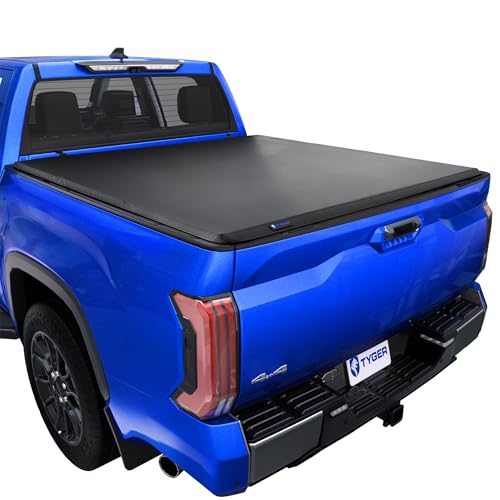
The T3 uses dual-coated 24-ounce marine-grade vinyl, aircraft-grade aluminum frames and stainless-steel clamps. Pre-assembled horizontal crossbars provide support when the cover is closed and fold with the cover. Tyger lists compatibility with models with or without the Utility Track System for this application.
It is designed for no-drill installation, with the same over-the-bedrail bedliner caveat noted by Tyger. That detail is worth checking before installation.
Who should consider it? Owners who want a soft folding cover with quick access and straightforward installation.
Pros
- Soft tri-fold design
- 24-ounce dual-coated vinyl
- Aluminum framing
- Pre-assembled support bars
- Designed for Tundras with or without Utility Track
Cons
- Less rigid than hard covers
- Soft construction offers less physical security
- Bedliner configuration can affect installation
BAKFlip MX4 — 2007–2021 Toyota Tundra
The second BAKFlip MX4 application in this guide is for the 2007–2021 Tundra generation. It is kept separate from the newer MX4 because the 2022 redesign changed the truck and its bed fitment.

The MX4 uses hard aluminum-based panels with reinforced construction, an automatic latching system, perimeter seals and drainage features. BAK lists a 400-pound evenly distributed load capacity and a five-year warranty for the applicable MX4 generation.
The 2007–2021 Tundra had multiple bed and equipment configurations, so the exact variation matters. The Amazon listing used here is ASIN B071WNJ2SS; verify the displayed size and configuration against your truck before ordering.
Who should consider it? Owners of 2007–2021 Tundras who want a hard folding cover from the MX4 family.
Pros
- Hard folding construction
- Automatic latching
- Full bed access when folded
- Stated 400-pound evenly distributed capacity
- Generation-specific application
Cons
- Exact bed configuration must be confirmed
- Costs more than soft covers
- Rigid panels add weight
KUIPERAUTO Soft Roll-Up — 2000–2006 Toyota Tundra 6.5′ Bed
For first-generation Tundra owners, the KUIPERAUTO soft roll-up cover is designed for 2000–2006 Toyota Tundra Fleetside trucks with the 6.5-foot bed. It gives owners of older Tundras a generation-specific option rather than trying to adapt a newer cover.
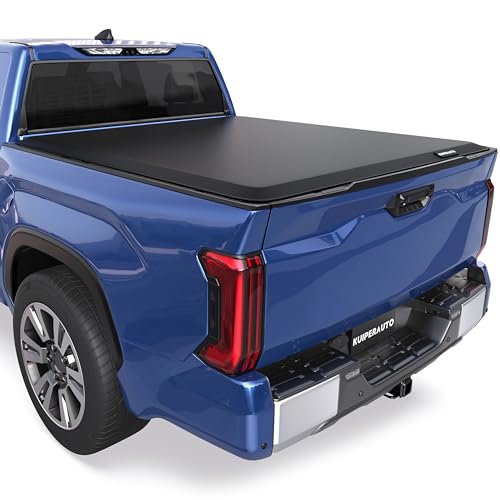
The cover combines a vinyl tarp with an aluminum frame and a strap-based locking system. Published specifications identify no-drill installation, weather-resistant vinyl and a 78-inch-class bed application. The roll-up format lets you open the bed without removing the complete cover.
This application is specifically for the 6.5-foot Fleetside bed, so owners of another first-generation configuration should not assume compatibility.
Who should consider it? Owners of 2000–2006 Tundras with the specified 6.5-foot Fleetside bed.
Pros
- First-generation Tundra application
- Soft roll-up design
- Aluminum frame
- No-drill installation design
- Bed access without removing the entire cover
Cons
- Limited to the specified older application
- Less rigid than a hard cover
- Exact bed style must be verified
Tundra Generations and Tonneau Cover Fitment
The first-generation Tundra covers 2000–2006, the second generation covers 2007–2021, and the current third generation began with the 2022 model year. Those generation boundaries matter because aftermarket tonneau covers are engineered around specific bed dimensions and mounting points.
2000–2006 Tundra
Older Tundras have their own bed and body configurations. The KUIPERAUTO product in this guide is specifically for a 6.5-foot Fleetside application.
2007–2021 Tundra
The second-generation Tundra was produced for many years and had multiple bed-length and equipment variations. Always select the exact product variation rather than assuming every 2007–2021 truck has the same bed.
2022–2026 Tundra
The current generation introduced a redesigned body and new bed configurations. Toyota’s 2026 materials identify 5.5-foot, 6.5-foot and 8.1-foot beds across the lineup. Your cover must match the actual bed on the truck.
For older trucks, the model-year range on the product page deserves the same attention as the bed measurement. A second-generation Tundra was sold for a long period, so a product that fits one bed configuration may not fit another. The same principle applies to first-generation trucks, where the bed style can be as important as the nominal length.
For the current generation, do not assume that every 5.5-foot or 5’7″ description represents the same physical application. Manufacturers use their own application measurements, and Amazon listings can group several variations under a single product family. The safest approach is to select the exact year and bed option in the listing before comparing price or features.
Tundra Bed Lengths and Rail Variants
Bed length is one of the easiest things to overlook when shopping for a Tundra bed cover. A cover that is slightly different in length can leave gaps, interfere with the tailgate or prevent proper latching.
Current Tundras can be configured with different bed lengths, and manufacturers may describe a particular application as 5.5 feet, 5’7″ or approximately 66.7 inches. Those descriptions should be interpreted through the product’s actual fitment listing rather than by converting measurements yourself.
Also check the rail system, bedliner and accessories such as racks or toolboxes. Some covers are compatible with utility tracks while others have specific exclusions.
Bedliners deserve particular attention because an over-the-bedrail liner can occupy some of the space needed by clamps. A product may be described as no-drill while still requiring a small liner modification for a particular bedliner style. Read the installation note instead of assuming “no-drill” means no changes under every configuration.
If you already use a bed rack, toolbox or cargo-management system, measure the available space around the side rails. Some accessories sit directly where a tonneau cover needs to mount or where a folding cover needs clearance. Compatibility should be confirmed as a complete system, not accessory by accessory.
What Makes a Tundra Tonneau Cover Weather Resistant?
Tonneau covers are designed to reduce exposure to rain, dust and road spray, but they should not be treated as a guarantee of a completely dry bed in every situation. Water can enter around the tailgate, seams, clamps and rail interfaces.
Hard covers such as the MX4 use perimeter seals and drainage features. Soft covers depend on the vinyl, side seals, tension and the way the cover sits against the rails. Correct installation and clean seals are important for either design.
If you carry electronics, documents or other moisture-sensitive cargo, use sealed containers inside the bed for an additional layer of protection.
After installation, inspect the front corners and tailgate area first because these are common places for gaps to appear. Check the cover after a normal rain rather than assuming the material alone determines water resistance. Dirt on the rails or compressed seals can also change how well the cover closes.
Weather protection should be treated as one part of cargo management. If a load cannot tolerate moisture, use a sealed bag, box or container inside the covered bed. That provides a second layer of protection if water gets past a seal during heavy rain, pressure washing or highway spray.
After installation, inspect the front corners and tailgate area first because these are common places for gaps to appear. Check the cover after a normal rain rather than assuming the material alone determines water resistance. Dirt on the rails or compressed seals can also change how well the cover closes.
Weather protection should be treated as one part of cargo management. If a load cannot tolerate moisture, use a sealed bag, box or container inside the covered bed. That provides a second layer of protection if water gets past a seal during heavy rain, pressure washing or highway spray.
What to Consider Before Buying
Generation and Model Year
Confirm the generation first. A 2022 Tundra is part of a different generation from a 2021 truck, so don’t assume a cover crosses that model-year boundary.
Bed Length
Compare your actual bed length with the product’s stated application. Tundra bed lengths vary by generation and configuration.
Rail and Bed Equipment
Check Utility Track or deck-rail equipment, bedliners and other accessories. These can affect mounting and compatibility.
Hard vs. Soft Construction
Hard panels provide more rigidity, while soft covers are generally lighter and easier to handle. The right choice depends on cargo and daily use.
Bed Access
Roll-up covers offer a large open-bed area when rolled back. Folding covers can provide quick access while remaining attached to the truck. Consider how often you haul tall or bulky cargo.
Installation
No-drill does not mean every truck installs identically. Follow the exact instructions for the product variation and check bedliner requirements.
Security
A hard cover creates a more rigid physical barrier than soft vinyl, but bed security also depends on the tailgate and truck’s locking system.
Budget
Budget is also about what you expect the cover to do over time. A soft cover can make sense when the main goal is to keep ordinary cargo covered and reduce visibility into the bed without adding much weight. A hard folding cover may justify a higher purchase price when you want a rigid surface, a more substantial barrier and a cover that can stay attached while the bed is opened.
Before comparing prices, make sure you are comparing equivalent fitments. A cheaper listing for a different bed length is not a real alternative to the correct cover. The same applies to products that fit one Tundra generation but not another. Start with the truck, then compare the products that actually fit it.
Think about storage and handling as well. If you remove the cover for a long load, where will you put it? A large rigid cover needs a safe place to rest without damaging the panels, while a soft cover can usually be rolled or folded into a smaller package. If removal is frequent, this practical difference can matter as much as the material used on top.
Finally, check the exact Amazon variation immediately before ordering. Product pages can contain multiple bed lengths and model-year applications under one product family, and the selected variation may change the part number. Confirm the year, bed length and factory equipment one last time before checkout.
Premium hard covers can cost substantially more than soft roll-up or tri-fold covers. Compare the construction and features you actually need rather than paying for a format you will not use.
Price should also be considered alongside the expected frequency of use. A cover that is opened and closed every day needs a different balance of convenience and durability from one that stays closed for weeks at a time. Think about whether you are paying for a feature you will use regularly or simply for a more expensive construction.
Finally, check the return and warranty information for the exact product variation. Fitment mistakes are easier to avoid than to fix, but having the correct order details and manufacturer support information available is useful if a mounting or compatibility question comes up during installation.
Installation and Fitment Tips
Before installing, verify the exact product variation against your model year and bed length. Clean the mounting surfaces and follow the manufacturer’s clamp sequence. After installation, operate the tailgate and cover several times to make sure nothing binds.
For soft covers, check tension after the material has settled. For folding covers, make sure every panel closes evenly and that seals are not folded or pinched. If your truck has a bedliner, follow the manufacturer’s instructions for clamp clearance.
Soft vs. Hard Tundra Tonneau Covers
Hard Tundra tonneau covers are useful when rigidity and a more substantial physical barrier matter. The tradeoffs are additional weight and usually a higher purchase price.
Soft covers are generally lighter and easier to roll or fold. They can work well for drivers who open the bed frequently. Their flexible construction, however, does not provide the same rigid barrier as hard panels.
The choice is therefore less about a universal winner and more about your cargo, access needs, security expectations and budget. Fitment should remain the first filter.
Hard covers can also change how you load the bed because the folded panels need clearance near the cab. Soft roll-up covers generally provide a larger unobstructed opening, while soft tri-fold covers keep the folded sections at the front. If you routinely carry long or tall objects, compare the open-bed configuration rather than looking only at the cover when it is closed.
For security, remember that covering the cargo can reduce visibility but does not make the bed invulnerable. Valuable equipment may still need a lockable toolbox or storage case. The tonneau cover should be considered one layer in the overall cargo-protection setup.
Maintenance and Long-Term Use
Clean the cover according to the manufacturer’s recommendations. Avoid harsh chemicals that could damage vinyl, seals or finishes.
Inspect clamps and mounting hardware periodically, particularly if the truck sees rough roads or off-road use. Check seals for dirt or damage and keep drainage channels clear on hard folding covers.
Soft covers should remain properly tensioned, while folding covers should be checked for smooth latch and hinge operation. Small maintenance checks can help catch fitment or hardware issues before they become larger problems.
FAQs
What is the best tonneau cover for Tundra?
It depends on your Tundra’s generation, bed length and preferred cover type. The BAKFlip MX4 is a hard folding option for specific applications, while the Tyger T1 and T3 provide soft roll-up and tri-fold choices for 2022–2026 5.5-foot beds.
Will a 2022 Tundra tonneau cover fit a 2021 Tundra?
Not automatically. The 2022 model year began the current Tundra generation, so use the manufacturer’s stated model-year fitment.
What bed lengths does the Tundra have?
Bed availability varies by generation and configuration. Current Tundras can have 5.5-foot, 6.5-foot and 8.1-foot beds, while older generations have their own bed-length combinations.
Is a hard tonneau cover better than a soft one?
Neither is universally better. Hard covers offer more rigid construction, while soft covers can be lighter and easier to handle. Choose based on cargo, access and budget. Also consider how often you need the bed completely open and whether the folded or rolled cover works with your other accessories.
Are Tundra tonneau covers waterproof?
They are designed to resist weather, but no cover should be assumed to be completely waterproof in every condition. Seals, tailgate gaps and installation all affect water intrusion. If the cargo is highly sensitive to moisture, use an additional sealed container inside the bed.
Do tonneau covers improve fuel economy?
Results vary with speed, driving conditions, truck configuration and the cover. A cover should primarily be selected for cargo protection and bed usability rather than a guaranteed fuel-economy improvement.
Can I use a tonneau cover with a Tundra bed rack?
Some rack and cover combinations are designed to work together, while others are not. Check compatibility for both products before combining them.
Final Thoughts
Finding the right Tundra truck bed cover is primarily a fitment exercise. Confirm the generation, model year, bed length and rail configuration first, then choose between hard folding, soft roll-up and soft tri-fold designs.
For newer Tundras, the BAKFlip MX4, Tyger Auto T1 and Tyger Auto T3 provide different approaches to bed protection and access. For older trucks, the generation-specific BAKFlip MX4 and KUIPERAUTO show why a product designed for the correct model years and bed length is essential.
Use the exact Amazon variation for your truck when checking any of these products. Listings can change, so verify the current vehicle-fitment information before purchasing.
BAKFlip MX4, Tyger Auto T1, Tyger Auto T3, BAKFlip MX4 for 2007–2021, and KUIPERAUTO are the products discussed in this guide.