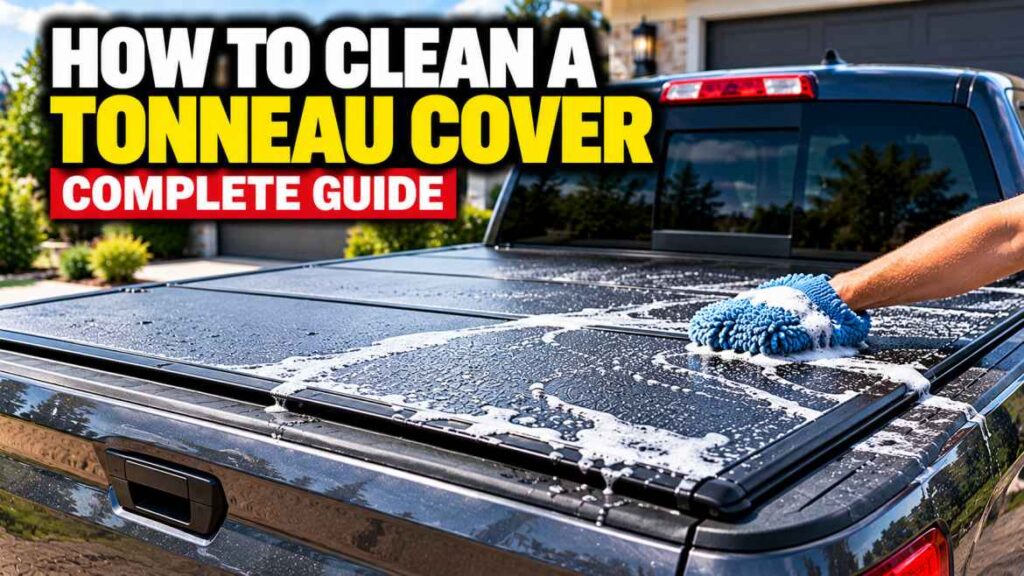
Cleaning a tonneau cover is straightforward when you start with the material and the manufacturer’s care instructions. The biggest mistake is assuming every truck bed cover can be treated with the same cleaner.
Start by checking the cover’s owner manual. For many soft vinyl covers, manufacturers recommend mild soap and water, gentle washing, thorough rinsing, and a protectant specifically intended for tonneau-cover vinyl. Hard covers can have different finishes and should be cleaned according to their material and coating. Avoid aggressive solvents, abrasive tools, pressure washing at seals, and generic dressings that the manufacturer says not to use.
Identify the Cover Material First
Tonneau covers are made from several material families. Soft covers may use coated vinyl or fabric, while hard covers can use aluminum, fiberglass, composite panels, plastic, or layered materials. The surface finish and the manufacturer’s care instructions matter as much as the base material.
For example, TruXedo owner guidance for several vinyl covers recommends mild soap and water and specifically warns against silicone, petroleum, and citrus-based products on the cover. That is a useful reminder that “shiny” does not automatically mean “better protected.”
If you own a different brand, use its manual as the final authority.
What You Need
- Garden hose or clean water source
- Mild automotive soap approved for the cover
- Soft microfiber cloth or soft-bristle brush if permitted
- Clean bucket
- Separate cloth for drying or a safe air-drying area
- Manufacturer-approved protectant, if recommended
Do not use an aggressive brush simply because the cover has textured dirt. Scrubbing harder can damage a coating or surface finish.
How to Clean a Soft Vinyl Tonneau Cover
Soft vinyl covers need gentle treatment. Their flexible surface can collect dust, road film, pollen, bird droppings, and other contaminants, but harsh cleaners can affect the finish or material.
- Park in a suitable location. Avoid cleaning a hot cover in direct sun if the cleaner instructions warn against it.
- Remove loose dirt first. Rinse gently with clean water. Do not blast seals or seams with a pressure washer.
- Use mild soap. Follow the cover manufacturer’s recommended dilution and product type.
- Wash gently. Work in manageable sections using a microfiber cloth or approved soft brush.
- Rinse thoroughly. Soap residue can leave a film and attract more dirt.
- Allow it to dry. Follow the manufacturer’s advice before applying any protectant.
- Use only approved protectant. If the manufacturer recommends a tonneau-specific vinyl protectant, use that rather than an unrelated dashboard dressing.
How to Clean a Hard Tonneau Cover
Hard covers are not all the same. A powder-coated aluminum panel, painted fiberglass lid, composite panel, and textured plastic surface may have different care requirements.
For many automotive finishes, a mild car-wash soap and clean water are a sensible starting point, but the manufacturer’s manual should determine what chemicals are safe.
Pay particular attention to hinges, latches, drainage channels, and seals. Dirt trapped in these areas can affect operation even when the visible top of the cover looks clean.
Step-by-Step Cleaning Method
1. Check the manual
Look for prohibited cleaners and any material-specific instructions before applying chemicals.
2. Remove loose contamination
Rinse away grit before wiping. Dragging dry grit across the surface creates unnecessary scratching.
3. Wash from clean to dirty areas
Start with the cleaner sections and move toward the dirtier areas. Rinse your cloth frequently.
4. Clean the seals separately
Use clean water and a gentle cloth around rubber seals. Avoid leaving abrasive grit packed into the seal channels.
5. Clean the hardware
Wipe latches, hinges, clamps, and rails. If the manufacturer specifies a lubricant for a hinge or latch, use only the recommended product and keep it off the cover surface.
6. Rinse completely
Leftover soap can create streaks and attract dust.
7. Dry appropriately
Follow the manufacturer’s instructions. Some soft covers should simply be allowed to dry naturally rather than being aggressively rubbed.
Removing Stubborn Dirt and Stains
Do not jump straight to a stronger solvent. First identify what the stain is and check the manufacturer’s cleaning instructions.
Road film and dust
Repeated gentle washing is safer than one aggressive cleaning session.
Bird droppings
Soften the contamination with water before wiping. Dried deposits can contain abrasive particles.
Tree sap
Use only a product that the cover manufacturer says is compatible with the surface. Do not assume a general automotive tar remover is safe for vinyl.
Water spots
Rinse thoroughly and dry according to the manufacturer’s recommendations. Mineral-heavy water may leave deposits that require a material-specific cleaner.
What Not to Use
- Unapproved petroleum solvents
- Harsh degreasers
- Strong acidic or alkaline cleaners
- Abrasive pads or stiff brushes unless explicitly approved
- Unapproved silicone or vinyl dressings
- Pressure washers aimed directly at seals, seams, or moving joints
The exact prohibited products vary by cover. For example, TruXedo manuals specifically warn against silicone, petroleum, and citrus-based products on its vinyl covers.
How Often Should You Clean It?
There is no universal schedule. Clean the cover when dirt or road film accumulates, after exposure to heavy grime, and whenever contaminants such as bird droppings or tree sap are left on the surface.
A truck driven on dusty roads may need more frequent cleaning than a pickup used mainly on paved roads. The objective is regular, gentle maintenance rather than aggressive deep cleaning every few months.
Inspect the Cover While You Clean
Cleaning is a good time to look for problems that are otherwise easy to miss.
- Loose clamps
- Damaged seals
- Cracked or lifting vinyl
- Loose stitching or hook-and-loop sections
- Corrosion around hardware
- Blocked drain tubes
- Hinges or latches that no longer move normally
TruXedo care guidance also recommends periodically checking attachment points and inspecting latch areas. Cleaning should therefore be part of a broader maintenance routine, not just cosmetic work.
Frequently Asked Questions
Can I use car wash soap on a tonneau cover?
Sometimes, but follow the cover manufacturer’s instructions. Some vinyl-cover manuals specifically recommend mild automotive soap and water.
Can I use Armor All on a tonneau cover?
Do not assume it is safe. Some TruXedo manuals specifically warn against vinyl conditioners such as Armor All on their covers. Use only a product approved for your cover.
Can I pressure wash a tonneau cover?
Pressure washing directly at seals, seams, or joints is a poor practice. A gentle rinse is safer and better suited to maintaining the weather-sealing system.
How do I clean a black tonneau cover without streaks?
Use clean water, an appropriate mild cleaner, a clean microfiber cloth, and a thorough rinse. Avoid letting soap dry on the surface.
Should I wax a tonneau cover?
Only if the manufacturer specifically approves the wax for the cover’s material and finish. A product safe for automotive paint is not automatically safe for every tonneau surface.
Seasonal Tonneau Cover Care
Summer
Frequent sun exposure makes UV care important, particularly for soft covers. Clean away dust before it becomes embedded and use only a protectant approved by the manufacturer.
Winter
Road salt and grime deserve prompt removal. Pay extra attention to rails, clamps, hinges, latches, and drainage channels where contamination can collect.
Rainy seasons
Check that seals remain seated and drains are open. Cleaning alone will not correct a damaged seal or blocked drain.
After off-road or dusty driving
Rinse loose grit before wiping the surface. Fine abrasive particles can scratch finishes when dragged across them with a cloth.
Cleaning by Material: Quick Reference
| Cover type | Starting approach | Extra caution |
|---|---|---|
| Soft vinyl | Mild soap and water if approved | Avoid unapproved solvents and dressings |
| Fabric | Follow fabric-specific cleaner instructions | Do not strip water-repellent treatments |
| Aluminum | Mild automotive wash solution | Protect the finish from harsh chemicals |
| Fiberglass/painted | Use products approved for the finish | Do not assume paint-safe means cover-safe |
| Composite/plastic | Follow the manufacturer’s material guidance | Avoid abrasive tools |
This table is a starting point, not a substitute for the product manual. A specific cover may use a special coating or construction that changes the recommended method.
What About Mildew or Musty Odor?
Do not mask a persistent odor with a strong fragrance or dressing. Clean the cover using the manufacturer’s approved method and allow it to dry completely. Also check whether moisture is being trapped underneath the cover or around the bed rails.
If a fabric or vinyl cover repeatedly stays damp, look for leaks, poor drainage, or storage practices that keep the material wet. Persistent mold or mildew may require a manufacturer-approved treatment rather than a household cleaner.
Bottom Line
The safest way to clean a tonneau cover is to identify its material, follow the manufacturer’s care instructions, use a mild approved cleaner, rinse thoroughly, and avoid aggressive chemicals or tools. Cleaning also gives you a chance to inspect seals, clamps, latches, hinges, and drainage components before a small problem becomes a bigger one.