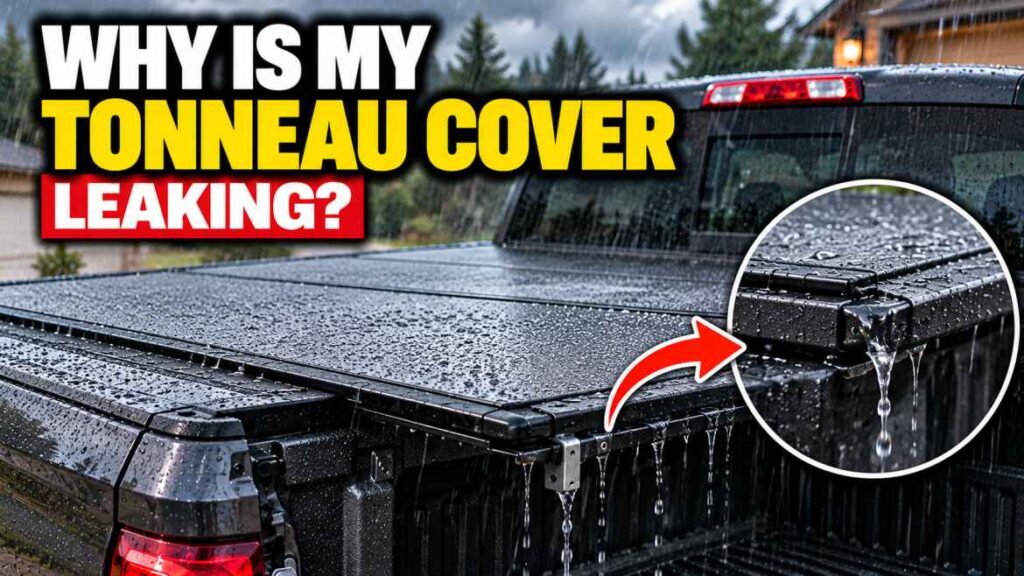
A tonneau cover can reduce rain and road spray entering a truck bed, but even a well-designed cover can leak if a seal is damaged, a rail has shifted, a drain is blocked, or the cover is not sitting correctly. The fastest way to fix the problem is to find where water first enters instead of adding more sealant everywhere.
The most common reasons a tonneau cover leaks are uneven seal compression, shifted or misaligned rails, damaged weather seals, clogged or incorrectly routed drain tubes, interference from a bed liner or accessory, and gaps around the tailgate. Start with a dry bed, identify the first wet point with a gentle water test, then inspect the cover from that location outward. Most leaks are installation or sealing problems rather than a reason to replace the entire cover.
Find Where the Water Enters
Do not begin by covering every seam with extra weather stripping. First dry the bed and identify the first location where water appears. Place a clean towel or dry paper around suspected areas, then use a gentle stream of water over one section at a time. A helper can make this much easier: one person stays outside with the hose while the other watches inside the bed.
Use low water pressure. A pressure washer can force water past seals that would normally resist rain and can make a normal cover look defective.
Common Causes of a Leaking Tonneau Cover
| Possible cause | What to inspect | Typical response |
|---|---|---|
| Damaged seal | Cracks, tears, flattened sections | Replace with the specified seal |
| Rail misalignment | Uneven gaps or poor latch contact | Realign according to the manual |
| Loose clamps | Rail movement or uneven compression | Reposition and tighten as specified |
| Blocked drain | Water collecting in rail or channel | Clear and reroute the drain |
| Bed-liner interference | Clamp or seal cannot seat correctly | Follow the cover’s fitment instructions |
| Tailgate gap | Water entering at rear corners | Check tailgate and cover alignment |
Check the Seals
Weather seals need to contact the intended surfaces continuously. Look for sections that are folded, pinched, pulled away, torn, or compressed differently from the surrounding seal. A seal that looks intact can still fail if it is not sitting in the correct channel.
Do not automatically add thicker foam tape. Extra material can change panel height, prevent latches from engaging, or create new gaps elsewhere. Use the replacement profile and adhesive recommended for the cover.
Inspect Rails and Clamps
Many tonneau systems depend on accurately positioned side rails. If a rail moves, the cover can lose seal compression or the latch can stop contacting correctly. Check that both rails are parallel and that clamps remain at their specified positions.
This is especially important after a cover has been installed for a while, after bed accessories have been added, or after repeated opening and closing. For installation guidance, see our guide to installing a tonneau cover.
Check Drain Tubes
Retractable and some folding systems collect water in a rail or housing and route it through drain tubes. A kinked, blocked, disconnected, or poorly routed tube can cause water to back up into the bed.
Inspect both ends of the tube and make sure the outlet is not blocked by debris. Do not enlarge holes or drill new ones unless the manufacturer specifically instructs you to.
Check the Tailgate Area
The tailgate is one of the most difficult parts of a pickup bed to seal because the cover, bed, tailgate, and side seals meet in a relatively small area. Look closely at both rear corners and the seal where the cover meets the tailgate.
A tailgate that is misaligned or fitted with an accessory can also change the gap. Fix the underlying fitment issue rather than simply filling the gap with a large amount of adhesive foam.
How to Water-Test the Cover
- Dry the bed completely.
- Close and latch the cover exactly as intended.
- Start at the front or one side rather than soaking the whole truck at once.
- Use a gentle hose flow for a short period.
- Watch the inside of the bed for the first wet point.
- Move the test area gradually until the source is isolated.
Rain and road spray are different from direct hose pressure, so passing a hose test does not mean a cover is absolutely waterproof under every condition.
Fixes That Often Make Things Worse
- Using household silicone or unapproved sealants.
- Pressure-washing directly into seals and seams.
- Over-tightening clamps to compensate for a misaligned rail.
- Adding layers of foam without checking the original seal.
- Drilling new drain holes without manufacturer guidance.
- Assuming every small amount of water means the cover itself has failed.
When to Replace a Seal or Cover
Replace a seal when it is damaged, permanently deformed, or no longer fits the manufacturer’s mounting channel correctly. A cover may need replacement when panels, rails, hinges, or other structural components are damaged beyond the available repair parts.
If the cover is under warranty, document the problem with photos and follow the manufacturer’s warranty process before making permanent modifications.
Frequently Asked Questions
Are tonneau covers waterproof?
Most are designed to be weather-resistant rather than guaranteed watertight in every situation. Seams, corners, tailgate gaps, drains, and installation tolerances can allow some water through.
Why does my tonneau cover leak at the corners?
Corners combine multiple seals and panels, so misalignment, poor compression, or a tailgate gap can expose a weak point. Locate the first wet spot before changing the seal.
Can I use more weather stripping to stop a leak?
Only when the manufacturer’s instructions call for it. Extra material can interfere with alignment and latching.
Why is water collecting inside the rail?
A blocked, kinked, disconnected, or incorrectly routed drain can prevent collected water from leaving the system.
Should I replace the whole tonneau cover?
Usually not as a first step. Diagnose seals, rails, clamps, drains, and tailgate fitment before considering full replacement.
Leak Diagnosis by Cover Type
Soft roll-up covers
Check the side attachment, rear tension system, front bulkhead seal, and the corners where the cover meets the tailgate. Because the cover material flexes, poor tension can change the way the seals contact the bed.
Hard folding covers
Inspect panel alignment, hinge areas, perimeter seals, latch contact, and the rail position. A rigid panel can remain visually straight even when one seal is not contacting correctly.
Retractable covers
Check the side tracks, canister drainage, drain tubes, and the points where the tracks meet the bulkhead. Water management is part of the design, so a blocked drain can look like a failed seal.
A Sensible Repair Order
- Confirm the cover is the correct fit for the truck.
- Check whether the leak is new or has existed since installation.
- Locate the first wet point.
- Inspect the seal closest to that point.
- Check rail position and clamp security.
- Inspect drainage components.
- Correct the issue and repeat a gentle water test.
This order prevents you from replacing a good cover when the actual problem is a shifted clamp, damaged seal, or blocked drain.
When to Get Professional Help
Consider professional help when the cover requires drilling, electrical components, structural repairs, or a specialized replacement seal that you cannot identify confidently. If the bed itself is bent or the tailgate is misaligned, the cover may not be able to seal until the underlying truck problem is corrected.
Bottom Line
A leaking tonneau cover is often a fixable sealing or installation problem. Find the first entry point, inspect the nearby seal and rail alignment, verify drainage, and test the repair gently. Avoid unapproved sealants and excessive pressure, and use the manufacturer’s instructions whenever a repair involves hardware or permanent modification.