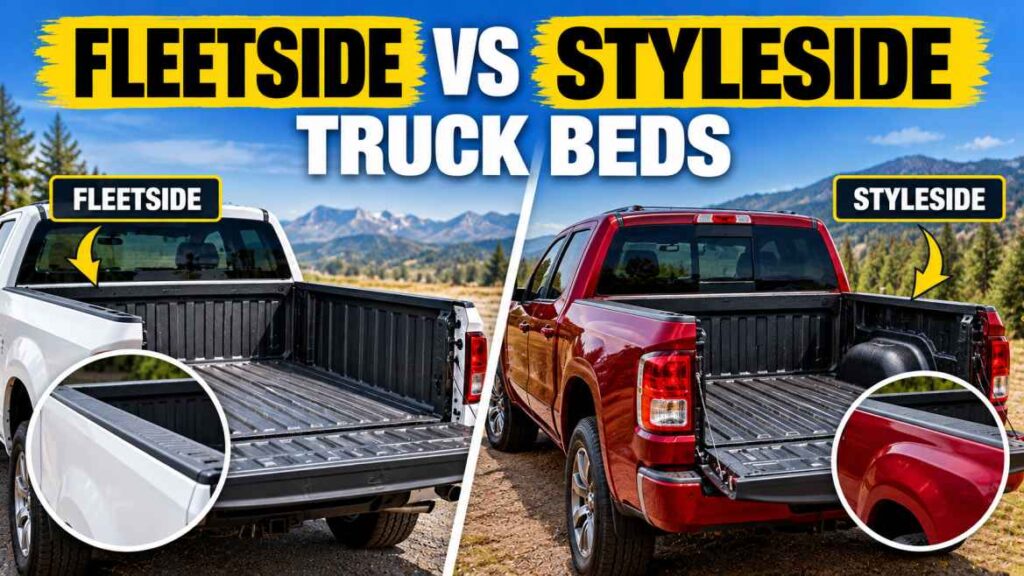
Fleetside and Styleside describe a common pickup-bed design in which the outer sides of the bed are relatively flush with the truck’s body, while the rear wheel housings are contained within the cargo box. The terms can be confusing because different manufacturers used different names for similar bed designs.
Quick Answer
A fleetside bed is the term Chevrolet historically used for its standard, flat-sided pickup box. Ford used the term Styleside for a similar flat-sided design. In both cases, the wheel wells are inside the bed rather than sitting outside the bed as they do on a traditional stepside or flareside design. On modern trucks, the distinction is mostly about manufacturer terminology and the specific vehicle generation.
What Is a Fleetside Bed?
A fleetside bed has smooth or relatively straight outer bedside panels that continue the visual width of the truck’s body. The rear wheel housings are enclosed within the bed, so they create wheel-well intrusions in the cargo floor.
Chevrolet used the Fleetside name for this style, and its historical vehicle literature describes features such as a double-wall cargo box and flat-topped wheel housings. The design became the dominant form of pickup bed as manufacturers moved away from exposed rear fenders.
What Is a Styleside Bed?
Styleside is Ford’s term for its equivalent flat-sided pickup-box design. Ford’s terminology is especially important when identifying older trucks or ordering replacement parts because a part listed for a Styleside box may not fit a Flareside box of the same model year.
Ford’s own parts catalog continues to use the Styleside and Flareside terms for older applications, which shows why the terminology can still matter when researching used trucks and replacement parts.
Fleetside vs Styleside
| Feature | Fleetside | Styleside |
|---|---|---|
| Manufacturer term | Historically associated with Chevrolet | Historically associated with Ford |
| Basic shape | Flat or flush-sided bed | Flat or flush-sided bed |
| Wheel wells | Inside the cargo bed | Inside the cargo bed |
| Traditional alternative | Stepside | Flareside |
| Modern relevance | Mostly terminology and older applications | Still useful when identifying Ford applications |
Why Did Manufacturers Use Different Names?
Automakers often developed their own names for similar body configurations. Chevrolet used Fleetside and Stepside, while Ford used Styleside and Flareside. Other manufacturers used names such as Wideside, Fenderside, Utiline or Sweptline depending on the era and brand.
That means the words are not always interchangeable when ordering a body panel or accessory. The basic design may be similar, but the exact truck, bed length, generation and mounting details still determine compatibility.
Fleetside vs Stepside
The easiest way to understand the difference is to look at the rear wheel area. A fleetside bed has the rear fenders contained within the bed sides. A traditional stepside bed has the rear fenders outside the cargo box, leaving a more rectangular cargo floor.
Stepside designs also traditionally included a step between the cab and rear fender. They were common on older pickups and are now much less common on new full-size trucks.
Styleside vs Flareside
Ford used Styleside for the standard flat-sided bed and Flareside for the version with the rear fenders pushed outward. Flareside is therefore Ford’s closest counterpart to the traditional stepside concept.
CarParts.com and other automotive references describe the same basic distinction: Styleside has the wheel arches inside the bed, while Flareside places the rear fenders outside the main cargo box.
Does Fleetside Mean a Wider Bed?
Not automatically. The overall body and cargo dimensions depend on the particular truck, model year and bed length. The fleetside design can provide a wider bed opening and a clean outer profile, but the wheel housings still occupy space inside the cargo area.
Never use the word Fleetside by itself to determine whether a toolbox, tonneau cover or other accessory will fit. Measure the actual truck and verify the manufacturer’s fitment information.
Does a Fleetside Bed Have More Cargo Space?
The answer depends on which measurement you are comparing. A flush-sided bed can provide useful width at the upper opening and a clean exterior profile, but the wheel wells occupy part of the floor. A stepside-style bed can have a more rectangular floor between the sidewalls, while the exterior body is narrower around the wheel area.
For real-world hauling, compare bed length, width between the wheel wells, maximum interior width and bed depth rather than relying on the body-style name.
Why the Terms Still Matter for Older Trucks
Body-style terminology is particularly important for classic trucks, restoration projects and used pickups. Replacement beds, fenders, tailgates, bed rails and other parts may be designed for one body style but not another.
A 6.5-foot bed is not automatically interchangeable with another 6.5-foot bed simply because the nominal length is the same. Mounting points, wheel-well shape, bedside construction and generation-specific dimensions can differ.
What About Modern Pickup Trucks?
Most modern pickups use the flush-sided configuration that historically led manufacturers to use names such as Fleetside or Styleside. The older marketing terms may disappear from current brochures even though the underlying design remains familiar.
This is why a modern truck owner is usually better served by identifying the exact year, make, model, cab and bed length when researching accessories. The body-style label is useful background information, but it is not a substitute for fitment data.
How to Identify Your Truck Bed Style
- Look at the rear quarter of the truck from the side.
- Check whether the rear fenders project outside the main bed sides.
- Look at the cargo floor and see whether the wheel wells intrude into the bed.
- Check the manufacturer’s terminology for your model year.
- Confirm the bed length and exact configuration before ordering parts.
Fleetside, Styleside and Accessory Fitment
Body style can affect the fit of tonneau covers, bed caps, mats, liners, rails and other accessories. A part designed around the bedside shape, rail profile or stake-pocket position may not transfer between configurations.
If you are measuring a truck for a cover, our guide to measuring a truck bed for a tonneau cover explains why exact measurements matter. For broader dimensions, see our truck bed dimensions guide.
Common Terminology Mistakes
- Assuming Fleetside and Styleside are two completely different bed shapes.
- Assuming every flat-sided truck is interchangeable with every other flat-sided truck.
- Using the bed length alone to select an accessory.
- Confusing a traditional stepside bed with a standard fleetside bed.
- Ignoring model-year and generation differences.
FAQ
Is a Fleetside bed the same as a Styleside bed?
They describe very similar flat-sided pickup-bed designs, but the names originated with different manufacturers. Exact dimensions and fitment still depend on the specific truck.
Is Fleetside better than Stepside?
Neither is universally better. A fleetside design generally offers a clean full-width exterior and a wider opening, while a stepside design can provide a more rectangular floor and distinctive styling.
Are Fleetside beds still made?
The terminology is less prominent on many current trucks, but the basic flush-sided design is extremely common. Whether a manufacturer calls it Fleetside, Styleside or something else depends on the brand and model.
Bottom Line
Fleetside and Styleside are mainly manufacturer-specific names for a similar flush-sided pickup-bed design. Fleetside is historically associated with Chevrolet, while Styleside is Ford’s terminology. If you are buying parts or accessories, use the term as a clue, then verify the exact model year, bed length and configuration before ordering.