Buying a tonneau cover by the words “short bed” or “6.5-foot bed” can be risky. Those labels are useful, but they are not precise enough to identify every truck configuration or every cover application.
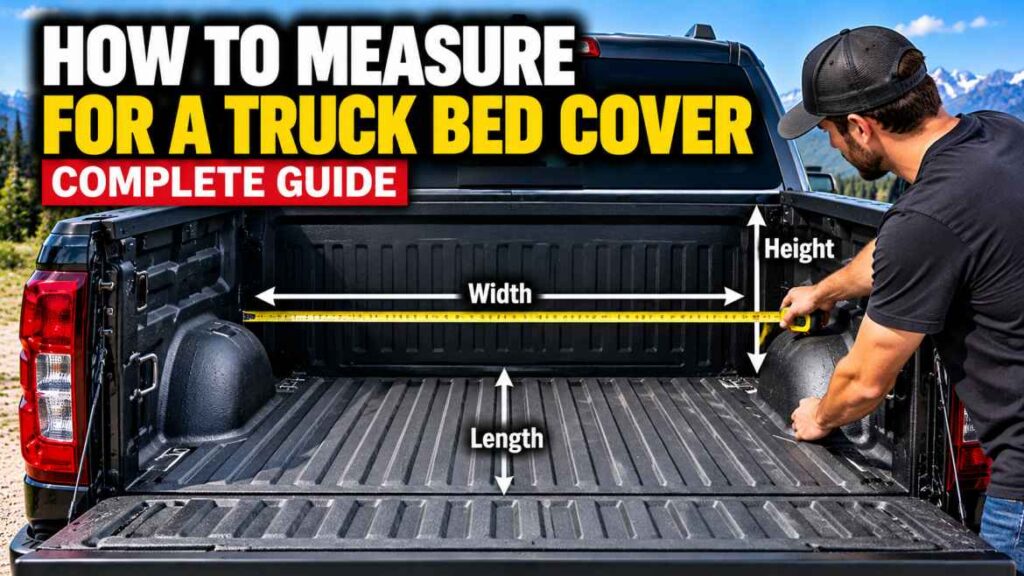
For a basic tonneau-cover measurement, close the tailgate and measure straight from the inside face of the front bulkhead to the inside face of the closed tailgate. Record the exact result in inches, then verify the truck’s year, bed, rails, tailgate, liner, and factory equipment against the cover maker’s fitment guide.
- What You Need
- Step 1: Identify the Exact Truck
- Step 2: Close the Tailgate
- Step 3: Find the Bulkhead
- Step 4: Measure to the Inside of the Closed Tailgate
- Step 5: Measure Again
- Step 6: Measure Bed Width
- Step 7: Check the Bed Rails
- Step 8: Check the Tailgate
- Step 9: Check for Accessories That Can Interfere
- Step 10: Check the Bed Liner
- Floor Length vs. Tonneau Fitment Length
- Why the Advertised Bed Length Can Be Different
- Common Measurement Mistakes
- How to Verify the Cover Before Ordering
- Should You Trust the Truck’s Factory Bed Measurement?
- What If Your Measurement Does Not Match the Product Listing?
- Frequently Asked Questions
- Bottom Line
The safest approach is to identify the exact truck and measure the bed, then compare those details with the tonneau manufacturer’s fitment information.
For the basic measurement, close the tailgate and measure from the inside face of the front bulkhead to the inside face of the closed tailgate, keeping the tape straight along the bed floor. Record the result in inches.
That measurement gives you the truck’s practical floor length. It should be used alongside the vehicle’s model year, cab, bed configuration and any special equipment.
What You Need
You do not need special equipment.
- A rigid steel tape measure
- A notepad or phone
- A helper if available
- The truck’s model year and exact configuration
- The tonneau manufacturer’s fitment information
A helper is useful because a long tape can bend or move while you are trying to read it.
Step 1: Identify the Exact Truck
Before measuring, write down:
- year;
- make;
- model;
- cab style;
- advertised bed length; and
- any special bed equipment.
For example, “2026 Ram 1500” is not enough. You may also need to know whether it has a 5’7″ or 6’4″ box and whether it has RamBox.
Likewise, “Silverado 1500” can refer to different generations and several box lengths.
The measurement confirms the physical size, but the manufacturer’s fitment guide confirms whether the cover is engineered for that exact application.
Step 2: Close the Tailgate
For the basic floor-length measurement, close and latch the tailgate.
Do not measure with the tailgate lying flat. The tailgate becomes part of the support area when it is down, so including it would give you a longer number than the closed-bed measurement used for most bed specifications.
Step 3: Find the Bulkhead
The bulkhead is the front wall of the truck bed, directly behind the cab.
Place the end of the tape against the inside face of this wall at the floor. Keep the tape straight rather than following the curve of the side wall.
Step 4: Measure to the Inside of the Closed Tailgate
Extend the tape straight toward the rear of the truck until it reaches the inside face of the closed tailgate.
Record the number in inches.
For example, if you read 67.4 inches, do not rewrite it as “about 5.5 feet” and forget the original number. Keep the exact measurement because it is useful when comparing specifications.
Step 5: Measure Again
Repeat the measurement once more.
If the two readings disagree, check whether the tape moved, sagged, slipped into a groove or started from a different reference point.
The goal is a straight, repeatable measurement—not a number that merely looks close to the truck’s advertised bed size.
Step 6: Measure Bed Width
Length is the first measurement to record, but width can matter for some covers and for checking unusual configurations.
Measure the inside width across the bed at the location relevant to the cover’s mounting system. If the manufacturer specifies a rail-to-rail measurement, follow that instruction rather than substituting a floor measurement.
Do not confuse maximum wall-to-wall width with the width between the wheel wells. They answer different questions.
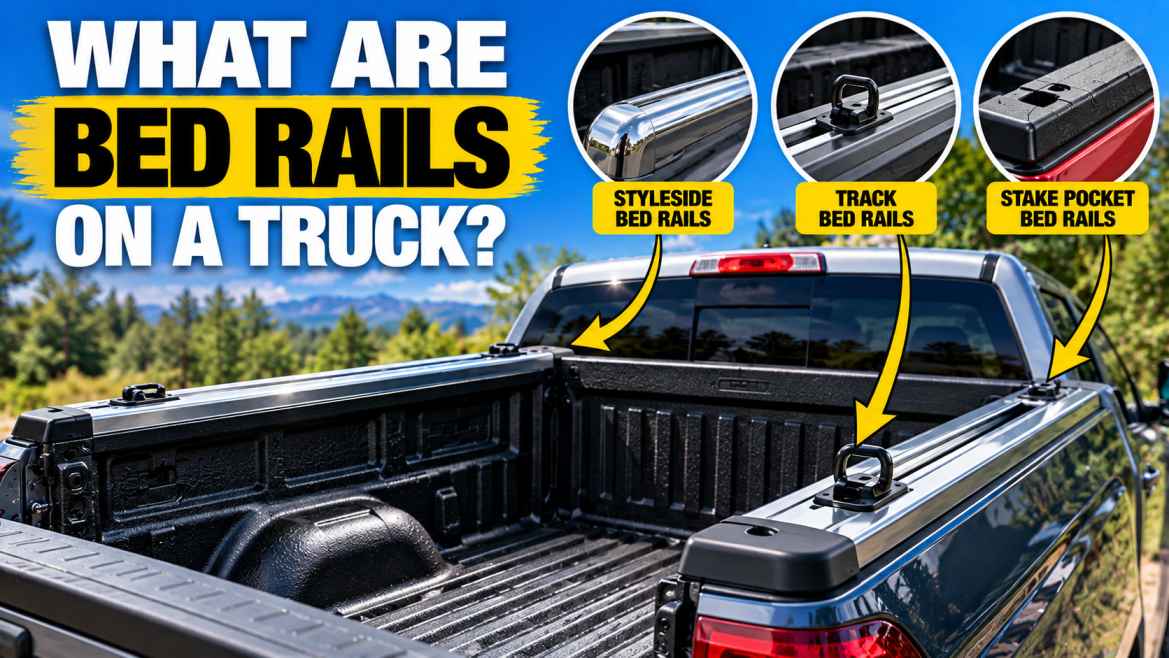
Step 7: Check the Bed Rails
This is where measuring for a tonneau cover becomes different from measuring a truck bed for general cargo.
A tonneau cover mounts around the top of the bed, so the side-rail shape, mounting surfaces and clearances can matter. Some manufacturers specify dimensions at the rail level or provide a vehicle-specific fitment system rather than asking the buyer to choose a cover by inches alone.
Do not assume that one universal measurement method applies to every cover design.
Step 8: Check the Tailgate
Look at the tailgate and note whether it is a standard tailgate or a special design.
A step-style or multi-function tailgate can change the rear sealing area and may require a specific cover application.
If the tonneau manufacturer lists a special tailgate requirement, follow that fitment information.
Step 9: Check for Accessories That Can Interfere
Before ordering, inspect the bed for equipment that could occupy the mounting area.
Pay particular attention to:
- factory cargo rails or tracks;
- RamBox compartments;
- bed racks;
- side rails;
- toolboxes;
- auxiliary tanks;
- bed caps;
- fifth-wheel or gooseneck hardware;
- unusual tie-down systems; and
- aftermarket bed liners.
A cover can have the correct length and still be incompatible with a bracket or mounting system.
Step 10: Check the Bed Liner
A spray-in liner normally follows the bed’s shape closely, while a thick drop-in liner can change the available mounting space around the rails and tailgate.
This does not mean a liner automatically makes a tonneau incompatible. It means you should check the cover manufacturer’s instructions rather than assuming the liner has no effect.
If the cover requires a specific clearance around the rails, measure the truck in its current condition.
Floor Length vs. Tonneau Fitment Length
This distinction prevents a lot of confusion.
Floor length is the general cargo-box measurement from the bulkhead to the inside of the closed tailgate.
Tonneau fitment can involve the bed rails, mounting surfaces, tailgate clearance and the cover’s own side rails or clamps.
Some manufacturers use the floor measurement as their primary sizing reference. Others provide vehicle-specific fitment tables or rail-level instructions. Therefore, the safest process is to measure the floor, record the truck’s exact configuration, and then follow the cover manufacturer’s fitment method.
Do not create your own conversion between a floor measurement and a rail-level measurement unless the cover manufacturer provides that method.
Why the Advertised Bed Length Can Be Different
Truck manufacturers use nominal names such as 5’7″, 6’4″, 6.5 feet or 8 feet. The actual interior floor dimension is not always identical to the name.
For example, a current Ram 1500 5’7" box is about 67.4 inches at the floor, while a Silverado 1500 standard box is about 79.44 inches. a Ford F-250 6.75-foot box is about 81.9 inches.
Those differences are normal. The important point is to know which dimension the accessory manufacturer is using.
Common Measurement Mistakes
Measuring with the tailgate down
This adds the tailgate to the usable length and produces the wrong number for a closed-bed fitment check.
Measuring to the outside of the tailgate
The outer face is not the same reference point as the inside face of the closed tailgate.
Measuring the truck from the outside
Exterior vehicle length and width have nothing to do with the cover’s bed fitment dimension.
Measuring diagonally
A diagonal measurement is longer than the straight floor length and cannot be substituted for it.
Rounding too early
Keep the exact measurement in inches. Use the manufacturer’s nominal category only after you know the physical number.
Ignoring the model year
A 2019 truck and a 2026 truck with the same model name may not share the same bed or mounting design.
Ignoring factory equipment
RamBox, rails, special tailgates and other hardware can change cover compatibility.
Buying from the truck name alone
The exact cab and bed configuration matters.
How to Verify the Cover Before Ordering
Use this checklist before you place the order:
| Check | What to confirm |
|---|---|
| Year | Exact model year |
| Make/model | Exact truck model |
| Cab | Regular, extended, crew, etc. |
| Bed | Exact nominal bed length |
| Measured floor length | Your actual measurement in inches |
| Rail configuration | Factory rails/tracks and mounting surface |
| Tailgate | Standard or special design |
| Bed liner | Type and thickness/coverage near rails |
| Accessories | Toolbox, rack, RamBox, hitch hardware, etc. |
| Manufacturer fitment | Exact application listed by the cover maker |
If any one of these does not match, stop and verify before ordering.
Should You Trust the Truck’s Factory Bed Measurement?
Yes—but use it correctly.
Factory specifications are an excellent way to identify the intended bed size and compare different configurations. Your tape measurement is a useful physical check of the truck in front of you.
Neither should replace the tonneau manufacturer’s fitment information. The cover maker knows how its particular rails, clamps, seals and panels interact with the truck.
What If Your Measurement Does Not Match the Product Listing?
Do not force the truck into the closest advertised size.
First, repeat the measurement. Make sure the tailgate is closed, the tape starts at the inside bulkhead and the tape runs straight along the floor.
Then check the manufacturer’s fitment guide for your exact year and bed. If the manufacturer uses a different measurement method, follow its instructions.
If there is still a discrepancy, contact the cover manufacturer or seller before ordering rather than guessing.
Frequently Asked Questions
Do I measure the truck bed with the tailgate up or down?
For the basic closed-bed floor measurement, measure with the tailgate closed. Measuring with it down adds the tailgate to the length.
Where do I start the tape measure?
Start at the inside face of the front bulkhead—the wall directly behind the cab.
Where do I stop the measurement?
For the basic floor measurement, stop at the inside face of the closed tailgate.
Should I measure in inches or feet?
Record the exact measurement in inches. You can still use the truck’s nominal bed length when comparing it with manufacturer fitment information.
Is bed length enough to choose a tonneau cover?
No. Model year, cab, bed configuration, rail design, tailgate, liner and factory accessories can also affect fitment.
Do I need to measure the bed width?
It is useful, but follow the tonneau manufacturer’s specific measurement instructions. Some covers use vehicle-specific fitment rather than a universal width measurement.
Will a tonneau cover fit if my measurement is close to the listed size?
Do not assume so. A close number is not proof of compatibility. Verify the exact vehicle application and the manufacturer’s fitment instructions.
Bottom Line
The safest way to measure a truck bed for a tonneau cover is to close the tailgate, measure from the inside bulkhead to the inside face of the closed tailgate, keep the tape straight, and record the exact measurement in inches.
Then go beyond the number. Confirm the truck’s model year, cab, bed length, rail configuration, tailgate, liner and special equipment against the tonneau manufacturer’s fitment information.
That process takes only a few minutes and is far more reliable than choosing a cover from a rounded bed-size label alone.
—