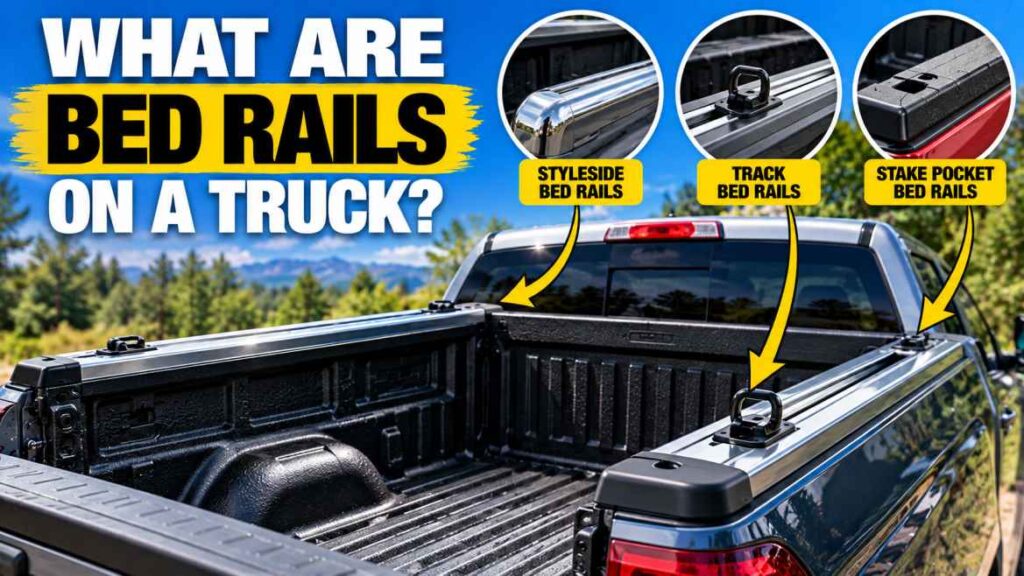
Truck bed rails are rails or rail-style accessories mounted along the upper edges or sides of a pickup bed. Depending on the design, they can protect the bedside, provide additional cargo tie-down locations, support accessories or create a track for adjustable cleats and other mounting hardware.
Quick Answer
Bed rails sit along the top or upper side of a pickup bed and are used for protection, cargo management or accessory mounting. Some are simple protective rails, while others include slots, cleats or channels for moving tie-down points. The mounting method and load rating vary widely, so a rail should not be treated as a universal heavy-duty anchor without checking its specifications.
What Do Truck Bed Rails Do?
The primary function depends on the rail design. A basic rail can protect the top edge of the bed from scratches and dents during loading. A cargo-management rail can provide attachment points for straps, cleats and other accessories. Some systems also serve as mounting structures for racks or other truck-bed equipment.
These functions can overlap, but they are not identical. A decorative or protective rail may not be rated to restrain heavy cargo. A rail designed as part of a cargo-management system may have specific load limits and mounting requirements.
Common Types of Bed Rails
| Type | Typical purpose | Important consideration |
|---|---|---|
| Protective bed rail | Protect the bedside edge | May have little or no cargo rating |
| Tie-down rail | Provide adjustable attachment points | Check cleat and rail ratings |
| T-slot rail | Accept compatible accessories | Accessory compatibility matters |
| Stake-pocket rail | Mount using existing stake pockets | Vehicle-specific fitment is important |
| Drilled/permanent rail | Create a fixed mounting system | Installation can affect corrosion protection |
Bed Rails vs Bed Caps
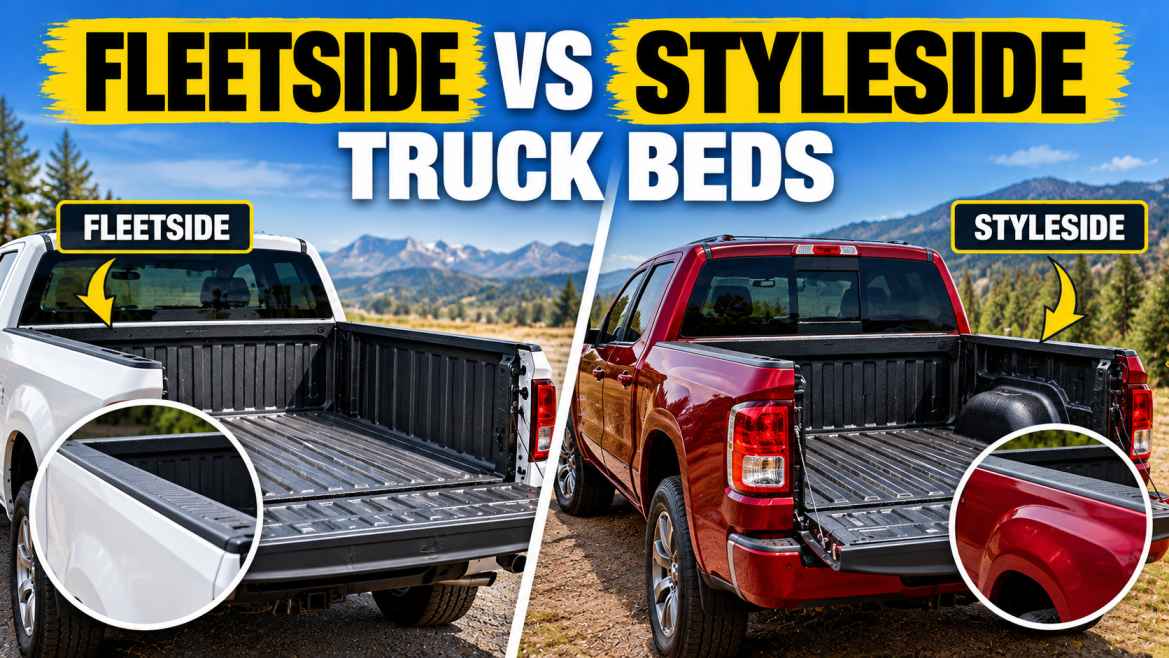
A bed cap is primarily a protective trim piece covering the top edge of the bedside. A bed rail is generally a bar, track or structural accessory that runs along the bed and may provide additional utility.
Some products combine protective and cargo-management functions, which is why product descriptions can use the terms differently. Always check what the specific product is actually designed to do.
Bed Rails vs Tie-Down Rails
The term bed rail can describe a wide range of products. A dedicated tie-down rail usually has a defined system of cleats, loops or attachment points. The advantage is flexibility: the anchor can often be positioned closer to the cargo.
However, the rail’s capacity is only as strong as the rail, mounting hardware, vehicle attachment and cargo restraint system. Never infer a load rating from the rail’s appearance.
How Do Bed Rails Mount?
Many aftermarket rails use existing stake pockets or vehicle-specific mounting points, allowing installation without drilling. Other systems use clamps or brackets that attach to the bed structure. Some permanent systems require drilling.
If drilling is required, corrosion protection becomes important. New holes can expose metal and should be treated according to the vehicle or accessory manufacturer’s instructions. Do not drill into the bed simply because a universal rail appears easy to adapt.
Can You Use Bed Rails to Secure Cargo?
Only if the specific rail and its mounting system are designed and rated for that purpose. If the product includes cleats or tie-down points, follow the stated working load limits and installation instructions.
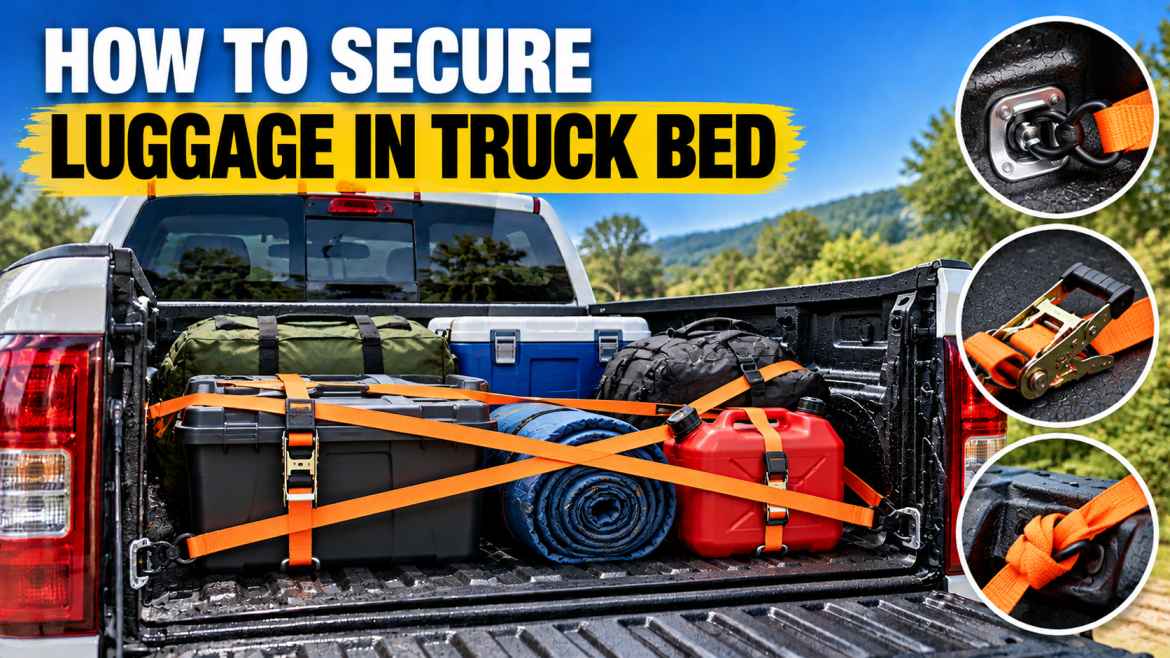
For cargo securement, the anchor is only one part of the system. You also need suitable straps or other restraints, proper load placement and enough securement to control movement in every direction.
Our truck bed tie-down guide covers dedicated cargo-securement options in more detail.
Can Bed Rails Support a Truck Bed Rack?
Some rack systems are designed to mount to rails or rail-compatible hardware, but this is not universal. A protective rail should never be assumed to be a structural rack mount.
If you are installing a rack, use the rack manufacturer’s specified mounting points and hardware. Our truck bed rack guide covers the broader rack category, while our truck bed rack installation guide explains the installation side.
Do Bed Rails Interfere With a Tonneau Cover?
They can. A tonneau cover needs sufficient clearance along the bed rails, and some covers clamp directly to the inside of the bedside. A rail, cleat or mounting bracket can therefore create a compatibility problem.
Before installing both accessories, check whether the tonneau manufacturer specifically lists compatibility with the rail system. Do not assume that two individually compatible accessories will automatically work together.
What Should You Check Before Buying Bed Rails?
- Exact truck year, make, model and bed length.
- Whether the rail mounts to stake pockets, clamps or drilled holes.
- Whether the truck has an existing tonneau cover or other accessory that occupies the rail area.
- Whether the rail is decorative, protective or load-rated.
- The stated load or working-load limits for cleats and attachment points.
- Whether drilling is required and how corrosion protection is handled.
- Whether the system supports the accessories you actually plan to use.
Common Bed Rail Mistakes
Assuming every rail is a tie-down
A rail can look strong without being engineered to restrain cargo. Use only rated attachment points.
Ignoring mounting hardware
A strong rail attached with unsuitable hardware is not a strong cargo system. Installation instructions matter.
Drilling without corrosion protection
Any modification that exposes bare metal should be handled according to the manufacturer’s corrosion-protection requirements.
Forgetting accessory clearance
Rails can conflict with tonneau covers, bed caps, toolboxes and rack systems. Check the complete accessory combination before installation.
Are Bed Rails Worth It?
They can be useful when you regularly load cargo near the bedside, need flexible tie-down positions or want additional protection from loading wear. They are less useful if you rarely use the bed or if the rail would interfere with an accessory you already depend on.
The value is therefore practical rather than universal. Choose a rail for the job you need it to perform, not simply because it makes the truck look more rugged.
FAQ
Are truck bed rails structural?
Some are engineered as part of a specific accessory system, but others are mainly protective or cosmetic. Check the manufacturer’s specifications before using a rail to support a load.
Do all trucks have bed rails from the factory?
No. Pickup beds vary by manufacturer and configuration. Some have factory cargo-management systems, while others use simple bedside edges and separate tie-down points.
Can I install bed rails without drilling?
Many products are designed for no-drill installation, often using stake pockets or clamps, but not every rail works that way. Confirm the installation method for your exact truck.
Bottom Line
Truck bed rails can protect the bedside and make cargo management more flexible, but their capabilities vary dramatically. Before using one as a tie-down point or rack mount, verify the rail’s purpose, load rating, mounting method and compatibility with your truck and other accessories.