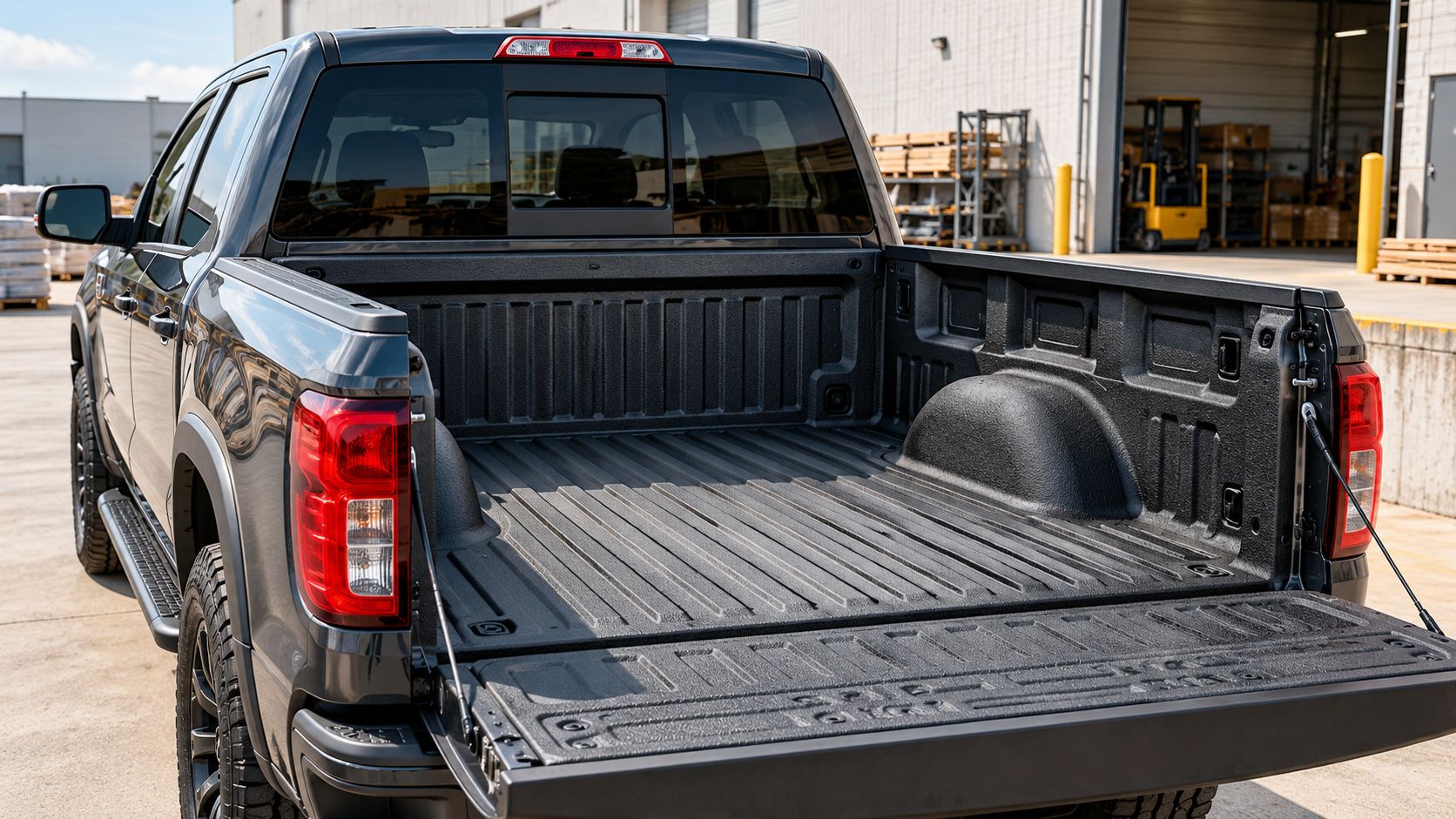
Your truck bed is one of the hardest-working parts of a pickup. Gravel, lumber, tools, landscaping material, coolers, motorcycles and muddy gear can turn a clean factory bed into a collection of scratches and dents surprisingly quickly. A good bed liner creates a dedicated protective surface between that cargo and the truck, but the right solution depends heavily on how you use the pickup.
Choosing a liner is not simply a matter of picking the thickest coating or the most recognizable name. Professional spray-on, DIY urethane, roll-on and drop-in systems protect the bed in different ways, with different costs, installation requirements and levels of permanence.
For this guide, we compared current manufacturer information for coating type, application method, coverage, surface preparation, durability characteristics, maintenance and warranty considerations. We also looked at the practical differences between permanent spray-on protection and removable drop-in systems. We have not treated manufacturer claims as hands-on test results, and we have not claimed to personally apply or test these products.
If you are deciding which type is right for your pickup, start with one question: do you want a permanent coating or something you can remove later? That decision narrows the field quickly. From there, consider how much abuse the bed sees, whether you plan to do the work yourself, and how much you are comfortable spending.
For a DIY spray-on truck bed liner, the U-POL Raptor 4-quart kit with spray gun is a versatile 2K urethane option. The Herculiner Original 1-gallon kit is a simpler roll-on alternative, while Rust-Oleum 342668 Truck Bed Coating is worth considering when keeping the project cost down matters. We also included two aerosol options that are currently sold on Amazon for smaller jobs and touch-ups: Herculiner Aerosol and Rust-Oleum 248914 Truck Bed Coating Spray. Professional spray-on systems are discussed separately because they are normally purchased through installers rather than Amazon.
- Our Top Picks
- Types of Truck Bed Liners
- Which Type Should You Choose?
- How We Chose
- Detailed Reviews
- Spray-On vs. Drop-In Bed Liners
- Truck Bed Liner Brands Worth Knowing
- Getting the Best Truck Bed Liners for the Money
- What to Consider Before Buying
- Application and Surface Preparation
- Maintenance and Long-Term Use
- Frequently Asked Questions
- Final Thoughts
Our Top Picks
These five products represent different DIY approaches to protecting a pickup bed, and each selected product has an Amazon.com listing. The list covers spray-on kits, roll-on coatings and aerosol products rather than treating every buyer as if they has the same tools, budget or project size.
Types of Truck Bed Liners
Before comparing brands, it helps to separate the products by how they protect the bed. The word “liner” is used for several very different systems.
Professional spray-on liners
Professional spray-on liners are applied directly to a prepared truck bed using specialized equipment. Professional spray-on brands such as LINE-X and Rhino Linings are major names in this category. The coating becomes part of the bed’s surface rather than sitting on top as a removable shell.
The major attraction is a continuous, custom-shaped protective layer. A professionally applied liner can cover the floor, sidewalls and other exposed areas without the gaps that can occur around a loose insert. The downside is price and permanence: you are paying for labor and a process that is difficult to reverse.
DIY spray-on kits
DIY spray-on kits bring a smaller-scale version of the coating process to the home garage. U-POL Raptor is a prominent example. Its current one-gallon system uses four bottles of coating and a hardener and is listed by U-POL at approximately 125 square feet of coverage, enough for a full-size pickup bed.
DIY spraying can produce a convincing result, but preparation matters enormously. The bed has to be clean, free of contaminants and properly scuffed so the coating can adhere. You also need the right application equipment, ventilation and personal protective equipment specified by the product manufacturer.
Roll-on bed liners
Roll-on products are usually the most accessible permanent-style DIY option. Herculiner’s Original kit, for example, is a textured polyurethane and rubber-granule coating supplied with rollers and a brush. J-B Weld states that its one-gallon kit is enough for a six-foot truck bed, with additional material needed for an eight-foot bed.
Roll-on application avoids the compressor and spray-gun requirements of many two-part spray systems. It is slower to make a uniform finish, though, and the final texture depends on preparation, application technique and the product itself.
Aerosol and small-area coatings
Aerosol bed coatings are useful for touch-ups, small repairs and limited areas rather than complete full-size beds. They are convenient because they need little equipment, but the coverage per can makes them impractical for many complete-bed projects.
Drop-in liners
A traditional drop-in liner is a molded plastic shell that fits over the bed. It can be removed later and does not require spraying or painting the factory finish. That reversibility can be useful for leased trucks, older pickups or owners who do not want to commit to a permanent coating.
Fit and drainage deserve extra attention with drop-in designs. The liner needs to match the bed correctly, and the space between the insert and the metal can collect dirt or moisture if the system is not installed and maintained properly. A drop-in also changes the usable dimensions of the bed slightly.
Which Type Should You Choose?
| Priority | Type to consider | Main reason |
|---|---|---|
| Maximum permanent protection | Professional spray-on | Custom application, continuous coverage and professional installation. |
| DIY spray finish | 2K urethane kit | More control over the project while avoiding a shop appointment. |
| DIY without spray equipment | Roll-on | Simple tools and a straightforward application process. |
| Lowest initial project cost | Budget coating or small-area product | Useful when the bed needs basic protection without a major installation. |
| Removability | Drop-in liner | Can be removed or replaced without stripping the permanent coating. |
There is no universal winner here. A long-term work-truck owner may value professional protection very differently from someone leasing a pickup. Likewise, an experienced DIYer may prefer urethane while another owner may reasonably choose a roll-on kit because it needs less equipment.
How We Chose
We looked at the parts of a bed liner that matter after the installation is finished: material, application method, coverage, surface preparation, resistance characteristics, fit or coverage, maintenance, warranty information and the amount of work required from the owner.
We also separated professional installation systems from consumer DIY coatings instead of comparing them as though they were identical. The five selected products are available through Amazon.com, while professional spray-on systems are discussed as a separate category because they are generally purchased and installed through local applicators. A shop-applied coating should not be judged by exactly the same criteria as a quart of roll-on material.
Where a manufacturer publishes coverage or application information, we use that information rather than inventing a test result. We also considered the practical cost of the project: application equipment, preparation supplies and professional labor can all change what looks like the cheapest option at first glance.
Finally, fit and use case matter. A liner that is excellent for a contractor carrying steel and concrete may be unnecessary for a driver who mostly hauls groceries, camping gear and occasional lumber. The best choice should match the work rather than simply the product’s reputation.
Detailed Reviews
1. Herculiner Original Aerosol — Best for Touch-Ups and Small Areas
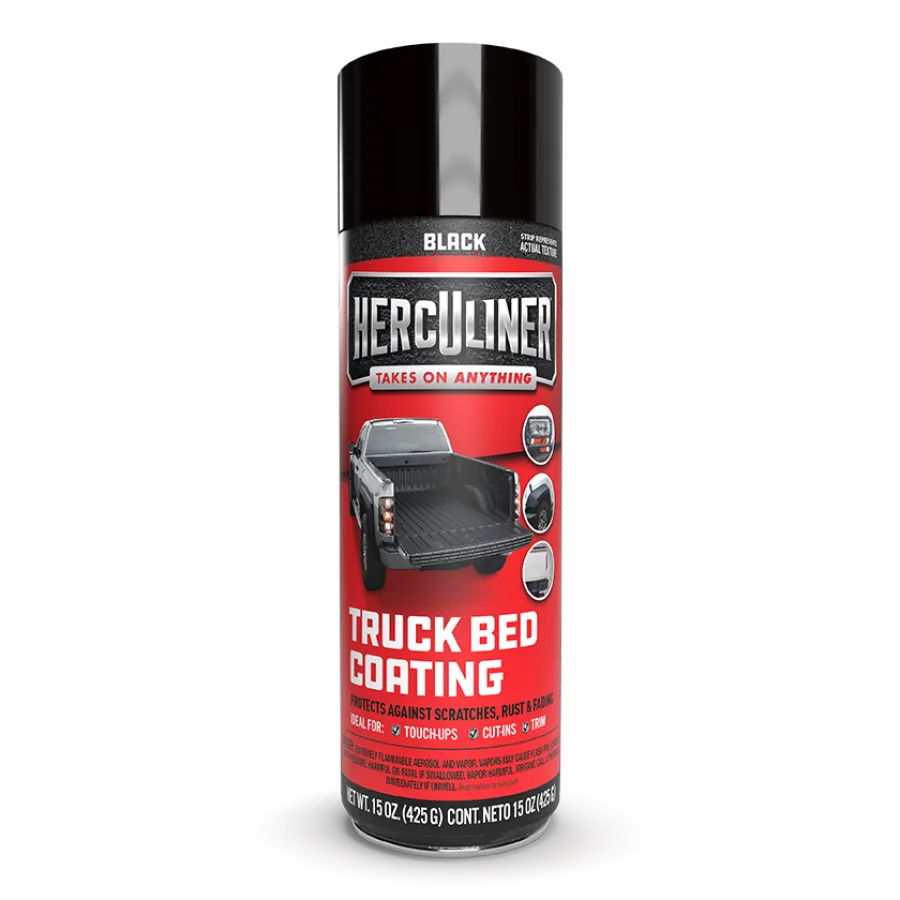
Herculiner’s Original Aerosol is designed for jobs where buying a full gallon of coating would be unnecessary. The 15-ounce spray can is intended for touch-ups, cut-ins and smaller areas, and the manufacturer describes the textured polyurethane formula as resistant to chips, fading and impact.
The aerosol format changes the role of the product compared with a full-bed roll-on kit. It needs little equipment and can be useful around corners, wheel wells, exterior trim and areas that are difficult to reach with a roller. Herculiner lists approximately 6 to 7 square feet of coverage per can, so a full-size pickup bed would require considerably more material than a single can.
That limited coverage is the main reason to treat this as a small-area product rather than a substitute for a complete-bed kit. It can make sense for localized repairs, cut-ins or projects where only a small section needs a textured protective coating.
Who should consider it?
This aerosol is a practical option for owners who need a convenient spray coating for touch-ups or small sections and want a product that is available on Amazon without buying a full roll-on kit.
Pros
- Simple aerosol application
- Useful for touch-ups and cut-ins
- Textured polyurethane coating
- Resists chips, fading and impact
- Works on several automotive surfaces
- Available on Amazon
Cons
- Limited coverage per can
- Not practical for most complete-bed projects
- Multiple cans may be needed
- Surface preparation still matters
2. U-POL Raptor 4-Quart Kit — Best DIY Spray-On Option
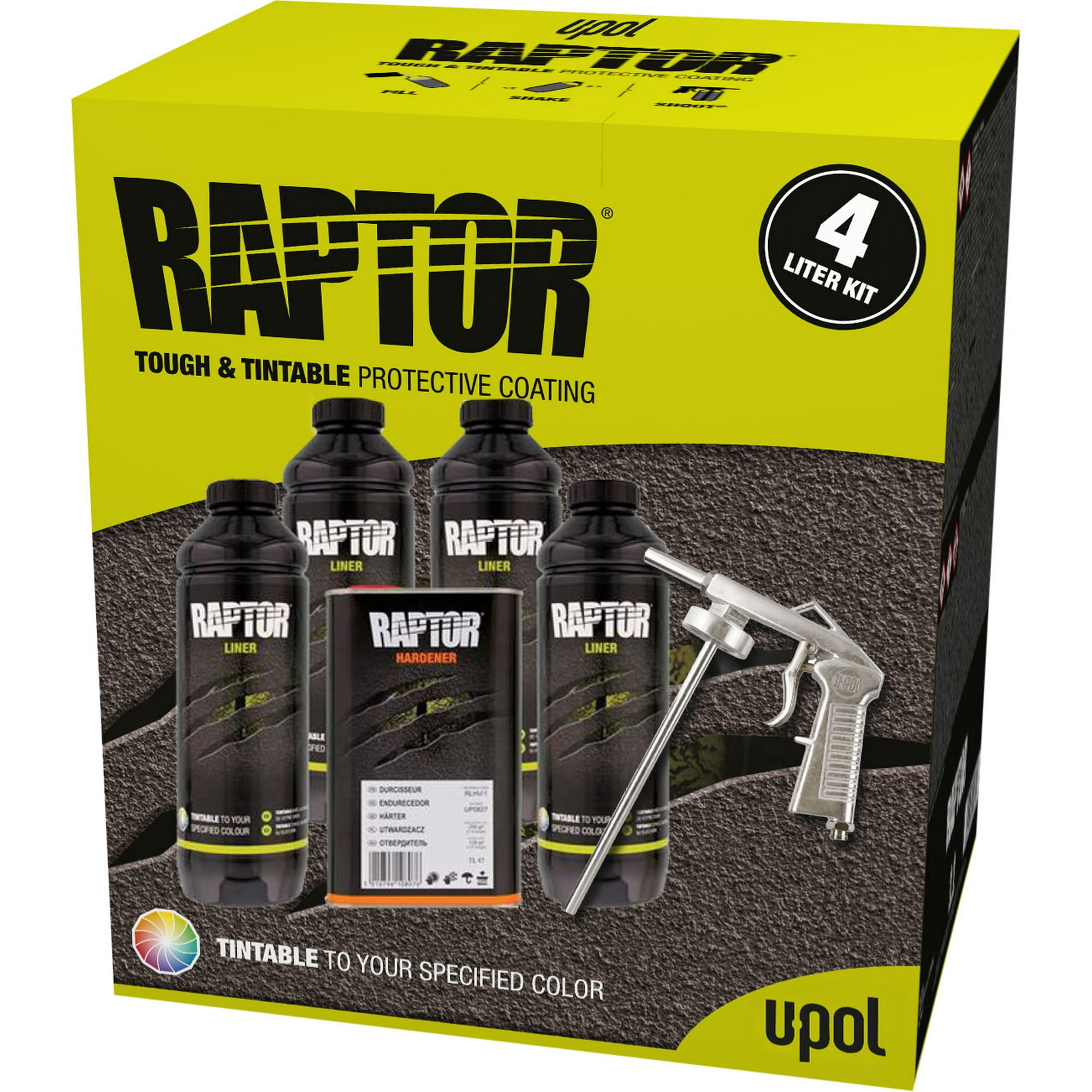
U-POL Raptor occupies the middle ground between a basic roll-on coating and a professional spray booth. The 4-quart kit is a two-component urethane system that mixes the coating with hardener and is intended to be sprayed with an appropriate Raptor application gun. U-POL lists the one-gallon kit at approximately 125 square feet of coverage.
One reason Raptor is frequently considered among the best truck bed liners for the money is the amount of material and control you get from a complete kit. You are still responsible for preparation and application, but you can build the texture and coverage yourself rather than paying a shop to do it.
The trade-off is complexity. A good result depends on scuffing the surface correctly, keeping contamination away, mixing the components accurately and applying the material consistently. U-POL’s technical documentation also emphasizes appropriate personal protective equipment and following the current safety instructions. This is not a product to spray casually in a closed garage.
Who should consider it?
Raptor is a good fit for a confident DIY owner who wants a substantial spray-on coating and already has, or is willing to obtain, the required equipment. It is particularly attractive for someone who wants more control than a simple brush or roller can provide.
Pros
- 2K urethane coating
- Approximately 125 sq. ft. coverage per one-gallon kit
- Spray, roll or brush application options
- UV, stain and abrasion resistance
- Flexible cured coating
- Available in black and tintable versions
Cons
- Requires careful preparation
- Spray application needs suitable equipment
- Mixing and application require attention
- Safety precautions are essential
3. Herculiner Original 1-Gallon Kit — Best Roll-On DIY Value

Herculiner takes a simpler route. Its Original Truck Bed Liner is a textured polyurethane and rubber-granule coating designed for DIY roll-on application. The current one-gallon kit includes the coating, a brush, two rollers and a roller handle, so you do not need a spray gun to get started.
J-B Weld states that the one-gallon kit covers a six-foot truck bed, with additional material required for an eight-foot bed. That detail is important because buying only one gallon for a long-bed pickup can leave you short of material or force you to compromise on the number of coats.
The application process is relatively approachable, but the word “easy” should not be confused with “no preparation.” The bed still needs to be cleaned and prepared correctly. Any oil, loose coating, rust or contamination left underneath can become an adhesion problem later.
Who should consider it?
Herculiner makes sense for owners who want a durable DIY coating but do not want to set up a spray system. It is also a useful option when the project budget matters and a professional installation is difficult to justify.
Pros
- Roll-on application
- Complete one-gallon kit includes rollers and brush
- Textured non-skid surface
- Flexible and repairable coating
- Useful for more than truck beds
- Long-running DIY product
Cons
- One gallon is listed for a six-foot bed
- Eight-foot beds need additional material
- Roller technique affects the final texture
- Preparation still takes significant time
4. Rust-Oleum 342668 Truck Bed Coating — Best Budget-Friendly Coating
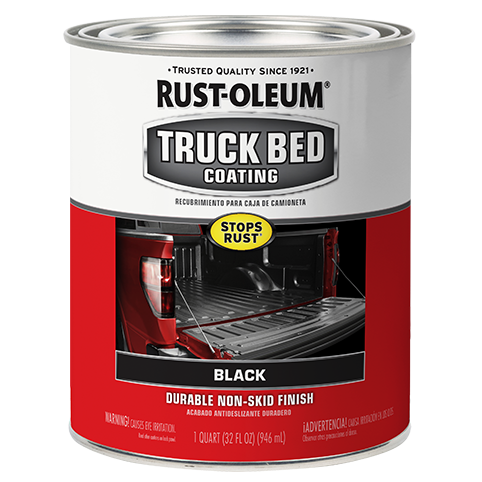
Rust-Oleum’s 342668 Truck Bed Coating is aimed at owners who want a relatively simple way to restore or protect a metal truck bed without stepping up to a full professional installation. The manufacturer describes it as a textured coating with abrasion resistance and rust protection, and says it can be applied by spraying, rolling or brushing.
The one-quart size is especially relevant to the best truck bed liners for the money conversation because it lets you approach the project incrementally. It can be useful for smaller beds, restoration work or sections that need attention, although a complete large pickup bed will require enough material for the coverage and number of coats recommended by the manufacturer.
Rust-Oleum’s preparation instructions are straightforward but should not be skipped. Bare or rusty metal needs to be cleaned and sanded, and previously coated surfaces need to be checked for loose or peeling material. The company recommends applying the product under appropriate temperature and humidity conditions.
Who should consider it?
This coating is a sensible starting point for a budget-conscious owner who is comfortable doing preparation and application. It also makes sense for restoration projects where a whole professional spray system would be more than you need.
Pros
- Lower-cost DIY approach
- Spray, brush or roller application
- Textured non-skid finish
- Rust and abrasion protection
- Useful for restoration work
- Easy to source compared with specialty systems
Cons
- Coverage depends heavily on the project
- Not equivalent to professional polyurea installation
- Surface preparation remains critical
- Quart size may not be enough for a full-size bed
5. Rust-Oleum 248914 Truck Bed Coating Spray — Best Convenient Aerosol Option
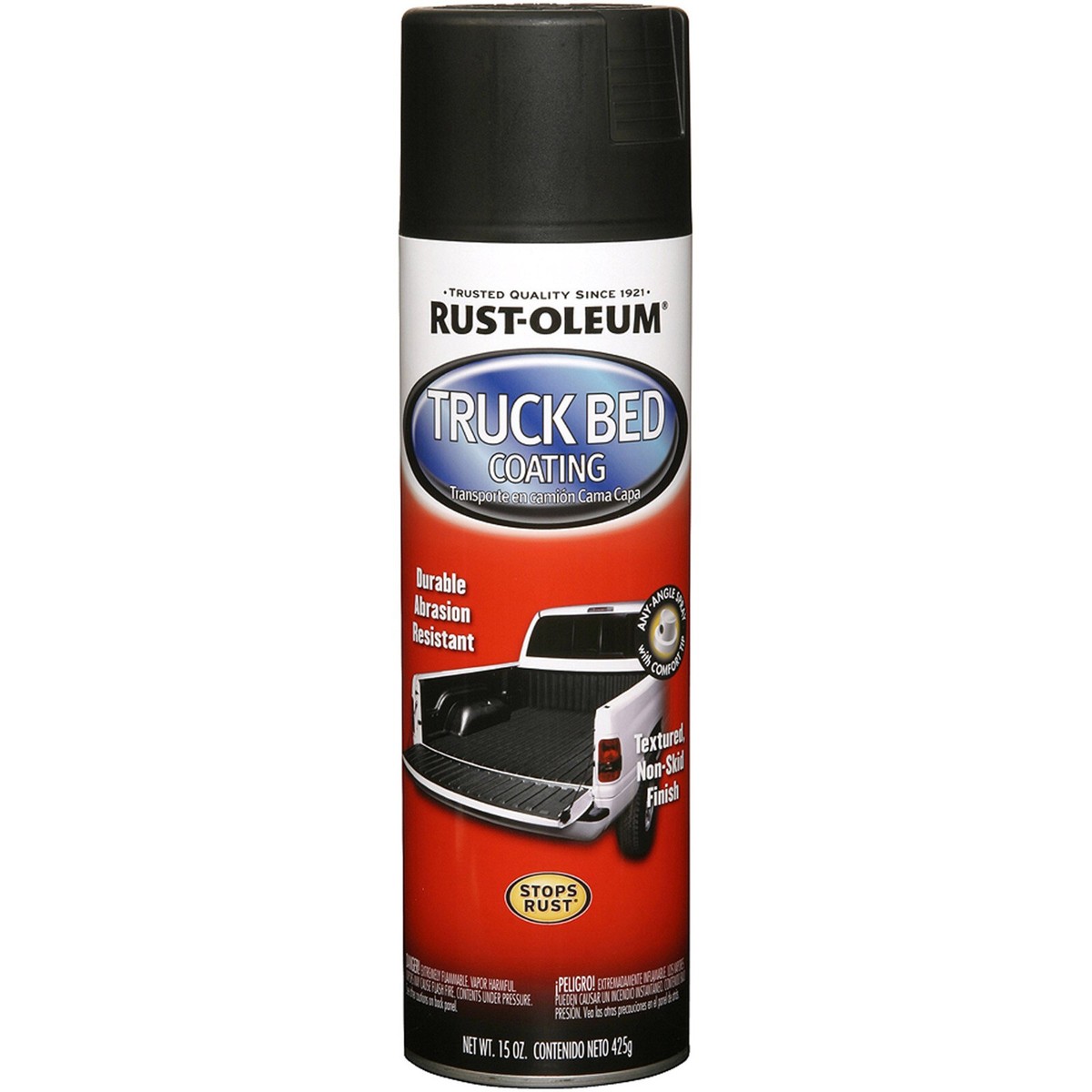
Rust-Oleum 248914 is an aerosol truck bed coating intended for smaller coating jobs, touch-ups and surfaces where a spray can is more convenient than a roller or larger spray system. The product is a textured coating designed to provide a non-skid surface with abrasion and weather resistance.
The biggest limitation is coverage. A 15-ounce aerosol can is useful for targeted work, but it is not the practical choice for coating the entire bed of a full-size pickup. That makes this product more relevant to repairs, smaller beds, exterior trim and other areas where you want a textured protective coating without buying a larger kit.
Rust-Oleum’s aerosol format also makes the application process straightforward compared with two-component spray systems. Even so, the surface should be clean, dry and properly prepared before coating, and the manufacturer’s current instructions should be followed for application conditions and recoating.
Who should consider it?
This product fits owners who want a convenient aerosol coating for smaller jobs and prefer buying a readily available Amazon product rather than committing to a full-size bed liner kit.
Pros
- Convenient aerosol application
- Textured non-skid finish
- Abrasion and weather resistance
- Useful for touch-ups and smaller areas
- No spray gun required
- Available on Amazon
Cons
- Limited coverage per can
- Not intended as the most practical full-bed solution
- Multiple cans may be needed for larger areas
- Preparation still affects adhesion and finish
Spray-On vs. Drop-In Truck Bed Liners
The spray-on versus drop-in decision is one of the most important choices in this category. Neither is automatically right for every owner.
Spray-on advantages
A spray-on liner follows the shape of the truck bed and creates a continuous surface. There is no separate plastic shell to lift out, and the coating can cover areas that a floor-only mat cannot. Professional systems are particularly useful for trucks that see frequent abrasion, because the coating is designed to stay bonded to the prepared surface.
The main disadvantages are permanence, preparation and cost. Once a professional coating is applied, changing your mind is not as simple as lifting a liner out. DIY coatings also require careful preparation, and a poor application can be difficult to correct.
Drop-in advantages
A drop-in liner is removable. That is its biggest advantage. If you are buying a used truck, leasing a pickup, or simply want to avoid permanently altering the factory finish, an insert can be appealing.
Drop-in liners can also be inexpensive and quick to install, but fit matters. The insert must match the bed, and any movement, trapped dirt or moisture should be dealt with rather than ignored. The extra layer also changes the floor height and may affect how some cargo-management accessories fit.
What about a drop-in liner with a rubber mat?
These are not the same thing. A rubber bed mat sits on the floor and is normally much easier to remove. A molded drop-in liner is a larger shell that can cover the floor and sidewalls. If your goal is simply to protect the floor while keeping the option to remove the accessory later, a custom-fit mat may be the less complicated solution.
Truck Bed Liner Brands Worth Knowing
There are many products in this category, but a short list of established names makes research easier.
LINE-X
LINE-X focuses heavily on professional spray-on installation. Its current lineup includes Standard, Premium and MAX products, with differences in UV protection and impact-oriented construction.
Rhino Linings
Rhino Linings is another major professional brand. Its product range includes formulas aimed at impact, abrasion, corrosion and chemical resistance, and applications are handled through its applicator network.
U-POL
U-POL’s Raptor line is particularly relevant to DIY buyers. The company offers gallon and smaller kits, application guns and different formulations. Raptor is a urethane coating rather than a traditional molded insert.
Herculiner
Herculiner is well established in the DIY roll-on market. Its Original product uses a textured polyurethane and rubber-granule coating and is supplied as a kit with rollers and a brush.
Rust-Oleum
Rust-Oleum offers several truck-bed coating formats, including brush, roller and spray-friendly products. Its appeal is accessibility and a wide range of DIY coating choices rather than professional spray-shop installation.
The important point is that the best truck bed liner brands list should not be treated as a ranking. Each brand serves a different part of the market, and the exact formula or product number matters more than a logo on the container.
How to Get the Best Truck Bed Liners for the Money
“Best value” is easy to misunderstand. A $100 DIY kit is not automatically a better value than a $700 professional installation, and a $30 quart is not necessarily enough to protect a full-size long bed.
Calculate the complete project cost
For a DIY coating, include the liner, hardener if required, spray gun or rollers, compressor if needed, masking supplies, cleaning products, abrasives and protective equipment. If you already own most of those items, the project becomes much cheaper than it would be for a first-time user.
Consider the life of the truck
A permanent professional coating makes more financial sense when you expect to keep the pickup for many years. If the truck is temporary or leased, a removable liner can avoid paying for a permanent modification that you may not benefit from later.
Do not buy too little material
Coverage figures are useful, but the amount you actually need depends on the bed size, number of coats, application thickness and whether you are coating the sidewalls and tailgate. A cheap product becomes expensive if you have to stop halfway through the job and buy another container.
Value preparation time realistically
Preparation is part of the cost even when nobody sends you an invoice. Cleaning, sanding, masking and allowing the surface to dry can take longer than the actual application. If you dislike that kind of project, paying an installer may be the more practical value.
What to Consider Before Buying
1. Your truck bed’s current condition
If the bed already has exposed rust, loose paint or deep corrosion, do not simply cover it and assume the problem is solved. The surface needs to be evaluated and prepared according to the coating manufacturer’s instructions. A liner cannot turn active corrosion into sound metal.
2. Permanent vs. removable protection
Decide this before shopping. A professional spray-on liner is difficult to reverse, while a drop-in liner or bed mat can be removed. This single decision can eliminate half of the products you are considering.
3. The material and chemistry
Polyurea, polyurethane, rubberized coatings and molded plastics have different characteristics. Do not compare them by thickness alone. Look at how the material cures, how it handles chemicals and impact, and what preparation is required.
4. Application equipment
Some DIY spray products require a suitable gun and compressor. Roll-on products need brushes and rollers instead. If you are working at home, check the complete equipment list before ordering the coating.
5. Coverage
Measure the bed length and check the manufacturer’s coverage information. Remember that coating the walls and tailgate consumes material as well as coating the floor.
6. Texture
A textured surface can add grip, but very aggressive texture can make it harder to slide heavy cargo across the bed and can be uncomfortable when kneeling. Think about the type of cargo you load most often.
7. UV exposure
If the truck spends most of its life outside, UV resistance and fade resistance become more important. LINE-X Premium, for example, specifically adds UV protection to its Standard-style abrasion and impact protection.
8. Chemical exposure
Work trucks may encounter fuel, oil, fertilizer, solvents, salt or other chemicals. Check the product’s technical documentation for the substances it is designed to resist instead of assuming that every textured coating has the same chemical performance.
9. Warranty
A warranty is useful only when you understand its terms. Professional and DIY products can have very different coverage and conditions.
10. Future truck-bed accessories
Think ahead if you plan to add a tonneau cover, bed rack, toolbox, fifth-wheel equipment or other accessories. A permanent coating normally works with these accessories, but the extra texture can affect how some mounts or seals sit.
Application and Surface Preparation
The quality of a bed liner often depends more on preparation than buyers expect. The most expensive coating cannot compensate for oil, loose paint, rust or contamination left underneath it.
Clean first
Remove dirt, grease, wax, loose material and old debris. Use the cleaner specified by the product manufacturer and rinse or wipe the surface as directed. Allow the bed to dry fully before proceeding.
Deal with rust and loose coating
Do not bury loose rust or peeling paint beneath a new coating. Rusted areas may need to be repaired, treated or primed depending on the product. Rust-Oleum, for example, specifically instructs users to clean and sand bare or rusted surfaces and to remove loose or peeling material from previously coated surfaces.
Scuff the surface
Most coatings need a mechanically prepared surface for reliable adhesion. Follow the exact grit and preparation method in the product’s current instructions. Do not assume that a quick wipe with a rag is enough.
Mask carefully
Protect drains, hardware, lights, hinges, wiring and painted areas that should remain uncoated. Overspray and roller splatter are much easier to prevent than to remove.
Follow safety requirements
Some two-part coatings and application processes require significant ventilation and personal protective equipment. Read the current technical and safety documentation before starting. If the product is not appropriate for your workspace or equipment, choose another application method or use a professional installer.
Maintenance and Long-Term Use
A properly applied liner is low maintenance, but that does not mean it should be ignored. Clean the bed regularly so abrasive grit does not remain trapped under cargo. Remove leaves, soil and other debris before they accumulate around drain points.
For spray-on coatings, a normal wash is generally enough for everyday dirt. Avoid harsh chemicals unless the manufacturer says they are compatible with the coating. If you notice a cut, gouge or area of delamination, address it according to the product’s repair guidance rather than allowing water to reach the underlying metal.
Drop-in liners need a different routine. Lift or inspect the insert periodically, clean the area underneath and look for trapped debris or moisture. The liner should remain properly secured so that movement does not rub against the bed over time.
DIY coatings deserve an additional inspection after the first few weeks of use. Look for areas where the coating did not bond correctly, especially around corners and edges. Early attention is much easier than trying to repair a neglected section months later.
Frequently Asked Questions
What are the best truck bed liners?
The right liner depends on your priorities. LINE-X and Rhino Linings are established professional spray-on choices, U-POL Raptor is a strong DIY urethane option, Herculiner is a straightforward roll-on system, and Rust-Oleum offers accessible DIY coatings. Your truck, budget and intended use should determine the final choice.
What is the best truck bed liner for most pickup owners?
There is no single answer for every pickup. A professional spray-on liner is a sensible route for long-term protection, while a DIY Raptor or Herculiner kit can make more sense when you want to control the installation cost. A removable drop-in liner is worth considering when permanence is not desirable.
What is the best spray-on truck bed liner?
For professional installation, LINE-X and Rhino Linings are two major brands to compare. For DIY application, U-POL Raptor is a well-established 2K urethane system. Compare the exact formula, installation requirements, warranty and local pricing rather than assuming every spray-on coating performs identically.
What is the best drop-in truck bed liner?
The best drop-in liner is the one that fits the truck precisely and matches how you use the bed. A molded plastic insert is attractive when removability matters, but fit, attachment and drainage should be checked carefully. If you only need floor protection, a custom-fit bed mat may be simpler.
What are the best truck bed liner brands?
LINE-X and Rhino Linings are major professional spray-on names. U-POL Raptor and Herculiner are well-known DIY choices, while Rust-Oleum offers a broad range of consumer truck-bed coatings. The exact product matters more than choosing a brand based only on reputation.
What are the best truck bed liners for the money?
Value depends on the complete project cost. Rust-Oleum can be attractive for smaller or budget-oriented coating jobs, Herculiner avoids the equipment needed for many spray systems, and Raptor provides a more substantial 2K urethane DIY route. Professional installation costs more but includes preparation and application.
Is a spray-on bed liner better than a drop-in liner?
They solve the problem differently. Spray-on liners provide permanent, continuous coverage and do not have a separate shell that can move. Drop-in liners are removable and can be cheaper or more practical for some owners. The better option depends on whether you prioritize permanence, cost, removability or installation convenience.
How long does a truck bed liner last?
There is no universal lifespan. Professional coatings, DIY products and drop-in liners experience different types of wear. Application quality, cargo, sunlight, chemicals, cleaning and climate all affect longevity. Follow the manufacturer’s care instructions and inspect the liner regularly.
Can I spray a bed liner over rust?
Do not use a bed liner as a substitute for rust repair. Remove or treat corrosion according to the coating manufacturer’s instructions before application. Coating over loose or active rust can leave the underlying problem hidden rather than solved.
Can you spray bed liner over an existing factory coating?
Some products can be applied over suitable existing finishes after proper cleaning and scuffing. Others have more specific requirements. Always check the current product instructions before applying a new coating over paint or an existing liner.
Can a spray-on bed liner be repaired?
Many coatings can be repaired or blended when damaged, but the exact process varies by product. A professional installer can usually advise on repairs to a professionally applied liner. For DIY products, use the manufacturer’s repair and recoating instructions.
Do drop-in liners cause rust?
A drop-in liner does not automatically cause rust, but trapped dirt and moisture can create problems if the system is not fitted and maintained correctly. Inspect underneath the liner periodically and address any moisture, abrasion or corrosion you find.
Should I install a bed liner before a tonneau cover?
There is no strict order required, but planning both accessories together is useful. A spray-on liner normally works well with tonneau covers, while some drop-in liners can change the bed dimensions around the rails and tailgate. Check compatibility before installing either product.
Final Thoughts
The best truck bed liner is not necessarily the most expensive product or the one with the toughest-sounding marketing. It is the protection system that fits your truck, your workload and your willingness to install and maintain it.
If you want a permanent professional solution, brands such as LINE-X and Rhino Linings can be compared locally through their installer networks. For a capable DIY spray-on project, U-POL Raptor offers a two-component urethane approach with substantial coverage. If you prefer a simpler roller-and-brush project, Herculiner remains a practical option.
For buyers who want to keep the project cost lower, Rust-Oleum Truck Bed Coating is worth considering, especially for restoration or smaller projects where a full professional installation would be unnecessary. And if you prefer the flexibility of a removable system, research a properly fitted drop-in liner rather than assuming a permanent coating is automatically better.
Before you order, check the condition of the bed, calculate the complete project cost, verify the amount of material you need and read the current application instructions. Most importantly, do not rush surface preparation. A well-prepared bed gives almost any legitimate coating a better chance of delivering the protection you paid for.
A truck bed liner should make the pickup easier to work with. Choose the type that matches your cargo, install it correctly and maintain it sensibly. Once those decisions are right, the liner can quietly do its job every time you load the bed.