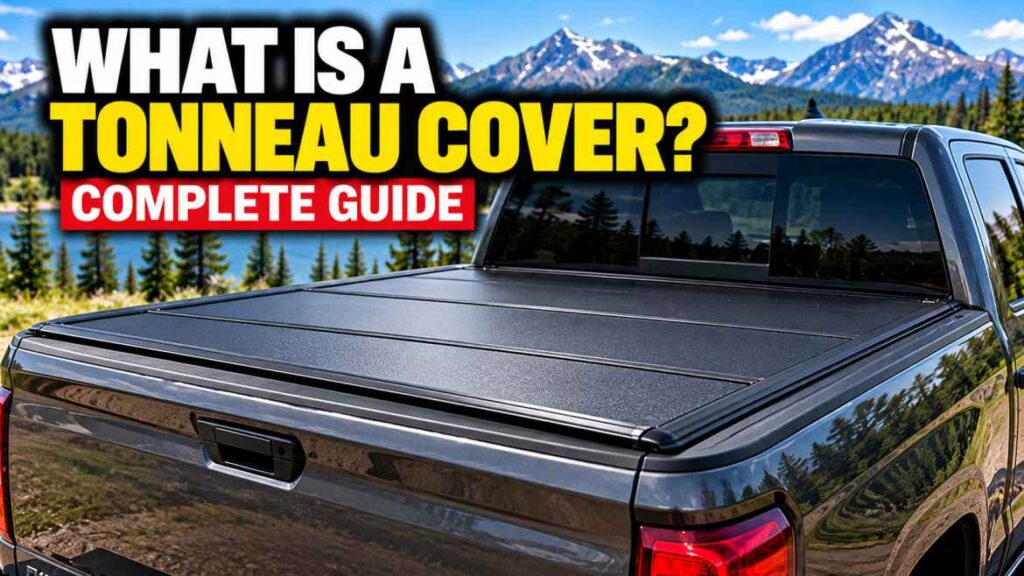
If you are new to pickup-truck accessories, you may have seen the term “tonneau cover” and wondered what it actually means. In simple terms, a tonneau cover is a cover designed to sit over the open bed of a pickup truck.
A tonneau cover is a removable, folding, rolling, retractable, or hinged cover that closes the top of a pickup truck bed. It can help shield cargo from weather and road debris, keep the contents less visible, and make the bed more useful for everyday hauling. The major choices are soft roll-up, soft folding, hard folding, retractable, and one-piece or hinged designs. The right type depends on your truck’s exact fitment, how often you need full bed access, and how much protection you want.
What Is a Tonneau Cover?
A tonneau cover is a truck bed cover that spans the top of a pickup’s cargo box. Depending on the design, it may roll toward the cab, fold into sections, slide into a housing, lift on hinges, or come off the truck when you need unrestricted access.
The important distinction is that a conventional tonneau cover is generally a relatively low-profile system at bed-rail height. It is intended to cover cargo that stays within the normal height of the pickup bed rather than turn the bed into a standing-height enclosed compartment.
The term is used broadly. A soft vinyl roll-up and a rigid aluminum folding cover are both tonneau covers even though they behave very differently.
For a useful starting point, see our Best Truck Bed Covers guide for the major product categories and fitment considerations.
Why Is It Called a Tonneau Cover?
“Tonneau” comes from French terminology associated with a barrel, cask, or enclosed rear compartment. In modern pickup-truck use, the word has become the common name for a cover placed over the truck bed.
You may also see “truck bed cover,” “pickup bed cover,” or simply “bed cover.” In most shopping and automotive contexts, these terms describe the same broad accessory category.
Main Types of Tonneau Covers
Soft Roll-Up
A soft roll-up uses flexible material, commonly vinyl or another coated fabric, that rolls toward the cab. It suits owners who frequently need to open a large portion of the bed. The trade-off is that flexible material provides less physical resistance to cutting or impact than a rigid cover.
Soft Folding
Soft folding covers usually divide into two or more sections. They are relatively simple to operate and can be a practical middle ground when you want quick access without the weight and hardware of a hard cover.
Hard Folding
Hard folding covers use rigid panels, often aluminum or composite materials. They generally provide a stronger physical barrier than soft covers and can be useful when cargo protection and a substantial feel are priorities. See our Best Hard Folding Tonneau Covers guide for this category.
Retractable
Retractable covers slide into a housing near the front of the bed. They can offer convenient opening and a clean appearance, but the housing occupies some space and these systems are often more expensive than basic soft covers. See our Best Retractable Tonneau Covers guide.
One-Piece or Hinged
A one-piece rigid cover lifts from hinges, usually near the cab. It can provide a clean, solid surface and strong weather protection, but it can be less convenient if you frequently need to carry tall or awkward cargo.
What Does a Tonneau Cover Do?
The basic job is simple: cover the open bed. That can make a meaningful difference when you use the truck for everyday cargo.
- Weather protection: a properly fitted cover helps reduce direct exposure to rain, snow, dust, leaves, and road spray.
- Reduced visibility: a closed cover hides many ordinary items from view when the truck is parked.
- Cargo management: covered cargo is less exposed to wind and debris than cargo left completely open.
- Everyday convenience: a cover lets you leave some gear in the bed without leaving the bed completely open.
- Appearance: many owners prefer the cleaner, more finished look of a covered bed.
None of those benefits means a cover makes the bed completely waterproof or theft-proof. Seals, installation, cover design, weather conditions, and the condition of the truck all matter.
Benefits of a Tonneau Cover
It can make the bed more useful
A pickup bed is excellent for bulky cargo, but an open bed is not ideal for every load. A cover gives you a practical way to carry bags, tools, groceries, camping equipment, or other gear while keeping the top of the bed covered.
It can improve privacy
When the cover is closed, people walking past the truck cannot easily see everything in the bed. That is useful even when the cover is not marketed as a high-security system.
It can reduce exposure to the elements
A tonneau cover is a first line of defense against weather, not a guarantee of a dry cargo compartment. Water can enter around seals, tailgate gaps, clamps, drainage channels, or through the cover material depending on the design.
It can preserve easy bed access
Modern covers are designed around different access patterns. A roll-up may give almost the entire bed back in seconds, while a folding cover can provide partial access without removing the whole system.
What a Tonneau Cover Cannot Do
- It cannot guarantee waterproofing in every storm or car wash.
- It cannot stop a determined thief from cutting a soft cover or attacking the truck itself.
- It cannot make tall cargo fit underneath the cover.
- It cannot compensate for incorrect fitment or poorly adjusted clamps.
- It should not be used as a seat or standing platform unless the manufacturer specifically rates that model for the intended load and use.
Why Fitment Matters
Tonneau covers are not universal in the way a generic tarp can be. The truck’s model year, bed length, cab configuration, rail shape, tailgate, bed liner, factory cargo system, RamBox-style storage, and other accessories can change compatibility.
Our guide on how to measure your truck bed for a tonneau cover explains the physical measurement. That measurement is only part of the process: the manufacturer’s fitment chart remains the final check for the particular cover.
A cover that is “about the right length” is not necessarily a correct fit. Poor fit can cause gaps, latch problems, water intrusion, wind noise, or interference with the tailgate and other equipment.
Tonneau Cover vs. Truck Cap or Topper
| Feature | Tonneau cover | Truck cap/topper |
|---|---|---|
| Height | Generally near bed-rail height | Extends above the bed |
| Typical cargo | Low or bed-height cargo | Taller enclosed cargo |
| Bed access | Usually quick to open, fold, roll, or retract | Door/window access depends on design |
| Removal | Often relatively simple | Usually more involved and heavier |
| Best for | Daily coverage and flexible bed use | Enclosed or taller cargo and camping/work applications |
If you regularly carry cargo above bed-rail height, a topper may make more sense than trying to work around a flat tonneau cover.
How to Choose the Right Type
| Your priority | Good starting point | Main trade-off |
|---|---|---|
| Low cost and simple coverage | Soft roll-up or soft folding | Less physical security |
| Rigid construction | Hard folding | More weight and cost |
| Frequent full-bed access | Roll-up or retractable | Different security/storage trade-offs |
| Low-profile appearance | Retractable or low-profile folding | Usually higher cost |
| Tall cargo | Cap/topper rather than tonneau | More bulk and installation complexity |
Start with how you use the truck rather than with a brand name. Then verify exact fitment before ordering.
Frequently Asked Questions
Is a tonneau cover the same as a truck bed cover?
Yes. “Tonneau cover” is the common automotive term for a cover that fits over a pickup bed.
Are tonneau covers waterproof?
They are better described as weather-resistant rather than guaranteed waterproof. Design, seals, installation, and conditions determine how much water reaches the bed.
Can you leave a tonneau cover open while driving?
Only if the specific manufacturer allows that operating position and provides a way to secure the cover. Follow the owner’s manual rather than assuming every cover can be driven open.
Do all tonneau covers fit all trucks?
No. Fitment is vehicle-specific and can vary by year, bed length, rail design, tailgate, liner, and factory equipment.
Does a tonneau cover improve fuel economy?
Some studies and product claims associate bed covers with aerodynamic changes, but the real-world effect varies with truck, speed, cover design, wind, and driving conditions. It should not be the only reason to buy one.
Common Tonneau Cover Misconceptions
A tonneau cover is not the same as a camper shell
A tonneau normally stays close to the bed rails and covers cargo from above. A camper shell or topper extends upward and creates a taller enclosed space. If you need to carry bicycles, coolers, boxes, or other gear above the bed rails, a flat tonneau may not be the right solution.
A tonneau cover is not automatically waterproof
Even a well-designed cover has seams, seals, tailgate interfaces, drains, and mounting points. Heavy rain, high-pressure water, truck movement, or an imperfect installation can allow some water into the bed. A cover should be viewed as weather protection, not a guarantee that the bed becomes a watertight trunk.
A soft cover is not equivalent to a hard cover for security
Both can hide cargo, but a flexible fabric or vinyl cover can generally be cut more easily than a rigid panel. If physical resistance to intrusion is a major priority, compare hard-cover construction and the truck’s tailgate-locking arrangement rather than assuming every tonneau offers the same security.
A cover does not eliminate the need to secure cargo
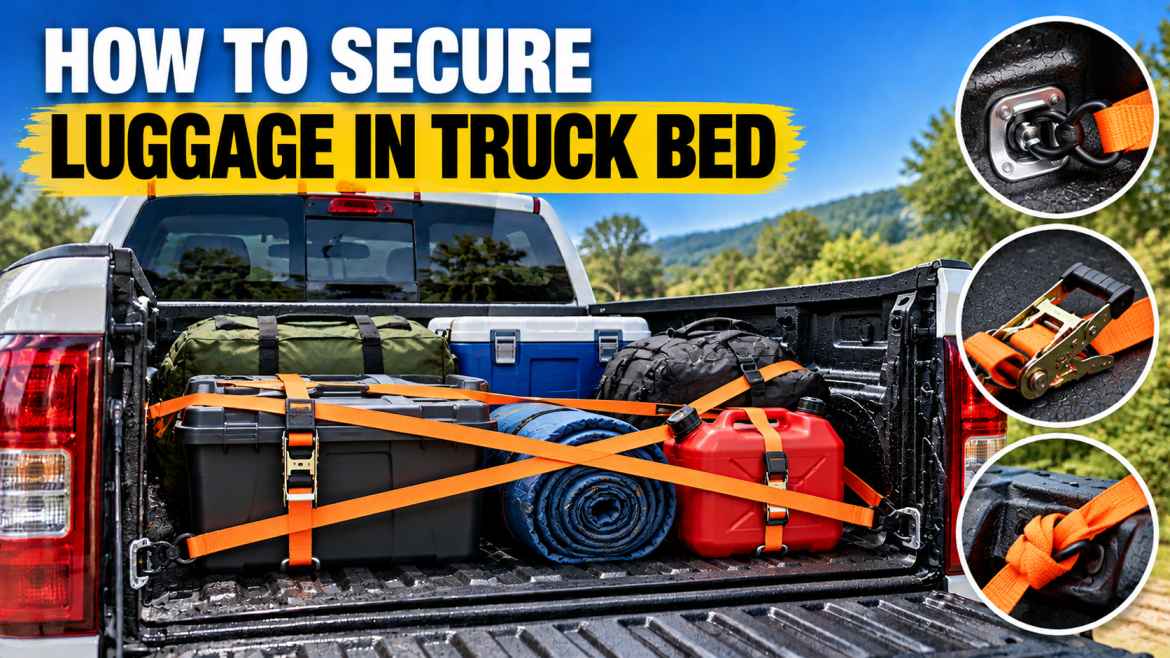
Loose tools, coolers, boxes, and other objects can still move around underneath a cover. Use appropriate cargo-management equipment when the load can shift. The cover is a lid, not a substitute for tie-downs.
Tonneau Cover Materials
| Material/design | Typical characteristics | What to consider |
|---|---|---|
| Coated vinyl | Flexible, relatively light, common on soft covers | Care, UV exposure, cutting resistance |
| Aluminum panels | Rigid and relatively strong | Weight, finish, hinges, load rating |
| Composite panels | Rigid panels using layered or polymer-based construction | Exact construction and manufacturer rating |
| Fiberglass | Rigid, often used on one-piece lids | Weight, hinge/lift hardware, removal |
Material alone does not tell you how good a cover is. Panel design, seals, rails, hinges, latches, drainage, and fitment are equally important.
Bottom Line
A tonneau cover is simply a system for covering a pickup’s open bed, but the different designs serve very different needs. Choose the style based on your cargo, access requirements, protection priorities, and budget, then verify the exact vehicle fitment before ordering. For product-specific recommendations, use the WheelsWire truck bed cover guides rather than treating every tonneau cover as interchangeable.
A tonneau cover is simply a system for covering a pickup’s open bed, but the different designs serve very different needs. Choose the style based on your cargo, access requirements, protection priorities, and budget, then verify the exact vehicle fitment before ordering. For product-specific recommendations, use the WheelsWire truck bed cover guides rather than treating every tonneau cover as interchangeable.