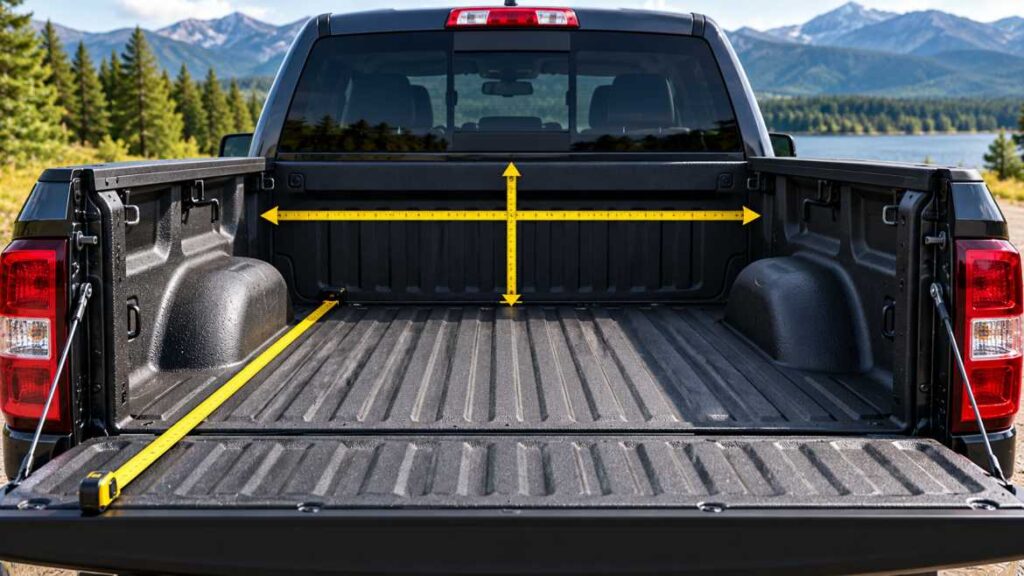
A truck bed is not defined by one number. The advertised size—such as 5.5 feet, 6.5 feet or 8 feet—is a useful shorthand, but the actual cargo box has specific interior measurements that determine what you can carry and which accessories will fit.
Truck bed dimensions are best understood through four measurements: floor length, maximum inside width, width between the wheel wells, and bed depth. Exact numbers vary by model year, cab, bed option, and generation.
- Truck Bed Dimensions at a Glance
- What Is Truck Bed Length?
- What Is Truck Bed Width?
- What Is Truck Bed Depth?
- Truck Bed Size Chart: Common Current Pickups
- Why the Same Truck Can Have Different Bed Dimensions
- Why Width Between the Wheel Wells Matters
- How to Measure a Truck Bed
- Bed Dimensions vs. Tonneau Cover Dimensions
- What Can You Fit in a Truck Bed?
- Common Truck Bed Measurement Mistakes
- Frequently Asked Questions
- Bottom Line
For most owners, the four measurements that matter most are length at the floor, maximum inside width, width between the wheel wells and bed depth. The exact numbers vary by truck, cab configuration, model year and bed option.
Truck Bed Dimensions at a Glance
| Measurement | What it tells you | Why it matters |
|---|---|---|
| Bed length | Front bulkhead to the inside of the closed tailgate, measured along the floor | Determines how long an item can sit in the bed |
| Maximum bed width | Widest inside wall-to-wall measurement | Useful for bulky cargo and accessory clearance |
| Width between wheel wells | Narrowest floor width created by the wheel housings | Critical for sheet goods, boxes and flat cargo |
| Bed depth | Floor-to-top-of-bed-wall height | Helps with tall cargo, liners and storage planning |
| Cargo volume | Approximate enclosed box volume | Useful for comparing overall capacity |
These measurements should not be confused with the truck’s overall width or length. A pickup can be more than 80 inches wide outside while the usable bed is much narrower inside.
What Is Truck Bed Length?
Truck bed length is normally the inside floor length of the cargo box. In practical terms, it runs from the front wall of the bed—the bulkhead behind the cab—to the inside of the closed tailgate.
Manufacturers often give the bed a rounded name. For example, a bed marketed as 6.5 feet may have an actual floor length around 78 or 79 inches. A nominal 8-foot bed can be close to 97–98 inches.
That difference is normal. The advertised figure is a category or nominal dimension, not a promise that the interior floor measures exactly that many inches.
What Is Truck Bed Width?
There are two width measurements worth separating.
Maximum inside width describes the broadest part of the cargo box between the side walls. Width between the wheel wells describes the narrower portion of the floor where the wheel housings intrude into the bed.
For flat cargo, the second number is often more important.
A 4×8 sheet of plywood is 48 inches wide. If the distance between the wheel wells is less than 48 inches, the sheet cannot simply lie flat on the floor between them. If the measurement is greater than 48 inches, width is less likely to be the limiting factor, although length and support still matter.
What Is Truck Bed Depth?
Bed depth is the vertical distance from the bed floor to the top of the bed wall. It is important when deciding how high cargo can be stacked, how much a liner or mat may change usable space, and whether a storage product will sit below or above the bed rails.
Depth also varies between models and generations. Do not assume that two trucks with similarly named beds have the same side-wall height.
Truck Bed Size Chart: Common Current Pickups
The following examples show why the actual measurement is more useful than a generic label. Figures are representative manufacturer-published dimensions and can vary by configuration or model year.
| Truck | Bed option | Floor length | Width between wheel wells | Depth |
|---|---|---|---|---|
| Ford F-150 | 5.5-ft | 67.1 in | 50.6 in | 21.4 in |
| Ford F-150 | 6.5-ft | 78.9 in | 50.6 in | 21.4 in |
| Ford F-150 | 8.0-ft | 97.6 in | 50.6 in | 21.4 in |
| Ram 1500 | 5’7″ | 67.4 in | 51.0 in | 21.4 in |
| Ram 1500 | 6’4″ | 76.3 in | 51.0 in | 21.5 in |
| Silverado 1500 | Short | 69.92 in | 50.63 in | 22.4 in |
| Silverado 1500 | Standard | 79.44 in | 50.63 in | 22.4 in |
| Silverado 1500 | Long | 98.18 in | 50.63 in | 22.4 in |
| Toyota Tacoma | 5-ft | 60.3 in | — | 20.2–21.2 in* |
| Toyota Tacoma | 6-ft | 73.5 in | — | 20.2–21.2 in* |
| Toyota Tundra | 5.5-ft | 65.6 in | 48.7 in | 20.9 in |
| Toyota Tundra | 6.5-ft | 77.6 in | 48.7 in | 20.9 in |
| Toyota Tundra | 8.1-ft | 96.5 in | 48.7 in | 20.9 in |
| Ford Ranger | Current bed | 59.6 in | 48.2 in | about 20.6–20.8 in |
| Chevy Colorado | Current bed | 61.7 in | 45.4 in | — |
*Tacoma depth varies by drivetrain/configuration. Always check the exact model-year specification.
The table is a comparison aid, not a universal fitment chart. Older generations can have materially different bed dimensions even when the badge and nominal bed name look similar.
Why the Same Truck Can Have Different Bed Dimensions
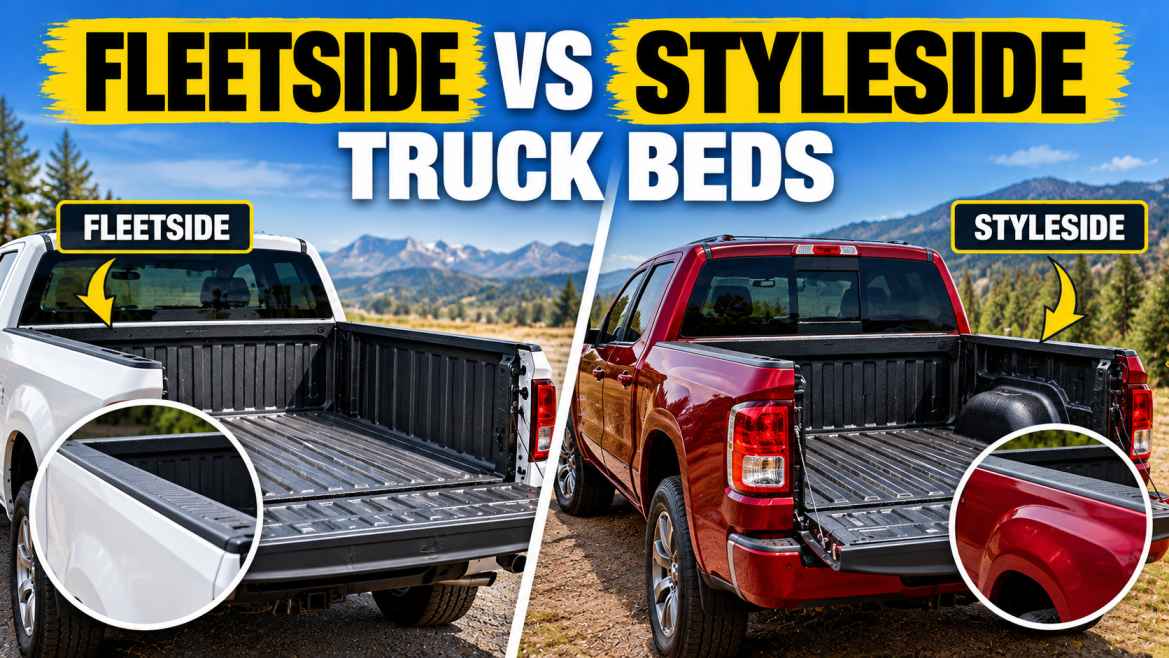
A truck model can be sold with several bed lengths. Cab configuration is often the deciding factor. A regular cab may be available with a long box while a crew cab may use a shorter box to preserve overall vehicle length.
Model-year changes also matter. A redesigned truck can keep the same nominal 5.5-foot or 6.5-foot description while changing the actual box shape, rail layout, wheelhouse position or depth.
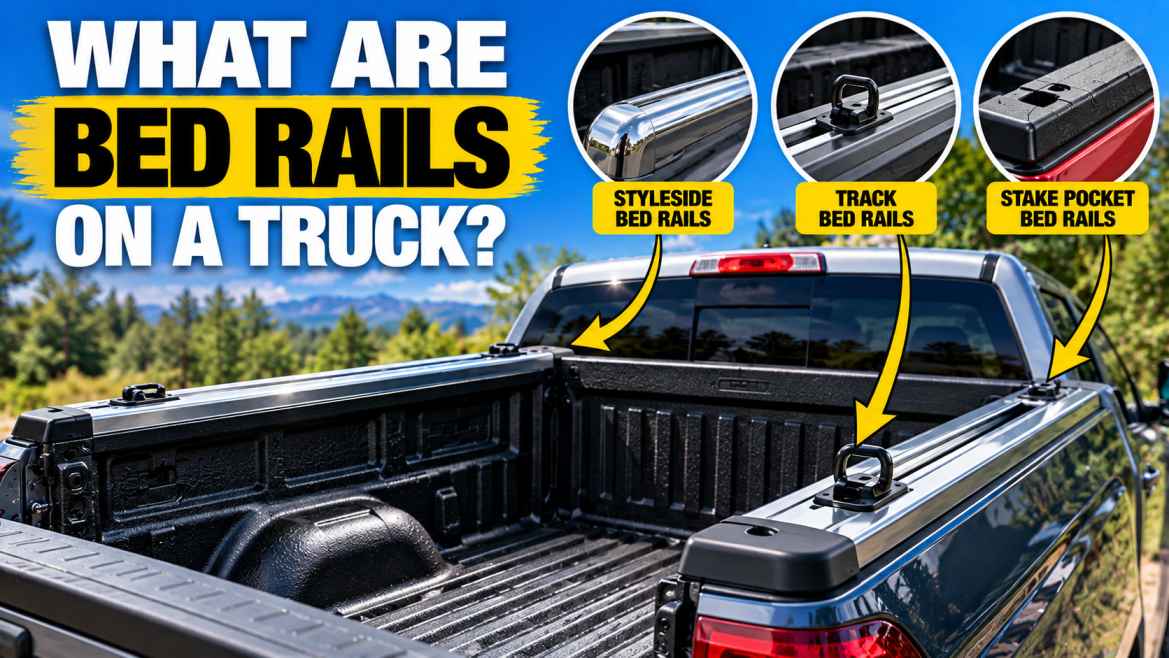
Factory and aftermarket equipment can matter too. RamBox-style storage, factory cargo tracks, bed liners, bed caps and other accessories can change the usable mounting area even when the underlying bed length has not changed.
Why Width Between the Wheel Wells Matters
If you regularly carry plywood, drywall, flooring, large boxes or other flat materials, measure between the wheel wells before assuming the bed is wide enough.
This measurement is especially useful because maximum wall-to-wall width can make a bed look much more spacious than the usable floor actually is. The wheel wells create the narrowest section of the cargo floor.
For accessory shopping, the same distinction matters. A storage box may be advertised by its outside width, while a bed organizer may need clearance around the wheel housings or tie-down hardware.
How to Measure a Truck Bed
You can measure most pickup beds with a steel tape measure and a notepad.
- Empty the bed as much as practical.
- Close the tailgate.
- Measure from the inside face of the front bulkhead to the inside face of the closed tailgate.
- Keep the tape straight and parallel to the bed floor.
- Measure maximum inside width from wall to wall.
- Measure between the wheel wells at the floor.
- Measure depth from the floor to the top of the bed wall.
- Record the exact measurements in inches rather than immediately rounding them to feet.
If you are measuring for an accessory, keep the exact number. A manufacturer may use a particular fitment range rather than the rounded bed name.
Bed Dimensions vs. Tonneau Cover Dimensions
A general truck-bed measurement and an accessory fitment measurement are not always identical.
For a tonneau cover, the manufacturer’s fitment guide is the final authority because the cover may depend on the bed-rail profile, tailgate design, clamps, tracks and other hardware. Start with the basic floor measurement, then verify the exact year, cab, bed length and special equipment against the cover maker’s fitment information.
This is particularly important on trucks with factory cargo systems, RamBox-style compartments, bed racks, toolboxes or unusual tailgates.
For a detailed measurement process, see our guide on how to measure your truck bed for a tonneau cover.
What Can You Fit in a Truck Bed?
Bed dimensions are more useful when translated into real cargo decisions.
Lumber and long materials
Bed length determines how much material can lie fully inside the box. If an item is longer than the floor, the tailgate may need to remain down and the load must be secured correctly.
Sheet goods
Width between wheel wells is often the first measurement to check. A standard 4×8 sheet is 48 inches wide, so the wheel-well measurement is the critical number for flat floor placement.
Toolboxes and storage systems
Measure not only the bed length but also the rail and wheel-well clearance. A toolbox can consume valuable width or interfere with a tonneau cover or other equipment.
Truck-bed mattresses and tents
Length and wheel-well clearance matter, but the shape of the bed also matters. A truck bed mattress should be selected for the actual bed configuration rather than the generic truck name. If you are comparing sleep setups, our truck bed tent guide is another useful starting point.
Common Truck Bed Measurement Mistakes
Measuring the outside of the truck. Exterior width is not usable bed width.
Measuring with the tailgate down. That adds the tailgate to the reading and does not represent the normal closed-bed length.
Measuring diagonally. A diagonal is not the straight usable length of the floor.
Using only the advertised bed size. A 6.5-foot bed is not necessarily 78 inches exactly, and different manufacturers use different nominal labels.
Ignoring model year. Generational changes can affect accessory fitment even when the bed name looks unchanged.
Forgetting the wheel wells. Maximum width and floor width between the wheel wells answer different questions.
Frequently Asked Questions
Are truck bed sizes measured in feet or inches?
Manufacturers commonly advertise bed sizes in feet and inches, but detailed specifications are normally given in inches. For accessories, record the exact inch measurement and use the manufacturer’s fitment system.
Is a 6.5-foot truck bed really 6.5 feet long?
Not necessarily. It is a nominal category. The actual interior floor measurement may be somewhat shorter or longer depending on the truck.
What is the most important truck bed measurement?
It depends on the job. For long cargo, floor length matters most. For flat sheet goods, width between wheel wells is critical. For stacked cargo, depth matters. For accessories, exact fitment dimensions and the truck’s model-year configuration matter.
Can two trucks with the same bed length have different widths?
Yes. Different manufacturers and generations can use different box widths, rail shapes and wheelhouse dimensions even when the nominal bed length is similar.
Should I measure my truck before buying a bed accessory?
Yes. Use the manufacturer’s specifications as a starting point, but verify the exact truck configuration and the accessory’s fitment requirements before ordering.
Bottom Line
Truck bed dimensions are more than the familiar 5.5-, 6.5- or 8-foot labels. Length, maximum width, width between the wheel wells and depth each tell you something different about what the bed can carry and which accessories will fit.
If you are buying a tonneau cover, rack, liner, toolbox, mattress or other bed accessory, keep the exact measurements and confirm them against the manufacturer’s fitment information. That extra step is much safer than assuming a rounded bed name tells the whole story.