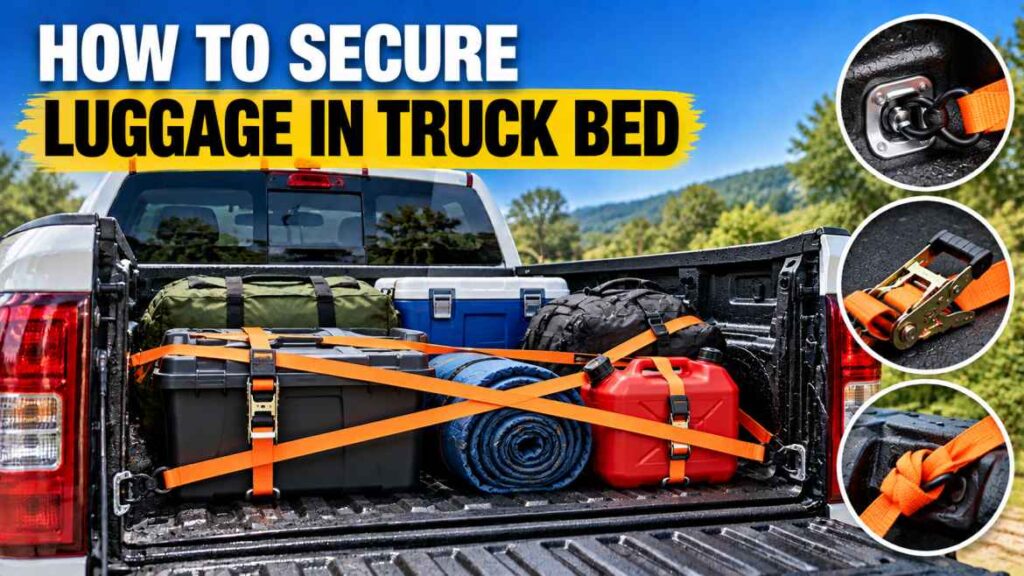
Learning how to secure cargo in a truck bed is about more than keeping an item from sliding around. A loose load can shift during hard braking, cornering or a sudden bump, and small pieces can blow out onto the road. The right approach is to match the securement method to the size, weight and shape of the cargo, then check the load before and during the trip.
Quick Answer
To secure cargo in a truck bed, place the heaviest items low and as close to the center of the bed as practical, position the load so it cannot roll or slide, and attach rated straps or other suitable restraints to sound anchor points. Use a cargo net or properly secured cover for loose material, keep the load within the truck’s capacity, and recheck the securement after driving a short distance. Never rely on the weight of an object alone to keep it in place.
Why Cargo Securement Matters
An unsecured load can move inside the bed or leave the vehicle entirely. The National Highway Traffic Safety Administration says unsecured loads are associated with hundreds of deaths and thousands of injuries each year and notes that all 50 states and the District of Columbia have laws addressing unsecured loads. The basic principle is simple: cargo should not be able to drop, shift, leak or escape from the vehicle.
That applies whether you are carrying a toolbox, furniture, lumber, camping equipment, yard waste or a few grocery bags. A short trip does not eliminate the risk.
Choose the Right Securement Method
| Cargo | Useful securement | What to watch for |
|---|---|---|
| Boxes and containers | Ratchet straps, cam straps or cargo net | Prevent sliding and keep lids closed |
| Furniture | Multiple straps plus padding | Protect edges and prevent tipping |
| Lumber and long materials | Straps, suitable front restraint and flagging when required | Prevent forward, sideways and rearward movement |
| Yard waste | Heavy-duty net or tarp plus securement | Stop small material from blowing out |
| Round or rolling objects | Chocks, blocking or other anti-roll restraint plus tiedowns | A strap alone may not stop rolling |
| Motorcycles or recreational equipment | Rated tiedowns at appropriate attachment points | Follow the equipment and vehicle instructions |
1. Check the Truck and the Cargo First
Before loading, inspect the truck bed, tie-down points, straps, hooks and other hardware. Do not use a damaged anchor point or a strap with severe cuts, fraying, heat damage or a damaged fitting.
Also consider the cargo itself. Check its weight, center of gravity, sharp edges and whether it can roll, tip or leak. If the load is beyond what the truck or its tie-down system can safely handle, the correct solution is to change the load or use a more suitable vehicle—not simply add another strap.
2. Put Heavy Cargo Low and Distribute It Properly
Place heavy items low in the bed whenever practical. Distribute weight sensibly from side to side and front to rear instead of creating a concentrated pile at one end. Keep the cargo within the vehicle’s payload and axle limits.
Do not assume that a truck can safely carry an item just because it physically fits in the bed. Payload ratings vary by truck configuration, and accessories or passengers also contribute to the vehicle’s total load.
3. Use the Truck’s Actual Anchor Points
Connect straps to sound factory tie-down points or properly installed cargo anchors that are rated for the job. Avoid attaching a strap to thin trim, a tailgate handle or another component that was not designed to restrain cargo.
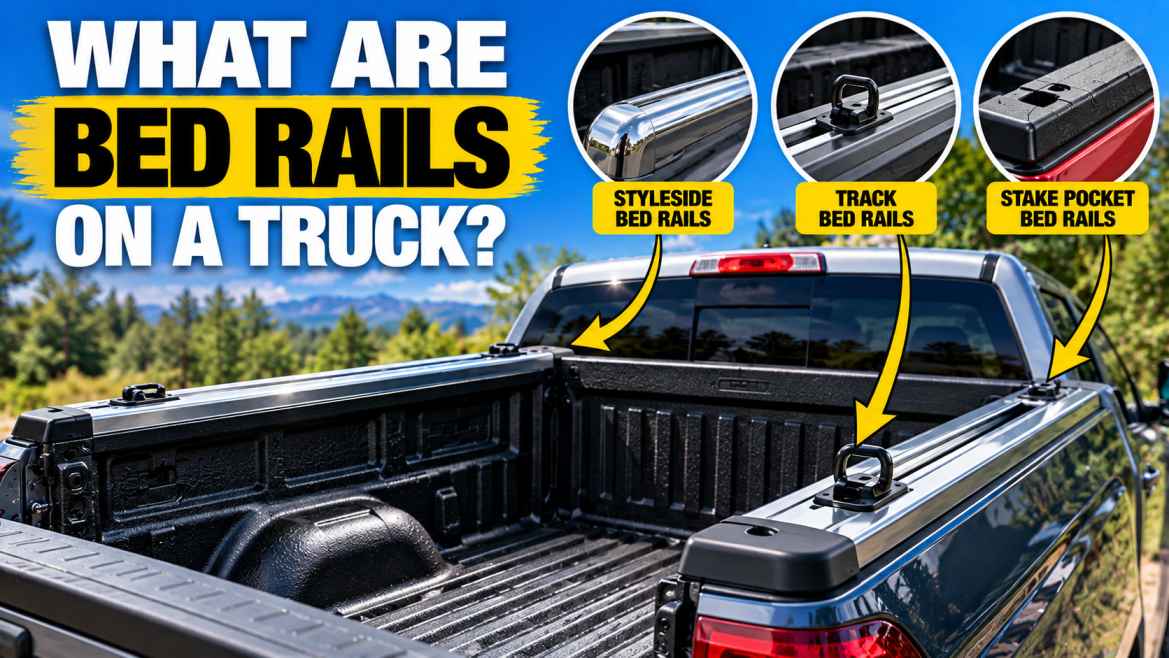
If your truck has adjustable cleats or a rail system, position the anchor so the strap can pull the load in a useful direction without rubbing against sharp edges.
4. Stop Cargo From Moving in More Than One Direction
A common mistake is securing only against rearward movement. Think about what happens when you brake, accelerate, turn or hit a bump. A load can move forward, backward, sideways or upward.
For bulky objects, use more than one restraint and position the straps so the cargo is held against the bed rather than merely wrapped around it. Where rolling is possible, use blocking, chocks or another appropriate method as well as tiedowns.
5. Protect Straps From Sharp Edges
Metal edges, unfinished lumber, brackets and other abrasive surfaces can damage webbing. Use edge protection or reposition the strap when necessary. A strap that looks strong can fail if it is being cut or badly abraded at the contact point.
6. Use a Cargo Net or Tarp for Loose Material
Small pieces of debris require a different approach from a single solid object. A cargo net or suitable tarp can help contain leaves, light yard waste and other loose material, but the cover itself must also be secured.
Do not assume a tarp automatically makes a load safe. Tie or fasten it so wind cannot get underneath it, and make sure loose material cannot escape through gaps around the edges.
7. Secure Tall or Oversized Items Carefully
Tall cargo has a higher center of gravity and can act like a lever against the straps. Keep it as low as practical, support it properly and use enough securement points to prevent tipping.
Long items that extend beyond the bed require extra attention to legal requirements, visibility and marking. Check the rules where you drive before transporting an overhanging load.
8. Do Not Depend on the Tailgate Alone
A closed tailgate can help contain cargo, but it is not a substitute for tiedowns. If an item can slide toward the rear of the bed, secure it directly to the vehicle.
The same principle applies to tonneau covers. A tonneau cover can protect cargo from weather and improve concealment, but it should not be treated as a cargo restraint unless the manufacturer specifically designed it for that purpose.
9. Tighten, Test and Recheck
After securing the load, physically test it. Push or pull the cargo from different directions and look for movement. Check that hooks are properly seated and straps are not twisted in a way that reduces their effectiveness.
After you have driven a short distance, stop somewhere safe and inspect the load again. Straps can settle, soft cargo can compress and loads can shift after the first few miles. Long trips deserve periodic checks.
Common Cargo-Securing Mistakes
- Using bungee cords as the only restraint for heavy cargo.
- Using damaged or unrated straps.
- Attaching straps to weak trim or unsuitable hardware.
- Securing only the rear of a load.
- Ignoring rolling, tipping or sliding hazards.
- Leaving loose debris uncovered.
- Overloading the truck because the bed still has physical space.
- Failing to recheck the load during a long trip.
How Many Straps Do You Need?
There is no single number that is correct for every pickup load. The number depends on the cargo, its dimensions, weight, shape, blocking and the securement equipment. Commercial cargo-securement rules provide more specific requirements for regulated transportation, including working-load limits and minimum tiedown counts for certain articles.
For everyday pickup use, the safer approach is to use enough appropriately rated securement to prevent movement in every direction and to follow the instructions for the cargo and equipment you are carrying.
What Is a Working Load Limit?
The working load limit, or WLL, is a rating used for securement equipment. Do not confuse it with a strap’s marketing breaking strength. The securement system needs to be suitable for the actual load and attachment points, and the weakest component can determine the practical limit of the system.
For commercial transportation, federal cargo-securement rules specify minimum working-load-limit requirements. Private pickup owners should still use rated equipment rather than guessing from strap appearance.
Quick Examples
Moving a dresser
Place the dresser securely in the bed, keep it upright if appropriate, protect its finish and use straps attached to proper anchors. If it can tip, add restraint that controls tipping rather than relying on one strap across the front.
Hauling lumber
Keep the stack organized, support it properly, secure it at appropriate points and address any material extending beyond the bed. Check local requirements for flags, lights or other markings when applicable.
Hauling yard waste
Keep branches and debris contained, use a suitable net or tarp, secure the cover itself and inspect for pieces that could escape. Never assume a heavy pile is too heavy to blow out.
When a Truck Bed Accessory Can Help
Bed rails, cargo bars, nets and adjustable tie-down systems can make securement easier, but the accessory does not automatically make a load safe. Check its mounting method, capacity and compatibility with your truck. Our truck bed tie-down guide covers dedicated securement options, while our cargo bar guide explains another way to limit movement.
FAQ
Can I use rope to secure cargo in a truck bed?
Rope can be suitable for some loads when used correctly, but the material, condition, attachment method and knot or tensioning method matter. For many everyday loads, purpose-designed tiedowns make the securement method easier to inspect and repeat.
Should cargo touch the cab?
Not necessarily. The important issue is preventing movement and protecting the truck and cargo. Do not position cargo where it can strike the cab during braking or where it interferes with safe operation.
Do I need to cover every load?
Not every solid load needs a tarp, but loose material that could blow, fall or escape needs appropriate containment. Check applicable state and local rules as well.
Bottom Line
Safe truck-bed cargo securement starts before the first strap is tightened. Choose the right vehicle and equipment, distribute the load sensibly, use sound anchor points, prevent sliding and rolling, contain loose material and recheck everything after you start driving. If you would not want the same load traveling behind you, it is not secure enough yet.