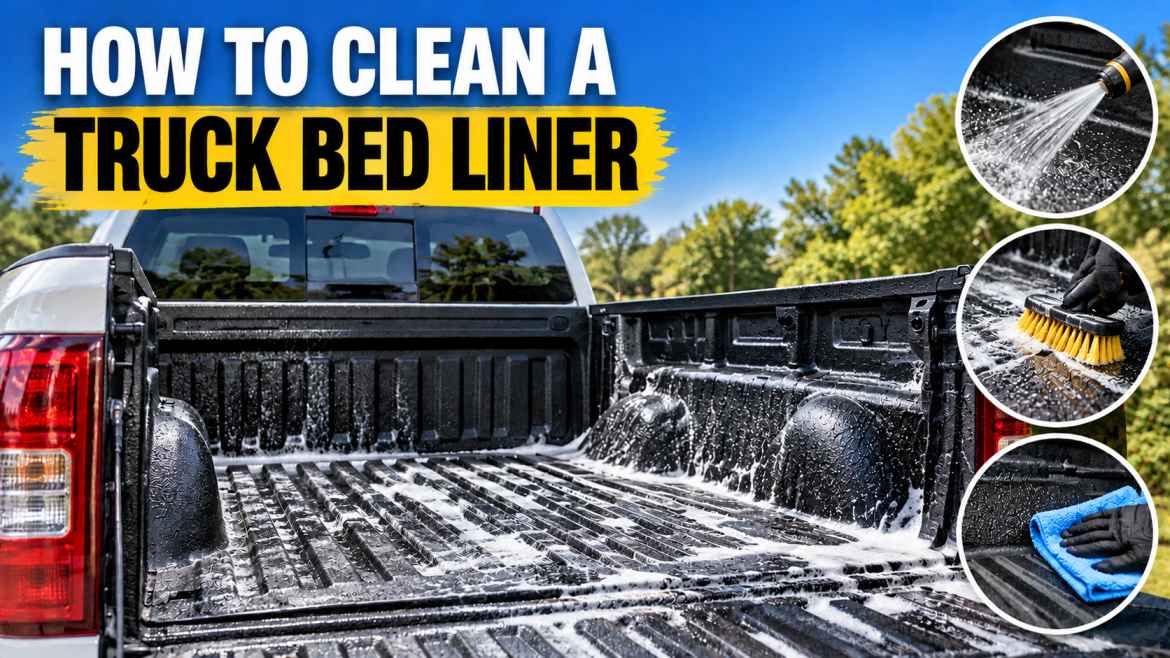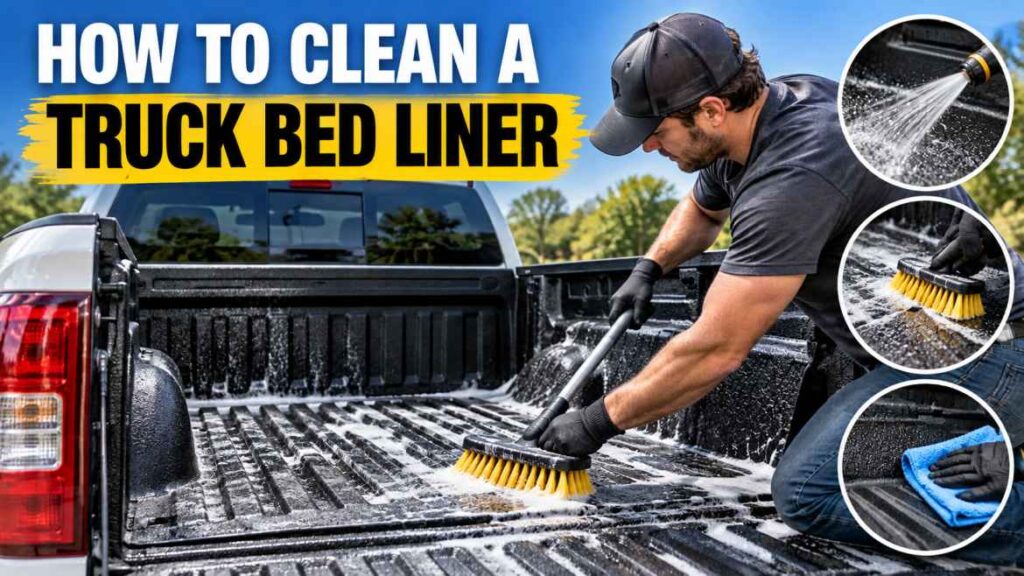
A truck bed liner makes hauling easier to live with, but it still needs regular cleaning. Dirt, sand, leaves, mud, spilled fluids and road salt can collect in the texture, corners and seams of the bed. Cleaning also gives you an opportunity to spot damage before it becomes a bigger problem.
The safest method depends on the liner material. A spray-in coating, molded plastic liner and carpet-style liner should not automatically be treated with the same chemicals or equipment.
Quick Answer
To clean a truck bed liner, remove loose cargo and debris, rinse away dirt, use a mild automotive-safe detergent when necessary, scrub with a soft or medium brush suited to the liner, rinse thoroughly, and let the bed dry. Avoid harsh chemicals, abrasive tools and silicone-based products unless the liner manufacturer specifically approves them.
Identify the Liner Before Cleaning
| Liner type | Good starting method | Extra caution |
|---|---|---|
| Spray-in | Rinse, mild detergent, soft/medium brush | Avoid chemicals that damage the coating or texture |
| Plastic drop-in | Hose, detergent and brush | Inspect underneath periodically |
| Carpet-style | Vacuum, then appropriate washing | Allow it to dry completely |
Step 1: Remove Everything From the Bed
Take out cargo, tie-downs, mats and loose accessories where practical. Shake or sweep out large debris before adding water. This prevents mud and grit from turning into a heavy slurry during washing.
Step 2: Rinse Away Loose Dirt
Start with clean water. Work from the higher surfaces toward the bed floor so dirt moves toward the drain openings. A hose is usually enough for routine cleaning.
If you use a pressure washer, keep the nozzle at a sensible distance and avoid forcing water behind liner edges, into electrical connections or into areas where the manufacturer warns against high-pressure water.
Step 3: Wash With a Mild Automotive Detergent
For oily grime, mud film or road residue, use a mild automotive detergent appropriate for the liner. Apply it according to the product instructions rather than assuming stronger chemistry will clean better.
Chevrolet’s owner information, for example, recommends periodic washing of spray-in bedliners with a mild detergent and warns that silicone-based products can damage the liner’s slip-resistant texture and attract dirt.
Step 4: Scrub the Texture
A textured liner can trap fine dirt that a hose will not remove. Use a brush that is strong enough to reach the texture without aggressively cutting into the coating. Work in manageable sections and pay attention to corners and the front wall of the bed.
Step 5: Rinse Thoroughly
Do not leave detergent behind. Rinse until the runoff is clear and there is no visible foam or residue. Check the drain areas because debris can collect there and slow drainage.
Step 6: Dry and Inspect
Allow the liner to drain and dry. A towel can speed drying on smooth surfaces, while carpet-style liners need enough time to dry throughout their material. Once dry, look for cuts, lifting edges, cracks, exposed metal or unusual staining.
How Often Should You Clean a Truck Bed Liner?
There is no universal calendar interval. A truck carrying soil, mulch, salt, construction debris or oily equipment needs more frequent cleaning than a truck used occasionally. The practical rule is to clean heavy contamination promptly and avoid allowing corrosive material to remain in the bed for long periods.
How to Deal With Common Messes
Mud and dirt
Let heavy mud loosen with water before scrubbing. Trying to dry-scrub a heavily textured liner can grind abrasive dirt into the surface.
Oil or greasy residue
Use an automotive-safe degreaser only if the liner manufacturer permits it. Test an inconspicuous area when there is any uncertainty.
Road salt
Rinse salt away thoroughly and inspect seams, rails and metal areas around the liner. Salt and trapped debris can contribute to corrosion, especially where damaged coating exposes metal.
Chemical spills
Clean chemical spills promptly. Chevrolet specifically advises promptly rinsing spray-in liner surfaces after a chemical spill to reduce the risk of permanent damage.
What You Should Avoid
- Strong solvents not approved for the liner
- Unapproved silicone dressings
- Very stiff wire brushes that can damage the surface
- Leaving detergent or salt residue behind
- Covering a wet carpet-style liner and trapping moisture
Do You Need to Remove a Drop-In Liner?
Not after every wash. However, periodic removal can be useful when the liner design allows it, particularly if dirt, moisture or debris can collect underneath. Chevrolet notes that some hard and carpet truck bed liners are removable and can be cleaned separately.
Cleaning vs. Maintaining the Liner
Cleaning removes contamination; maintenance also means checking the condition of the liner and the metal underneath. If you see damaged coating, exposed metal, corrosion or a liner that has shifted, deal with the underlying issue rather than simply cleaning around it.
For broader protection choices, see our truck bed liner guide and our truck bed liner recommendations.
FAQ
Can I pressure wash a truck bed liner?
You can use pressurized water carefully on many liners, but avoid directing high pressure at edges, seams, drains or vulnerable components. Follow the liner manufacturer’s instructions.
Can I use household bleach?
Do not assume it is safe. Use only cleaners compatible with the liner material.
Why does my liner look faded?
Sun exposure, road dirt, oxidation and hard-water deposits can affect appearance. Some manufacturers specify a compatible conditioner; use only one approved for the liner.
A Simple Maintenance Routine
You do not need a complicated detailing routine to keep a truck bed liner clean. For normal use, remove loose debris whenever the bed is emptied and give the surface a rinse when dirt becomes visible. After hauling especially dirty, wet or corrosive material, clean the bed sooner rather than allowing the contamination to remain trapped in the texture.
For a deeper cleaning, wash one section at a time rather than letting detergent dry across the entire bed. This gives you better control over stubborn dirt and makes it easier to notice areas that need attention.
What If the Liner Has a Bad Odor?
Persistent odors usually mean that organic material, spilled liquid or moisture is still present somewhere. Remove the source first. Check corners, drain areas, under mats and beneath removable liners or accessories. Clean with a compatible product and allow the area to dry completely.
Do not try to cover an odor with a dressing or fragrance. If moisture is repeatedly trapped beneath a liner, the underlying drainage or fitment issue needs to be addressed.
How to Clean Around Tie-Downs and Hardware
Tie-downs and mounting hardware can collect fine dirt and salt. Brush around these areas carefully and rinse them thoroughly. Do not loosen hardware unnecessarily just for routine cleaning, but inspect it for corrosion or damage while you work.
When Cleaning Reveals Damage
A clean liner makes defects easier to see. Small cuts, cracks or lifting edges should be monitored and repaired according to the liner manufacturer’s recommendations. If damage exposes the underlying metal, treat that as a bed-maintenance issue rather than simply a cosmetic flaw.
Seasonal Cleaning Tips
Winter road salt deserves more frequent rinsing, while spring and fall may bring leaves and organic debris that collect around drains. During periods of heavy hauling, clean the bed whenever a load leaves behind material that can retain moisture or attack the surface.
How to Tell When a Liner Needs More Than Cleaning
Cleaning should not be used to hide a deteriorating liner. If you find a crack that is spreading, a section that is lifting, exposed metal, unusual softness, or persistent moisture beneath a removable liner, investigate the cause. A damaged liner may need a repair or replacement rather than another round of washing.
Keep the Bed Draining Properly
After cleaning, make sure water can leave the bed normally. A clean surface with blocked drainage can still develop problems because moisture remains where it should not. Keep factory drain paths clear and do not improvise modifications unless the vehicle or accessory instructions call for them.
Bottom Line
The best way to clean a truck bed liner is simple: remove debris, rinse, use a compatible mild cleaner when needed, scrub appropriately, rinse completely and inspect the bed as it dries. Regular cleaning is not just cosmetic; it helps you find corrosion, damage and drainage problems before they become expensive repairs.