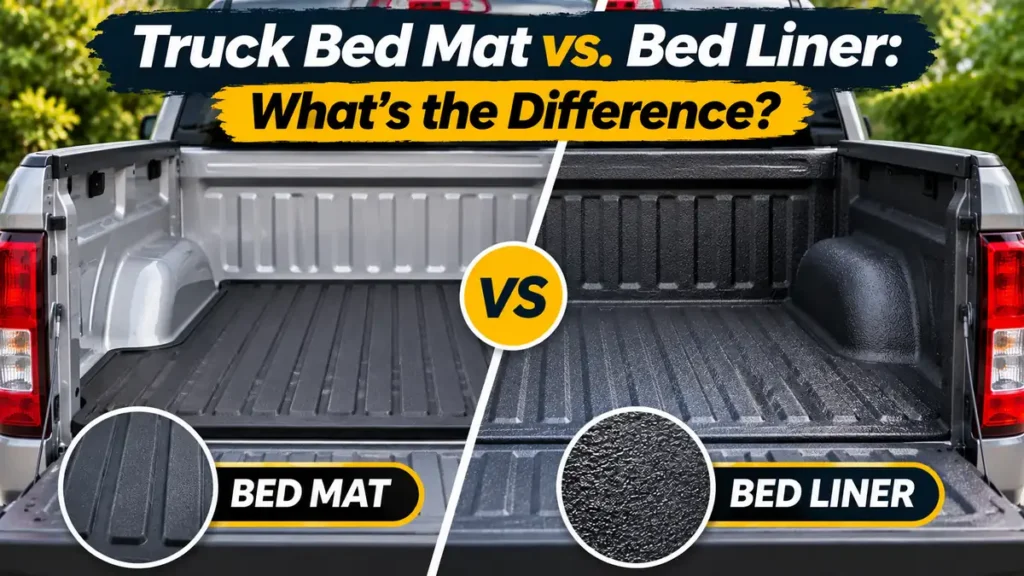
A truck bed mat and a truck bed liner both help protect a pickup’s cargo area, but they do different jobs. A mat usually sits on the bed floor and can be lifted out for cleaning. A bed liner is a broader category that can include a molded shell or a coating that protects the floor and sidewalls. The right choice depends on what you haul, how much of the bed needs protection, and whether you want the option to remove the material later.
Choose a truck bed mat if you mainly need floor protection, extra cushioning, better cargo grip, easy removal, and a relatively simple installation. It is a practical choice for everyday gear, groceries, camping equipment, and tools that mostly sit on the floor.
Choose a bed liner if you want broader protection for the floor, sidewalls, front wall, and wheel wells. A drop-in liner can be removed, although it may be bulky; a spray-in liner is a more permanent coating. You can also use a compatible mat over some existing liners for additional grip and cushioning.
- Bed Mat vs. Bed Liner at a Glance
- What Is a Truck Bed Mat?
- What Is a Truck Bed Liner?
- Coverage, Abrasion, and Impact Protection
- Moisture, Cleaning, and Rust Concerns
- Fitment and Accessory Compatibility
- Cost, Installation, and Removal
- Which Option Should You Choose?
- Frequently Asked Questions
- Final Verdict
Truck Bed Mat vs. Bed Liner at a Glance
| Factor | Truck bed mat | Bed liner |
|---|---|---|
| Main purpose | Floor cushioning, grip, and surface protection | Broader protection for bed surfaces |
| Typical coverage | Bed floor; some products also cover the tailgate | Often floor, sidewalls, front wall, and wheel wells; exact coverage varies |
| Removable | Usually easy to lift out | Drop-in shells can be removed; spray-in coatings are intended to remain bonded |
| Installation | Usually place in the cleaned bed; custom trimming may be needed for universal mats | Depends on type: insert and secure a drop-in shell or prepare and apply a coating |
| Cargo grip | Textured rubber or polymer often provides useful grip | Varies by material and surface texture |
| Cushioning | Often better on the floor, especially with thick rubber or padded designs | Rigid plastic and thin coatings offer less cushioning than a thick mat |
| Maintenance | Lift it to clean and inspect underneath | Clean the surface; removable liners may need to be lifted out for under-liner inspection |
| Best fit | Owners who mainly need floor protection and easy cleaning | Owners who want coverage beyond the floor or a more integrated protective surface |
“Bed liner” is a broad term, so the comparison depends on the type. A removable mat versus a spray-in coating is a different decision from a mat versus a molded drop-in liner. This article focuses on the practical difference between a floor mat and broader bed protection rather than repeating a full liner-type comparison.
What Is a Truck Bed Mat?
A truck bed mat is a separate layer that rests on the floor of the pickup bed. Most are made from rubber, thermoplastic elastomer (TPE), or another molded polymer; padded or carpet-style bed products are also available. Many have a textured top surface to help cargo stay put and a patterned underside designed around the bed’s contours.
The biggest advantage is simplicity. A mat generally does not require sanding, adhesive, or permanent changes to the truck. Once the bed is clean, a vehicle-specific mat can usually be positioned in place. A universal mat may need careful measuring and trimming to avoid curled edges or gaps.
A thick rubber mat can absorb some impact from tools and equipment and reduce scuffing on the floor. Its weight may help it stay in position, although fit and cargo movement still matter. Thinner molded mats are easier to handle but may not offer the same cushioning as a heavy rubber mat.
The limitation is coverage. A conventional floor mat does not protect the painted sidewalls, front wall, or wheel wells. Some products include a tailgate mat or are part of a larger bed-rug system, so check the actual product design rather than assuming every mat covers the same areas.
If you are choosing between rubber, molded polymer, and padded options, see our Best Truck Bed Mats guide. It focuses on specific products and fitment considerations rather than this article’s mat-versus-liner decision.
What Is a Truck Bed Liner?
A bed liner protects more of the cargo box, but its construction can vary significantly. Two common types are molded drop-in liners and spray-in coatings.
Drop-in bed liners
A drop-in liner is a molded shell that fits over the bed floor and usually extends up the sidewalls and front wall. Depending on the design, it may also protect the tailgate. It provides broader coverage than a floor mat and can be removed for inspection or replacement, but removal may be awkward because the shell is large and must fit the truck’s specific bed dimensions.
Fit and installation matter. A poorly matched or moving liner can allow grit to rub against the factory finish, and debris or moisture can collect in areas underneath it. A drop-in liner should not be treated as maintenance-free simply because it covers the metal.
Spray-in bed liners
A spray-in liner is a coating applied to prepared surfaces in the bed. Once properly applied and cured, it follows the contours of the floor, walls, and wheel wells without a separate shell sitting over the metal. It is intended as a long-term modification, not a removable mat.
Preparation and application quality are critical, and the exact process depends on the product or installer. If you are comparing spray-in and drop-in liners specifically, read our separate Spray-In vs. Drop-In Bed Liners comparison. For a broader look at coating and liner choices, visit Best Truck Bed Liners.
Coverage, Abrasion, and Impact Protection
The most important difference is how much of the bed is covered. A mat protects the area beneath it, which is where much of the cargo weight lands. It can help reduce scratches, scuffs, and minor impact damage on the floor. However, sliding lumber, sheet goods, metal equipment, or other abrasive cargo can still contact the uncovered sidewalls and front wall.
A liner with sidewall coverage is a better fit when loads routinely rub against the bed’s vertical surfaces. A molded shell separates cargo from those panels, while a bonded coating creates a protective surface over the prepared areas. Neither design makes the truck bed dent-proof, and a coating should not be assumed to absorb heavy impacts like a thick mat might.
Grip also matters. A textured rubber mat often provides more cushioning and friction than smooth painted metal or some hard plastic surfaces. Liner grip varies with the material and texture. Regardless of the surface, friction is not a substitute for properly rated tie-downs. Secure heavy cargo using the truck’s approved anchor points and suitable restraints.
For many owners, the choice is not strictly one or the other. A compatible mat placed over an existing liner can add floor cushioning and grip, while the liner protects a wider area. Check the mat maker’s fitment notes and ensure the combined setup does not interfere with drainage, tie-down access, or accessories.
Moisture, Cleaning, and Rust Concerns
A removable mat makes it easier to inspect the bed floor because you can lift it out, rinse away grit, dry the surface, and check for chipped paint. That is useful after hauling wet equipment, muddy gear, or materials that leave fine debris behind. The mat itself can still hold moisture or abrasive dirt underneath if it is never lifted.
Drop-in liners also need periodic inspection beneath the shell where the design allows it. Water, road salt, sand, and dirt can collect in hidden areas; movement can grind that debris against the finish. A properly fitted liner, clean bed, intact paint, and clear drainage paths all help reduce the risk, but no removable cover should be considered a guarantee against corrosion.
A bonded spray-in coating does not create the same separate cavity as a loose shell, but it depends on good surface preparation and a sound application. Inspect the coating for damage and follow the product or installer’s maintenance recommendations.
Whatever you choose, keep factory drain paths clear where applicable. Do not assume a mat or liner will stop rust by itself. If you find damaged paint or exposed metal, address it promptly instead of covering it and forgetting about it.
Fitment and Accessory Compatibility
Bed length and model year are not the only fitment details. Pickups may have different wheel-well contours, factory bed systems, bed rails, tie-down locations, tailgate shapes, or storage features. A mat listed for one bed length may not fit another version of the same truck.
Check whether the mat is designed for a bare bed, a spray-in liner, or use over a drop-in liner. A mat made for the original bed floor may sit incorrectly on top of a molded shell. The wrong combination can curl at the edges, shift, cover tie-down points, or interfere with drainage. Never assume two products are compatible because they physically fit inside the bed.
Also consider tonneau covers, bed racks, toolboxes, and other accessories. A floor mat usually has less effect on rail-mounted accessories than a liner that wraps over the bed rails, but exact designs vary. Review the instructions for both products before combining them.
Cost, Installation, and Removal
A bed mat is often the lower-commitment starting point. It typically needs little more than a clean bed and correct positioning, and it can be removed for cleaning or replaced without stripping a coating. Price varies with material, thickness, vehicle-specific fit, and whether the product includes a tailgate or other sections.
A drop-in liner usually costs more than a basic mat because it covers more surfaces and uses a larger molded component. It may still appeal to owners who want broad coverage but do not want a permanent coating. Installation complexity varies by model and may involve fasteners or trim adjustments.
A spray-in liner generally involves more preparation and application work, and professional installation includes labor. It is a longer-term choice and is not easily reversible. DIY coatings may reduce labor expense, but the owner must account for preparation materials, equipment, safety requirements, and the possibility of a poor application needing repair.
There is no reliable single price that applies to every pickup and product. Compare current quotes and product fitment for your exact truck, and include the cost of any additional floor mat you plan to use. The cheapest initial purchase is not necessarily the best value if it fails to cover the surfaces you actually need to protect.
Which Option Should You Choose?
Choose a bed mat if…
- You mainly want to protect the floor from scratches, scuffs, and everyday cargo.
- You value a grippy surface and cushioning for tools, coolers, boxes, or camping gear.
- You want something that can be lifted out and cleaned without a major installation.
- You prefer to avoid a permanent modification to the bed.
- You already have a compatible liner and want extra floor protection.
Choose a bed liner if…
- You regularly haul lumber, metal, construction materials, or bulky cargo that rubs against the bed walls.
- You want more complete coverage than a floor mat can provide.
- You prefer a molded removable shell or a bonded coating for long-term use.
- You are prepared to inspect and maintain a removable liner underneath, or to follow care guidance for a coating.
Consider both if…
You want broad bed-surface protection plus better cushioning and grip on the floor. A compatible mat can complement a liner, but verify the fit and do not obstruct drain holes, tie-downs, or accessory mounting points.
Frequently Asked Questions
Is a truck bed mat the same as a bed liner?
No. A bed mat is generally a removable layer for the floor. “Bed liner” usually refers to broader protection, such as a molded drop-in shell or a coating applied to the bed. Some product names use these terms loosely, so confirm the coverage shown in the manufacturer’s listing.
Can I put a bed mat over a spray-in liner?
Often, yes, provided the mat is compatible with that truck bed and liner. A mat can add cushioning and cargo grip. Check both manufacturers’ fitment guidance and lift the mat periodically to clean and inspect underneath.
Can a bed mat cause rust?
A mat does not automatically cause rust, but moisture and abrasive debris trapped underneath can contribute to damage if the paint is compromised. Remove the mat periodically, clean and dry the bed, keep drain paths clear, and repair exposed metal.
Does a bed liner protect against dents better than a mat?
It depends on the type of liner and the impact. A thick mat can cushion the bed floor, while a liner offers broader surface coverage. Neither makes the bed dent-proof, especially when heavy or sharp objects are dropped or allowed to slide.
Which is easier to remove?
A typical bed mat is easiest to remove. A drop-in liner can also be removable but may be bulky or secured with hardware. A spray-in coating is intended to remain bonded and is not a quick-removal accessory.
Do I need a bed mat if my truck already has a liner?
Not necessarily. A mat is useful if you want more floor cushioning, cargo grip, or a softer surface. If the current liner already meets your needs, a mat may add cost and another layer that needs cleaning.
Final Verdict
A truck bed mat is a straightforward solution for owners who mainly need floor protection, cushioning, cargo grip, and easy removal. A bed liner makes more sense when you want to protect the sidewalls and other surfaces as well, with the choice between removable and permanent designs depending on your priorities.
Think about what you haul and which parts of the bed take the most abuse. If the floor is the main concern, start with a properly fitted mat. If cargo regularly scrapes the walls or you want broader coverage, consider a liner. For some trucks, the most practical setup is a compatible mat over a liner—provided fitment and drainage are handled correctly.