A truck bed tent and a ground tent can both make a weekend outdoors more comfortable, but they solve the camping problem in different ways. A truck bed tent uses your pickup as the sleeping platform, while a ground tent gives you more freedom to choose where and how you camp. The better option depends on your campsite, truck, sleeping setup, weather expectations, and how much gear you bring.
Choose a truck bed tent if you already have a compatible pickup, want to sleep above the ground, and usually camp where you can park on a suitable, level surface. It can be convenient for road trips and drive-in campsites, but it ties your sleeping area to your truck and bed dimensions.
Choose a ground tent if you want more campsite flexibility, room for a larger shelter, or the ability to leave your vehicle parked elsewhere. It needs an appropriate tent site and ground preparation, and comfort depends on the ground, sleeping pad, and campsite conditions.
Neither option is automatically warmer, drier, or faster to set up in every situation. Tent design, weather, site selection, and practice matter more than the category name alone.
- Truck Bed Tent vs. Ground Tent at a Glance
- How Each Tent Setup Works
- Setup and Pack-Down
- Comfort and Sleeping Surface
- Weather Protection and Ground Conditions
- Vehicle Dependence and Campsite Flexibility
- Storage, Space, and Gear
- Cost and Long-Term Value
- Truck Bed Tent vs. Rooftop Tent
- Which Should You Choose?
- What to Check Before Buying
- Frequently Asked Questions
- Final Verdict
Truck Bed Tent vs. Ground Tent at a Glance
| Factor | Truck bed tent | Ground tent |
|---|---|---|
| Sleeping location | Inside the pickup bed, with the tailgate usually open according to the tent instructions | On a suitable patch of ground selected at the campsite |
| Setup location | Requires the compatible truck to be parked where you plan to sleep | Can be pitched separately from where the vehicle is parked, subject to campsite rules |
| Sleeping surface | Truck bed floor, often paired with a mattress or sleeping pad | Ground beneath the tent, usually separated from the sleeper by a pad or mattress |
| Site flexibility | Limited by vehicle access, parking, bed size, and level positioning | More flexible, provided the site is permitted, safe, and suitable for pitching |
| Space | Bound by bed length and width; often practical for one or two sleepers depending on model | Available in many footprints, from compact solo tents to larger group shelters |
| Weather exposure | Elevates the sleeping area but does not eliminate rain, wind, condensation, or cold | Requires attention to drainage, ground moisture, wind exposure, and site selection |
| Vehicle needed at camp | Yes, for the sleeping setup | No, once you have transported the tent to the campsite |
| Cost considerations | Tent plus any compatible mattress, truck-specific fitment, and possible bed-accessory changes | Tent plus footprint or groundsheet, sleeping pad, and any extra stakes or weather gear |
| Best fit | Drive-in trips and pickup owners who value a raised sleeping area | Campers who want site flexibility, more footprint choices, or a shelter independent of the vehicle |
These are general differences. Individual tent designs vary, so check the instructions and fitment information for the exact model rather than assuming every truck bed tent or ground tent behaves the same way.
How Each Tent Setup Works
Truck bed tent: sleeping in the pickup bed
A truck bed tent attaches to or wraps around the bed of a pickup and uses the bed as its base. Many designs have a sewn-in floor; others are floorless and sit over the bed area. The tailgate is commonly left open during use, and the tent must match the truck bed’s dimensions and configuration.
The raised position can keep the sleeping area away from mud, puddles, and some uneven ground. It does not make the tent weatherproof by itself, and it does not remove the need for a suitable campsite. The truck must be parked safely, on a stable surface, with the tent installed exactly as its manufacturer directs.
For help comparing actual models and bed-size variations, see our Best Truck Bed Tents guide. It covers enclosed and floorless designs, fitment considerations, and features that differ by model.
Ground tent: a shelter you can pitch where permitted
A ground tent stands on the campsite surface and is secured using its poles, stakes, and guylines as required by its design. It can be pitched at a drive-in campground, a walk-in site, or another permitted location that provides a safe, suitable surface. That freedom is useful when the best tent spot is not the same place where a vehicle can park.
Ground tents also come in a wider range of sizes and layouts. A compact backpacking tent can save space and weight, while a larger camping tent can provide room for more people or equipment. Larger tents, however, take more room to pitch and may need more stakes and setup time.
Setup and Pack-Down
A truck bed tent can feel straightforward once you have practiced with the exact truck and tent combination. The bed provides a defined base, and the tent’s straps or attachment points are designed around that configuration. However, you may need to clear the bed, position the fabric around the tailgate and cab, route straps correctly, and check that the tent is aligned without pinching or stretching it.
A ground tent has no truck-bed fitment to manage, but the setup depends on the ground. You may need to remove stones and debris, orient the tent away from prevailing weather, stake it securely, and use a footprint or groundsheet if recommended. On a hard surface, rocky site, or platform, staking can be more complicated; follow campsite rules and the tent’s instructions rather than improvising unsafe anchors.
Neither option is automatically faster. A familiar ground tent may be quicker than a truck tent being installed for the first time, while a practiced truck-bed setup can be convenient at a drive-in campsite. If speed matters, practice at home in daylight and time the whole process—including bed clearing, staking, rainfly installation, and pack-down.
Comfort and Sleeping Surface
The truck bed gives you a relatively defined sleeping platform, but the comfort level depends on the bed dimensions and what you put on top of it. A thin mat may not feel comfortable for everyone, and wheel-well intrusions, bed ribs, a liner, or cargo can affect how a mattress sits. Measure the usable area and choose a mattress or pad that fits without blocking the tent’s intended attachment points.
A truck bed sleeping platform vs. air mattress is a separate decision from truck tent vs. ground tent. A rigid platform can create a flatter base and space for organized storage underneath, but it adds weight, occupies bed space, and may require a custom fit. An air mattress is easier to store when deflated and can be comfortable when properly inflated, but it can lose air or feel unstable depending on the model and surface. Follow the tent and mattress manufacturers’ recommendations, and avoid placing sharp or abrasive items beneath an inflatable mattress.
In a ground tent, the ground itself may be uneven or firm, so a suitable sleeping pad is important. A larger tent can offer more room to move or store bags, but a larger footprint does not guarantee better sleep. For either setup, insulation, ventilation, bedding, and personal sleeping preferences matter more than the tent’s position alone.
Weather Protection and Ground Conditions
A truck bed tent raises the sleeping area above the campsite surface, which can help when the surrounding ground is damp or uneven. It does not protect you from wind-driven rain, leaks at openings, condensation, or cold air. Rain protection depends on the tent’s fabric, rainfly, seams, ventilation, setup, and condition. A pickup parked in a low spot can still be exposed to pooling water or unsafe conditions.
A ground tent makes site selection especially important. Choose an established, permitted site where possible; avoid depressions that collect water, drainage channels, and areas beneath damaged branches. REI’s campsite-selection guidance recommends considering drainage, wind protection, and the surrounding terrain. A footprint may help protect a tent floor, but it is not a substitute for a suitable campsite or correct pitching.
For either tent, use all required guylines and stakes, keep ventilation open as instructed, and check the forecast. Do not assume a standard camping tent is designed for severe storms or high winds. If conditions become unsafe, move to appropriate shelter rather than trying to rely on the truck or tent to withstand them.
Vehicle Dependence and Campsite Flexibility
The biggest trade-off with a truck bed tent is that your sleeping shelter is attached to your vehicle. You need to reach a place where the truck can be parked legally and safely, and the ground must be suitable for the truck and tent. A campsite with a designated parking space far from the tent pad may not work, and a truck tent is a poor match for trips where you leave the vehicle behind and hike to a separate site.
A ground tent lets you separate the shelter from the parking location. That can be useful at walk-in campgrounds, group sites, or places where the vehicle cannot be driven to the exact sleeping spot. It also means you can leave the tent set up while using the vehicle for a day trip, depending on campsite rules and security considerations.
Both options still depend on access and regulations. Not every public land area permits dispersed camping, and a vehicle-accessible location is not automatically a legal campsite. Check local land-manager rules, campground restrictions, and fire or weather advisories before you go.
Storage, Space, and Gear
A truck bed tent uses space that would otherwise carry cargo. Before pitching it, you may need to remove coolers, tools, recovery gear, or other items from the bed. Some floorless designs can accommodate certain gear beneath or around the sleeping area, but that is product-specific and should not be assumed for an enclosed-floor tent.
A ground tent leaves the truck bed available for cargo during the trip, but you need to carry the tent, sleeping gear, and any groundsheet or stakes to the site. A bigger ground tent can make it easier to keep bags inside, while a compact tent may force more gear to stay in the vehicle or under a separate shelter. Keep food and scented items stored according to local wildlife guidance.
Think about the entire campsite, not just where you sleep. If you want a dedicated sleeping area and a separate place for cooking or sitting, you may need an awning or canopy regardless of tent type. Never cook inside a tent or use fuel-burning appliances in an enclosed shelter because of fire and carbon-monoxide risks.
Cost and Long-Term Value
The purchase price of the tent is only one part of the total cost. Truck bed tents can require a truck-specific size, a suitable mattress, and possibly changes to existing bed accessories. If you have a tonneau cover, toolbox, bed rails, or rack, confirm compatibility before buying. Some combinations work, while others interfere with the tent’s fit or seal.
Napier’s official truck tent FAQ explains that tonneau-cover compatibility depends on the cover style: some retractable or rolled-up covers may work under specified conditions, while folding or one-piece hinged covers can prevent a proper fit. That is an example from one manufacturer, not a universal rule for every tent. Always check the exact tent and cover instructions.
Ground tents range from minimal designs to large, feature-rich shelters. You may need to budget for a sleeping pad, footprint, replacement stakes, or weather protection, but the tent generally does not require a particular truck bed. If you already own a suitable ground tent and sleeping pad, using them is often the lower-cost way to try camping. If you already own a pickup and plan frequent drive-in trips, a truck bed tent may be worth the additional fit-specific purchase.
Prices and availability change, so compare current prices for the exact sizes and configurations you need. Do not compare a basic ground tent with a premium truck tent—or vice versa—without accounting for the rest of the sleeping setup.
Truck Bed Tent vs. Rooftop Tent
A truck bed tent uses the bed as the sleeping area, while a rooftop tent mounts on a roof rack or a compatible bed-rack system. A rooftop tent can keep the sleeping platform higher and may fold into a compact unit for travel, but it usually requires a suitable rack, verified load ratings, and more investment. A truck bed tent generally uses a simpler attachment arrangement but still needs exact bed fitment and must be removed or packed away before driving according to the product instructions.
This is a supporting distinction rather than the same choice as truck bed tent vs. ground tent. If your main priority is choosing where to camp and whether you need the vehicle at the shelter, compare truck-bed and ground tents first. If you are committed to sleeping elevated and want a semi-permanent travel setup, then research rooftop-tent and rack compatibility separately.
Which Should You Choose?
Choose a truck bed tent if…
- You own a pickup with a bed that matches an available tent size.
- You mostly camp at drive-in sites where parking and sleeping in the truck are allowed.
- You prefer a raised sleeping area and can park on a suitable surface.
- You are comfortable clearing the bed and installing a vehicle-specific shelter.
- You have checked the tent’s compatibility with your bedliner, cover, rails, toolbox, and other accessories.
Choose a ground tent if…
- You want the freedom to pitch the tent away from the vehicle.
- You need a footprint or layout that does not fit within a pickup bed.
- You already own a suitable tent and want to keep the setup cost low.
- You camp at walk-in sites or places where vehicles cannot park at the sleeping area.
- You want to choose from a wide range of sizes and styles.
What about truck bed camping vs. tent camping?
Truck bed camping is still tent camping; the key difference is where the tent is supported and how much the vehicle determines your campsite. A truck bed setup can be convenient for road trips and drive-in camping. A ground tent is more adaptable when you need to move away from the parking area or want more freedom in shelter size. Neither is universally more comfortable or weatherproof.
What to Check Before Buying
- Measure first. Confirm the truck’s model year, bed length, and configuration against the tent maker’s current fitment chart.
- Check accessories. Verify compatibility with bedliners, tonneau covers, toolboxes, racks, rails, and any bed-mounted equipment.
- Plan the sleep system. Check the usable sleeping area and whether your mattress or pad fits without interfering with the tent.
- Review weather details. Look for the rainfly, seam construction, ventilation, included stakes and guylines, and the manufacturer’s intended conditions of use.
- Consider the whole trip. Think about parking, campsite rules, cargo storage, how often you will move camp, and whether the truck must remain at the sleeping site.
- Practice setup. Assemble the tent at home and check that all parts are present before relying on it outdoors.
Frequently Asked Questions
Is a truck bed tent better than a ground tent?
It depends on your trips. A truck bed tent can be convenient for pickup owners who camp where they can park and want a raised sleeping area. A ground tent is more flexible when the sleeping site is separate from the vehicle or when you need a larger shelter.
Are truck bed tents more comfortable?
Not automatically. A truck bed gives you a defined base, but comfort depends on the bed dimensions, mattress or pad, insulation, and available room. A ground tent with a suitable sleeping pad can be just as comfortable or more comfortable for a particular camper.
Does a truck bed tent keep you dry?
It can help keep the sleeping area above wet ground, but it does not guarantee a dry night. Rainfly design, seams, ventilation, installation, condensation, and weather conditions all matter. Follow the manufacturer’s instructions and avoid severe weather.
Can you use a truck bed tent with a tonneau cover?
Sometimes, depending on the tent and cover style. Some cover designs may remain in place under specific conditions, while others interfere with fit or sealing. Check both manufacturers’ instructions for the exact models before purchasing.
Can a truck bed tent be used without a truck?
No. A truck bed tent is designed to attach to a compatible pickup bed. If you need a shelter that works independently of the vehicle, choose a ground tent.
Is a truck bed tent the same as a rooftop tent?
No. A truck bed tent uses the pickup bed as its base. A rooftop tent mounts to a compatible roof or bed-rack system and has different load-rating, mounting, cost, and storage considerations.
Final Verdict
A truck bed tent is a practical option when the pickup is part of the camping plan and you want to sleep in the bed at a suitable drive-in campsite. Its main advantages are the raised sleeping area and a setup built around the truck; its main limitations are fitment, bed space, and dependence on vehicle access.
A ground tent is the more flexible all-around choice for campers who want to select the sleeping spot independently, need more size options, or already have a suitable tent. The right decision comes down to how you camp—not a blanket claim that one style is always easier, warmer, drier, or more comfortable.
If you are leaning toward a truck bed setup, start with the fitment-focused recommendations in our Best Truck Bed Tents guide, then verify your exact truck bed and existing accessories before ordering.
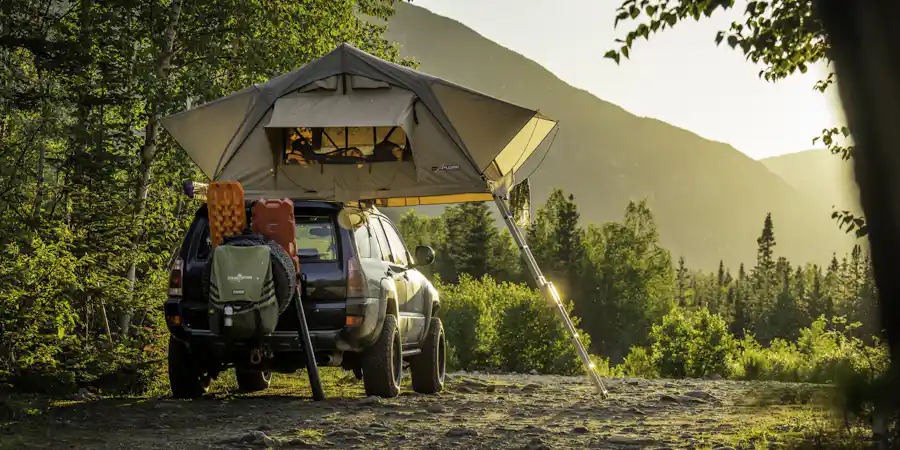
Header photo: Alfred Boivin via Unsplash.