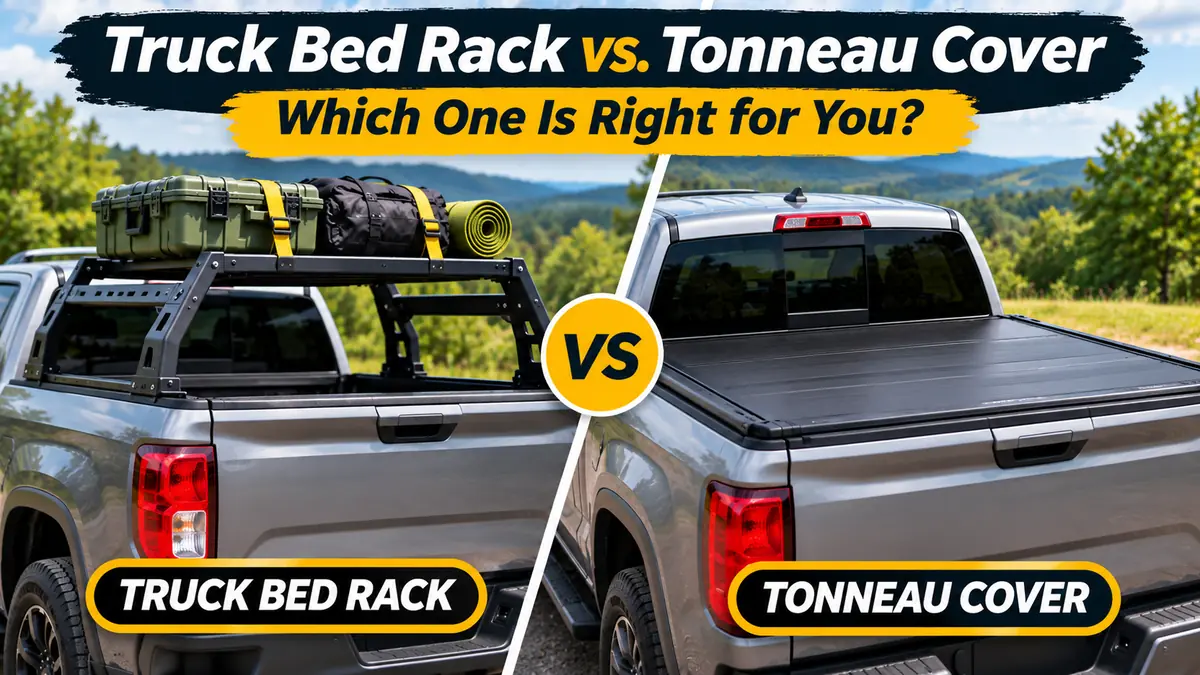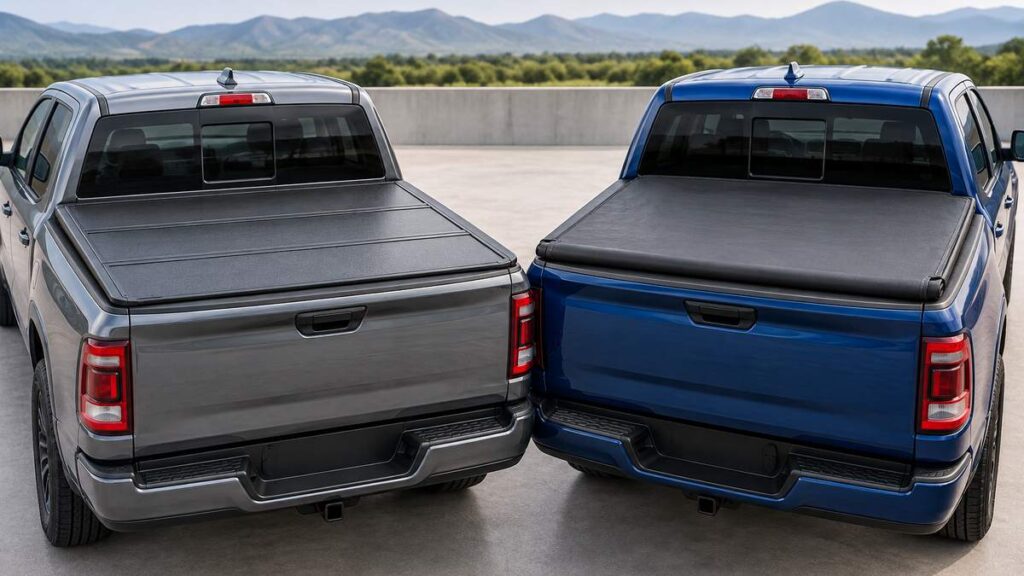
Choosing between a hard and soft tonneau cover comes down to what you carry, how often you open the bed, and how much security you need. Hard covers usually offer better resistance to cutting and prying, while soft covers are lighter, easier to handle, and generally less expensive. Neither is automatically the better choice for every truck owner.
This comparison focuses on the differences between the two types—not a list of products. For individual recommendations, see our guide to the best truck bed covers.
Quick Answer: Hard vs. Soft Tonneau Covers
Choose a hard tonneau cover if cargo security, a rigid surface, and a more substantial cover matter most and you are comfortable paying more and handling extra weight. Choose a soft tonneau cover if you want an affordable, lightweight cover that is easier to remove and often provides convenient full-bed access when rolled up.
Both types can help conceal cargo and reduce direct exposure to rain and debris. Neither should be assumed to be completely waterproof or theft-proof. Actual performance depends on the design, seals, installation, tailgate lock, and the specific model.
Hard vs. Soft Tonneau Cover: At a Glance
| Factor | Hard tonneau cover | Soft tonneau cover |
|---|---|---|
| Typical construction | Rigid aluminum, composite, fiberglass, or plastic panels/slats | Flexible vinyl or fabric supported by a frame |
| Security | Usually more resistant to cutting and casual tampering | Conceals cargo but flexible material can be cut |
| Price | Usually costs more | Usually more budget-friendly |
| Weight and handling | Heavier; removal may take more effort or a second person | Lighter and often easier to remove |
| Bed access | Depends on design; folding and retractable styles differ | Roll-up models can expose most or all of the bed; folding styles vary |
| Weather protection | Rigid panels can offer strong protection, but seals and drainage still matter | Can protect well from ordinary weather, but tension, seams, and seals matter |
| Maintenance | Check hinges, latches, seals, drains, and moving parts | Clean the cover and check tension, snaps, seams, and frame hardware |
| Best fit | Owners prioritizing security and a rigid cover | Owners prioritizing price, lower weight, and simple handling |
What Is a Hard Tonneau Cover?
A hard tonneau cover uses rigid panels or slats rather than a flexible sheet. Depending on the design, materials can include aluminum, fiberglass, ABS plastic, or composite construction. Hard covers are available as folding, one-piece hinged, hard rolling, and retractable designs, so their weight, access, and installation requirements are not all the same.
Advantages of hard covers
- More resistance to tampering: Rigid panels are generally harder to cut than vinyl. A compatible locking arrangement and locked tailgate can add protection, although no cover makes cargo theft-proof.
- Firm, finished appearance: Many hard covers sit close to the bed rails and provide a solid, uniform look.
- Potential for a more rigid top surface: Some models allow limited loads on top, but only use the cover this way if the manufacturer provides an explicit load rating and instructions.
- Durable construction: Rigid materials can stand up well to regular use, but hinges, seals, coatings, latches, and moving parts still require care.
Trade-offs of hard covers
- Higher upfront cost: Hard construction and more complex mechanisms commonly increase the purchase price.
- More weight: Some covers are difficult to lift off and store alone. Check whether the model has quick-release hardware or requires help for removal.
- Access depends on style: A folding cover stacks toward the cab, a one-piece lid lifts as a unit, and a retractable cover moves into a canister that occupies some bed space.
If a rigid folding design is your likely choice, our hard-folding tonneau cover guide covers product options separately.
What Is a Soft Tonneau Cover?
A soft tonneau cover usually uses vinyl or another flexible cover material stretched over a supporting frame. Common designs include roll-up and soft folding covers. They are typically lighter than hard covers and are often chosen for their lower cost and straightforward operation.
Advantages of soft covers
- Lower cost in many cases: Soft models are often the more affordable way to cover a truck bed, though premium soft covers can overlap in price with entry-level hard models.
- Lightweight handling: Their lower weight can make installation, removal, and storage easier.
- Convenient access: A roll-up cover can roll toward the cab to open the bed. Soft folding designs open in sections, with access depending on the model.
- Simple design: Many models use a relatively straightforward frame and latch arrangement, though fit and installation still need to be checked.
Trade-offs of soft covers
- Less resistance to cutting: Flexible material is easier to cut than a rigid panel, so a soft cover is mainly a concealment and weather barrier rather than a strong physical security barrier.
- Material care matters: UV exposure, dirt, temperature changes, and improper tension can affect the cover over time. Follow the manufacturer’s cleaning and care guidance.
- Surface support is limited: Do not place loads on top unless the manufacturer specifically rates the cover for that use.
For product-specific choices, see our guides to soft tonneau covers and roll-up tonneau covers.
Security: Which Type Protects Cargo Better?
Hard covers generally win on physical security because rigid panels are more difficult to cut through than flexible vinyl or fabric. Some models include a lock or latch that works with the truck’s tailgate. The level of protection varies, however: a cover that relies on a locked tailgate is only as secure as that tailgate and its locking system, and not every hard cover has the same hardware.
Soft covers still have a useful role. They keep cargo out of sight and can discourage opportunistic access, but they should not be treated as a secure enclosure for expensive tools, electronics, or other valuables. If theft resistance is a priority, review the exact cover’s locking arrangement and consider the security of the tailgate as part of the whole setup.
Weather Protection: Are Hard Covers More Waterproof?
A well-fitted hard cover can provide excellent weather protection, but “hard” does not automatically mean waterproof. Water can enter around the tailgate, bed rails, seams, hinges, or drain system. Soft covers also protect cargo from direct rain and debris when correctly installed and tensioned, but their performance depends on material quality, seams, and perimeter seals.
Most truck-bed cover systems should be treated as weather-resistant rather than fully waterproof. If you regularly carry items that must stay dry, inspect the manufacturer’s sealing and drainage design, install the cover exactly as instructed, and use appropriate waterproof storage for sensitive cargo. For troubleshooting, see why a tonneau cover may leak.
Durability and Maintenance
Hard covers avoid some of the wear patterns associated with flexible fabric, but they have their own maintenance needs. Hinges, latches, seals, coatings, and retractable mechanisms can wear or need cleaning. A damaged panel or mechanism may also be more expensive to repair than a small soft-cover component.
Soft covers can be durable when cared for properly, but their flexible material may fade, loosen, or become damaged through abrasion, harsh cleaners, or weather exposure. Keep the cover clean, maintain correct tension, and follow the care instructions for the material. In either category, longevity depends on the product, climate, frequency of use, installation, and maintenance—not just whether it is hard or soft.
Weight, Installation, and Everyday Bed Access
Soft covers are often easier for one person to handle because they weigh less. Many use clamp-on mounting systems, but installation requirements vary by truck and cover. Hard covers can be heavier, and some need two people for safe removal. Do not assume every model is a no-drill installation; check the instructions for your exact truck configuration.
Bed access is mainly a design question, not simply a hard-versus-soft question. A soft roll-up may open the full bed without removing the cover. A hard folding cover usually stacks panels near the cab, while a retractable design slides into a canister and can take up some bed length. One-piece hinged covers may limit access or clearance when raised. If easy access is your main concern, compare the specific opening style before choosing a material.
Before ordering, confirm your truck’s year, make, model, bed length, and bed-rail configuration. Accessories, liners, and factory utility tracks can affect fitment. Our guides explain how to measure for a truck bed cover and how tonneau covers are installed.
Price and Long-Term Value
Soft covers are usually the lower-cost option, while hard covers typically cost more because of their materials, construction, and mechanisms. The exact gap varies by brand, size, design, and features, so compare current prices for covers that fit your truck rather than relying on a single category-wide figure.
Think about total ownership cost, too. A more expensive hard cover may be worth it if it addresses a real security need or will be used daily for years. A soft cover may offer better value if your main goals are concealment, basic weather protection, low weight, and a modest upfront spend. Avoid paying for features you will not use.
Which Should You Choose?
Choose a hard tonneau cover if…
- You regularly carry tools or gear and want greater resistance to cutting and casual tampering.
- You prefer a rigid cover and are comfortable with a higher budget.
- You can manage the cover’s weight and removal requirements.
- You have checked how the chosen style opens and whether it affects the cargo space you need.
Choose a soft tonneau cover if…
- You want to keep costs down while concealing cargo and reducing direct weather exposure.
- You value lower weight and easier removal.
- You frequently need access to the full bed and prefer a roll-up design.
- You understand that flexible material offers limited resistance to cutting and tampering.
Frequently Asked Questions
Are hard tonneau covers safer than soft covers?
They generally offer better physical resistance to cutting and prying. The actual level of security depends on the cover’s construction, latches, lock, and tailgate arrangement. Neither type guarantees that cargo cannot be stolen.
Do soft tonneau covers leak?
They can, as can hard covers. Water intrusion depends on fitment, seals, seams, tension, drainage, installation, and weather conditions. Follow the manufacturer’s instructions and treat most covers as weather-resistant rather than fully waterproof.
Can I remove a tonneau cover when I need the whole bed?
Usually, but the effort differs. Soft covers are often lighter and easier to remove. Some hard covers have quick-release hardware, while others are heavy or awkward enough to require a second person. A roll-up or retractable design may give access without removing the cover.
Can I put cargo on top of a hard tonneau cover?
Only if the manufacturer explicitly specifies a load rating and explains how the load must be distributed and secured. Do not assume that a rigid-looking cover can safely support a person or cargo.
Will a tonneau cover improve fuel economy?
Results vary with the truck, speed, cover design, driving conditions, and other factors. Do not assume a specific fuel-economy improvement without credible testing for the exact setup.
Do hard and soft covers fit every truck?
No. Covers are designed for specific bed lengths and vehicle configurations. Confirm the year, make, model, bed length, and any relevant bed-rail or liner accessories before ordering.
Final Verdict
A hard tonneau cover is usually the better fit for truck owners who prioritize a rigid barrier and greater resistance to tampering. A soft tonneau cover is usually the better value for owners who want lightweight, convenient, and more affordable bed coverage. Weather protection, durability, and ease of access depend heavily on the specific style and model, so compare the installation requirements, seals, locking system, and opening mechanism before buying.
For a product shortlist based on your needs, start with our best truck bed covers guide, then compare the relevant hard-folding, soft, retractable, and roll-up options.
Research references: etrailer’s hard-vs-soft cover guide and RealTruck’s truck bed cover buying guide. Always check the current manufacturer’s instructions for the exact cover you are considering.